HELM
The Helm Blog
Insights on nervous system regulation, mental clarity, and the science of optimal performance.
HELM
HELM
HELM
HELM
HELM
HELM
Insights on nervous system regulation, mental clarity, and the science of optimal performance.
Helm is the #1 app to optimize your mind, breathe better, and master your focus. Combine science-backed breathwork and meditation into your daily protocol to build resilience.
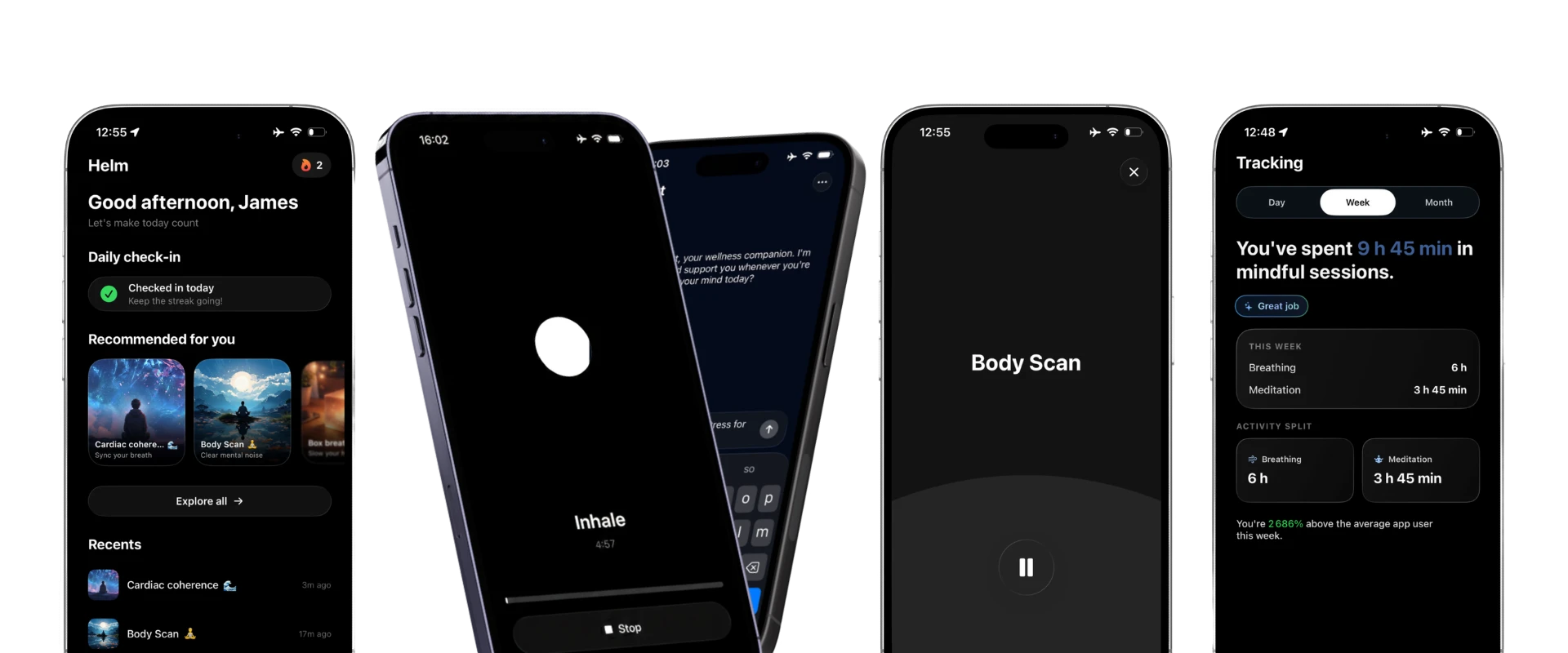
Apps to track heart rate variability and breathing are most useful when they do more than log numbers. The right ones help you see daily recovery trends, guide slow breathing, and show whether sleep, stress, training, or alcohol are moving your nervous system in the right direction. If you are choosing one, prioritize consistent trend tracking, breathing guidance, wearable integration, and notes you can actually use.
That matters because HRV is not a score to chase. It is a pattern that reflects how your autonomic nervous system responds to load and recovery. Good apps turn that pattern into decisions: push hard or back off, work longer or reset, breathe slower for calm or use a more alert rhythm. The goal is not more data. The goal is better self-regulation.

A strong app should support awareness, action, and reflection. Awareness means showing your baseline and trend, not just a single morning number. Action means offering a breathing session you can use when stress rises or focus fades. Reflection means helping you connect the data to behaviors like poor sleep, intense workouts, travel, illness, or a heavy evening meal.
That last piece is where many tools become genuinely helpful. HRV only makes sense in context. A lower reading after a hard training block may not mean something is wrong. A lower reading after three nights of short sleep might be a clearer signal to reduce strain. Apps that let you tag habits, symptoms, and mood tend to be far more useful than apps that simply reward you with streaks.
When you compare options, ignore flashy dashboards first and look for signal quality and practical coaching. If an app tracks HRV but does not explain when to measure, how breathing affects the reading, or what trend matters over time, it may create more confusion than clarity.
Look for these features first:
A bonus feature is education. Apps that explain why HRV changes help you make calmer decisions. If you want a deeper non-app primer, this guide on simple steps to improve HRV is a useful place to understand what actually moves the number.
The honest answer is accurate enough for trends, not perfect for diagnosis. HRV is sensitive to timing, posture, hydration, respiratory rate, recent exercise, caffeine, stress, and illness. As the classic standards for HRV measurement make clear, the conditions around the reading matter almost as much as the algorithm that reports it.
In practice, chest-based sensors and strong wearable integrations usually give the steadiest data. Camera-based readings can still be useful, especially for beginners, but they are more vulnerable to lighting, finger pressure, movement, and short measurement windows. That does not make them worthless. It simply means you should trust repeated patterns more than one impressive result.
Breathing data has its own limits. Some apps infer breathing rate from heart rhythm changes or motion, while others ask you to follow a visual pacer. Guided breathing is often more actionable than passive breathing tracking. If the app helps you slow down, lengthen your exhale, and notice how your body responds, it can still deliver value even if its respiratory graph is not laboratory grade.
The healthiest way to use these tools is to treat them like a daily compass, not a daily verdict. Check the trend, note how you feel, then choose a small adjustment. A low HRV day might mean taking a walk instead of adding intervals. A stressed afternoon might mean three minutes of slow breathing before your next meeting.
Here is a simple way to keep the data useful:
This is also where breathing features matter most. Slow breathing can change the state of your nervous system in real time, and a systematic review on slow breathing and physiology found meaningful effects on autonomic activity and emotional regulation. If you are not sure whether you are breathing efficiently during these sessions, this breakdown of diaphragmatic breathing vs chest breathing can help you clean up the basics.
These apps tend to help people who want better recovery awareness, not constant performance validation. They can be especially useful for stressed professionals, recreational athletes, shift workers, people rebuilding healthier sleep habits, and anyone trying to catch overload before it turns into burnout. The breathing component adds immediate value because it gives you a direct response when the data suggests you are under strain.
Caution matters if you already feel vulnerable to health anxiety or compulsive tracking. More data is not always more calm. If every morning score changes your mood, you may need stronger boundaries around when you check it and how much meaning you assign to it. People with known heart rhythm issues, breathing disorders, or significant medical concerns should treat app data as supportive information, not diagnosis or treatment.
If you want the shortest decision rule, choose the app that best fits your actual use case. For recovery and training, prioritize sensor quality and trend analysis. For stress management, prioritize guided breathing and clear session design. For lifestyle change, prioritize notes, patterns, and behavior prompts.
The best app for you is rarely the one with the busiest dashboard. It is the one you will use consistently for eight weeks, under similar conditions, while making small decisions from the data. If the app helps you notice patterns, breathe more intentionally, and step back from all-or-nothing thinking, it is doing its job.
Apps that combine HRV and breathing can be genuinely useful, but only if you choose them with the right expectations. Look for consistency, context, and coaching rather than perfect precision. The strongest options help you spot recovery trends, guide a simple breathing reset, and connect your numbers to real life factors like sleep, workload, and training.
Used well, these tools can make you more responsive to your body, not more reactive to it. The win is not a higher score every day. The win is learning when to push, when to pause, and how to regulate your state with more skill. If you want a simple place to practice guided breathing resets, you can try Helm, a mental wellness app designed to manage stress and improve focus.
Yes, for trends they usually are. They are most useful for pattern recognition over days and weeks, not for diagnosing a medical problem from a single reading.
Yes, sometimes. A phone camera can be good enough for beginners, but it is usually less reliable than a quality wearable or sensor when conditions are inconsistent.
Yes, often in the short term. Slow, steady breathing can influence heart rhythm dynamics quickly, especially when you lengthen the exhale and reduce stress at the same time.
Once a day is enough for most people. A single consistent morning reading is usually more useful than checking repeatedly and reacting to every fluctuation.
It depends. Many people feel good around 5 to 6 breaths per minute, but comfort, dizziness, and your current stress level should guide the pace more than a rigid target.
Join thousands using Helm to manage stress, improve focus, and build lasting healthy habits.