HELM
The Helm Blog
Insights on nervous system regulation, mental clarity, and the science of optimal performance.
HELM
HELM
HELM
HELM
HELM
HELM
Insights on nervous system regulation, mental clarity, and the science of optimal performance.
Helm is the #1 app to optimize your mind, breathe better, and master your focus. Combine science-backed breathwork and meditation into your daily protocol to build resilience.
If you are searching for breathing exercises for deep work, you are probably not looking for another productivity hack. You are looking for a reliable way to start, stay with the task, and stop spiraling when something feels hard. That is less about willpower and more about physiology.
Breathing is one of the few levers you can pull on purpose that quickly influences arousal, attention, and emotional reactivity. In simple terms, your breath can nudge your nervous system toward either mobilization (useful for energy) or downshifting (useful for steadiness). When you match the breath pattern to the work demand, you create the conditions for stable attention instead of white knuckle concentration.
This article gives you a short pre-work routine, micro-resets you can do without leaving your desk, and customization tips for anxiety, fatigue, and mental overload.

Deep work depends on the ability to tolerate mild discomfort without seeking relief through distraction. Breath training helps because it influences stress physiology and interoception, which is your sense of internal state. When your body reads “safe enough,” the brain can allocate more resources to planning and sustained attention.
Research links slow, controlled breathing with shifts in autonomic balance and heart rate variability, a proxy often used to study regulation capacity. Reviews in journals like Frontiers in Psychology discuss how slow breathing can support vagal activity and emotional regulation (Frontiers in Psychology). This is not magic, it is training a rhythm that your body associates with steadiness.
Breath also affects carbon dioxide tolerance. Many people overbreathe under cognitive load, which can increase sensations like dizziness, tingling, or urgency. A calmer, smaller breath helps maintain a more stable internal chemistry, making it easier to keep your mind on one track.
If you want the big picture first, it helps to understand how breathwork fits into attention and stress response. The physiology behind breathing and calm has been well described in clinical education resources like the relaxation response overview from a major medical publisher (Harvard Health).
Use this before you open email or messages. Your goal is not to feel blissful, it is to become alert and steady. Sit upright, feet on the floor, jaw unclenched. Keep the breath quiet and nasal if possible.
Why it works: longer exhales tend to cue calming pathways, then equal breathing lands you in a middle zone where focus is easier to sustain. Many people do better with this than with overly intense methods.
If you want a longer walkthrough of this middle zone approach, the coherent breathing guide for calm and focus is a helpful companion for dialing in pace and comfort.
Even strong concentration comes in waves. Instead of waiting until you are fully scattered, do a 20 to 40 second reset at natural transition points: finishing a paragraph, saving a file, or after a hard decision.
Reset A: 3 physiological sigh cycles (about 30 seconds) Do a normal inhale, then “top up” with a short second inhale, then a long relaxed exhale. Repeat 3 times. This pattern has been studied for rapid downshifting of arousal in laboratory contexts (Cell Press). Use it when you feel pressure, frustration, or urgency.
Reset B: 4 rounds of box breathing (about 1 minute) Inhale 4, hold 4, exhale 4, hold 4. Keep it gentle, not strained. This is best when your mind is racing and you need cognitive boundaries. If breath holds spike anxiety for you, shorten the holds to 2 seconds or skip them.
Pairing breath with attention training multiplies the benefit. If your focus slips because your mind keeps checking for threats or unfinished tasks, try combining a micro-reset with a short attention cue from meditation for focus at work.
Breathing for focus is not one size fits all. Choose based on your state, not your goal. The aim is to land in the narrow band where you have enough energy to engage, and enough calm to stay.
Use longer exhales and keep the inhale modest.
This reduces the tendency to overbreathe. It also teaches your system that you can be with discomfort and continue working.
For anxiety education and practical breathing guidance, reputable clinical resources emphasize slow, controlled breathing as a first-line self-regulation skill (National Health Service).
You do not necessarily need “more oxygen,” you need slightly more arousal.
Avoid aggressive hyperventilation-style practices right before desk work, especially if you are alone or prone to dizziness. The goal is clean activation, not a rush.
You are likely attention-fragmented. Use a rhythm that is simple and repetitive.
This can become a cue that “single-tasking starts now.” Over time, your brain learns the pattern as a context signal for deep work.
Most breathwork problems come from doing too much, too fast, too soon. Deep work breathing should feel sustainable, not heroic.
If you have a respiratory or cardiovascular condition, are pregnant, or have a history of panic, keep practices gentle and avoid intense breath retention. Stop if you feel faint, numb, or distressed. For general guidance on stress and the body, credible mental health organizations describe how breathing and relaxation skills can support regulation when practiced safely (American Psychological Association).
The best sign you are doing it right is simple: you feel a little more settled, and starting the next step feels easier.
Breathing does not replace good planning, clear goals, or protected time, but it can change whether you can actually use those tools. The most effective breathing exercises for deep work are the ones that match your state: longer exhales to steady anxiety, equal pacing to stabilize attention, and short resets to prevent drift.
Start with the 5-minute pre-work protocol for a week and track one metric: how long it takes to begin. Then add micro-resets at transition points, not only when you are already overwhelmed. With repetition, your breath becomes a cue for focus, and focus becomes easier to re-enter.
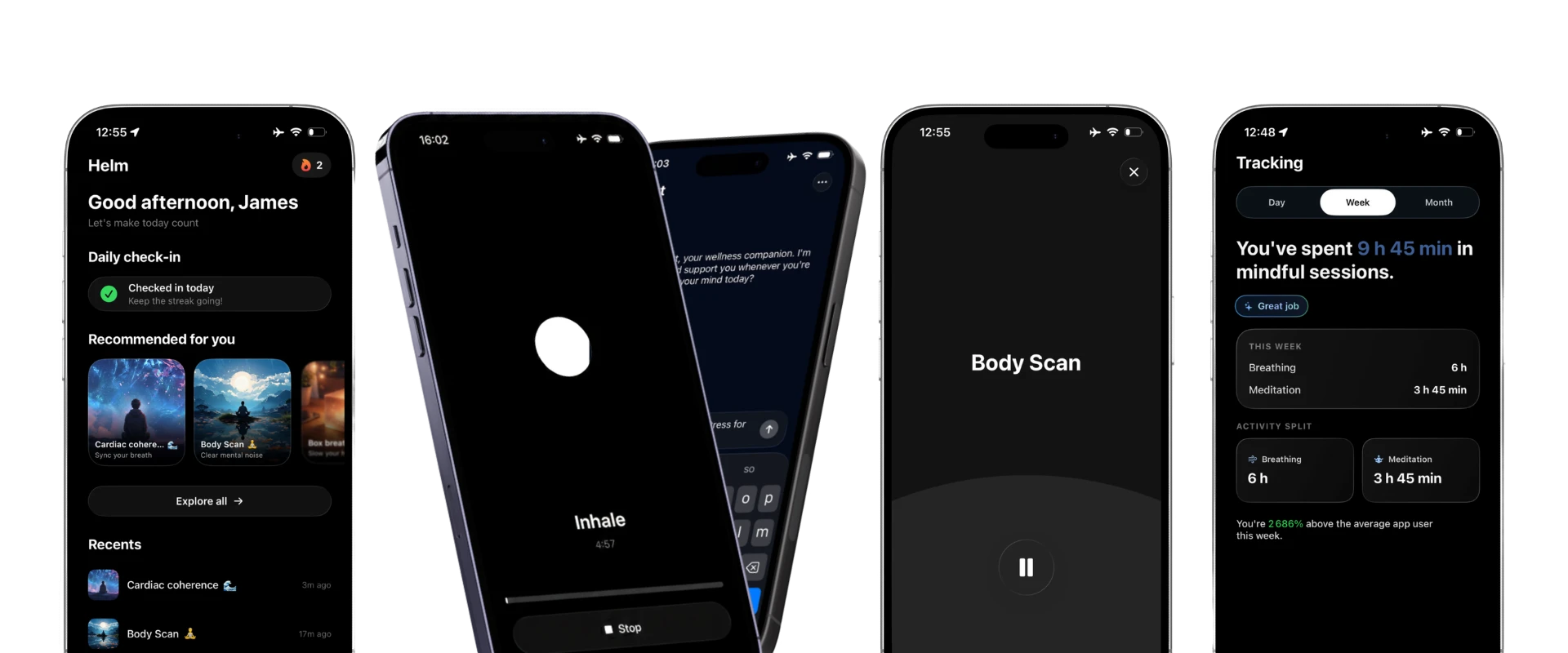
If you want a guided option, try Helm, an iOS mental wellness app designed to manage stress and improve focus through guided breathing resets.
Do 3 physiological sigh cycles or 4 gentle box-breath rounds. Keep breaths quiet and nasal if possible, then immediately start the next smallest action to lock in momentum.
Nasal breathing is usually better for steadiness and smoother pacing. Mouth breathing can be useful during intense physical exertion, but at a desk it often increases overbreathing and jitteriness.
It can reduce reliance by improving regulation and alert calm, but it is not a direct stimulant. Use breath to stabilize attention, then support energy with sleep, light, movement, and hydration.
Dizziness often comes from breathing too much or too quickly, which lowers carbon dioxide. Make breaths smaller, slow the exhale, and pause the practice if symptoms persist.
Aim for one micro-reset every 20 to 45 minutes, plus whenever you notice stress spikes. Keep it brief so it supports the work instead of becoming another form of procrastination.
Join thousands using Helm to manage stress, improve focus, and build lasting healthy habits.