HELM
The Helm Blog
Insights on nervous system regulation, mental clarity, and the science of optimal performance.
HELM
HELM
HELM
HELM
HELM
HELM
Insights on nervous system regulation, mental clarity, and the science of optimal performance.
Helm is the #1 app to optimize your mind, breathe better, and master your focus. Combine science-backed breathwork and meditation into your daily protocol to build resilience.
Mornings are a nervous system handoff, not a clean slate. Your brain is moving from sleep inertia into task mode while your body checks for safety, energy, and urgency. A morning breathwork routine for focus works because it gives that system a clear signal: steady breathing equals steady demand.
If your first inputs are scrolling, rushing, or caffeine on an empty stomach, your body may interpret the day as a threat and shift toward vigilance. The goal is not to force calm, it is to create predictable physiology that supports attention. Slow, controlled breathing can nudge heart rhythm and stress signaling in a direction that makes concentration easier.
Research on paced breathing suggests it can influence vagal activity and heart rate variability, which are linked with emotion regulation and cognitive flexibility. A practical overview of how breathing impacts stress physiology is summarized by Harvard Health Publishing.

Focus improves when arousal is “just right”. Too low feels foggy, too high feels scattered. Breathwork helps by adjusting CO2 tolerance, respiratory rate, and interoceptive attention, all of which shape your mental clarity and alert calm.
There are two levers you can reliably use:
Slow breathing has been studied for effects on autonomic balance and stress markers, with reviews noting measurable shifts in physiological regulation for many people when practice is consistent. One accessible overview of mechanisms and outcomes appears in this review on slow breathing and autonomic effects in Frontiers in Human Neuroscience.
A focus-oriented routine is also behavioral. You practice staying with one simple cue, like counting or sensing airflow, which trains attentional control before the day starts asking for it.
Do this seated, feet on the floor, or lying down if you tend to feel lightheaded. Keep the breath nasal if possible, and keep intensity at a 4 to 6 out of 10. The point is steady attention, not intensity.
Set posture and intention (60 seconds) Sit tall and soften your jaw. Pick one focus cue: “air at the nostrils” or “counting.” If your mind races, that is normal, you are practicing returning.
Downshift with longer exhales (2 minutes) Inhale gently for 4 seconds, exhale for 6 seconds. If that feels strained, shorten both while keeping the exhale slightly longer.
Build stable rhythm breathing (4 minutes) Breathe in for 5 seconds, out for 5 seconds. Keep it smooth, quiet, and even. You are aiming for coherent pacing that feels sustainable.
Add a focus constraint (2 minutes) Keep the same pace, but count only the exhales from 1 to 10, then restart. If you lose count, restart at 1 without judgment.
Transition to action (60 seconds) Let the breath return to normal. Ask: “What is the next single step?” Then stand up slowly and begin it.
If you want a deeper explanation of why breathing can change felt stress quickly, this overview on the science behind breathing exercises is a helpful starting point. Consistency matters more than perfect timing or perfect counts.
On high-stress mornings, simplify. Use fewer steps, slower pacing, and more grounding. The quickest swap is to do 2 minutes of longer exhales, then 2 minutes of steady 5-5 breathing. This keeps the practice gentle and reliable.
If anxiety is present, avoid big breaths. Big breaths can become subtle hyperventilation, which may increase tingling, dizziness, or panic sensations. Choose a smaller inhale and emphasize softness in the chest and belly. For an ultra-clear structure, try box breathing for instant calm as a short reset, then return to your normal morning plan.
If you wake up foggy, do not jump to fast breathing. Instead, keep nasal breathing and slightly increase posture, light, and movement. Pair 2 minutes of 4-in, 6-out breathing with a slow walk around your room. This tends to create cleaner alertness without a spike.
The biggest predictor of results is whether you practice when it is easy, not only when you need rescue. Tie your routine to an existing cue, like after brushing teeth or while the kettle heats. This turns breathwork into automatic behavior, not another decision.
Keep the “win condition” small. Success is completing 5 to 10 minutes at low intensity, five days a week. If you want a slightly different pacing option that many people find intuitive, explore coherent breathing for calm and focus and use it as your step 3.
Track one metric for two weeks: either “time to start my first task” or “number of times I context-switch in the first hour.” Simple tracking keeps the practice anchored to real-world focus, not vibes.
Breathwork should feel steady, not edgy. Stop if you feel faint, numb, or unusually anxious. Those signs often mean you are breathing too much, too fast, or too deeply. The safest default is nasal, quiet breathing with a comfortable pace and no breath holds.
Use extra caution if you are pregnant, have cardiovascular disease, uncontrolled high blood pressure, panic disorder, asthma that is easily triggered, or a history of fainting. If you are unsure, consult a clinician before doing more intense breathwork styles. General guidance on relaxation and breath practices is available from Cleveland Clinic.
Never practice intense techniques while driving, in water, or standing. For morning focus, intensity is unnecessary. You are training attention through repetition and rhythm, and the safest path is almost always gentle consistency.
A morning routine works when it meets you where you are. If you wake up stressed, you downshift first. If you wake up foggy, you stabilize and gently energize. Either way, the practice is the same skill: returning attention to a simple, repeatable cue until your body learns calm readiness.
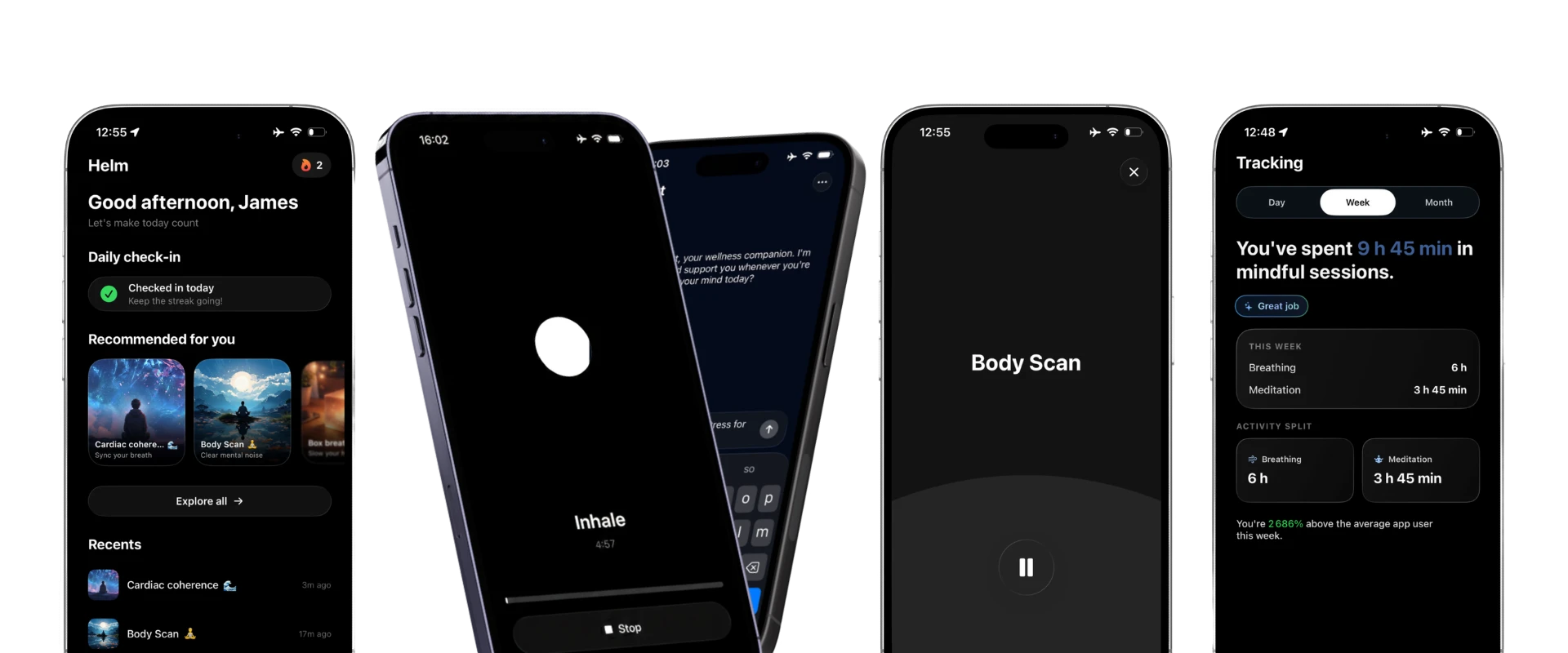
Try this for two weeks before changing anything: 10 minutes, low intensity, same time, same place. You will learn your personal signs of “too much” versus “just right,” and your focus will start to feel less like willpower and more like a state you can enter on purpose. If you want guided breathing resets, you can try Helm, an iOS mental wellness app designed to manage stress and improve focus through guided breathing resets.
Within 30 minutes of waking works well because you shape attention before inputs pile up. If mornings are chaotic, do it right before your first deep work block.
Sometimes it reduces the need, especially for stress-driven fatigue. It will not fully replace sleep, hydration, or nutrition, but it can create cleaner alertness and fewer jitters.
You may be over-breathing, even if it feels calm. Reduce depth, slow the pace, keep nasal breathing, and avoid holds. If dizziness persists, stop and consult a clinician.
It can help by training attention anchoring and reducing stress arousal that amplifies distractibility. Keep sessions short, use counting, and pair it with one clear next task to start immediately.
Join thousands using Helm to manage stress, improve focus, and build lasting healthy habits.