HELM
The Helm Blog
Insights on nervous system regulation, mental clarity, and the science of optimal performance.
HELM
HELM
HELM
HELM
HELM
HELM
Insights on nervous system regulation, mental clarity, and the science of optimal performance.
Helm is the #1 app to optimize your mind, breathe better, and master your focus. Combine science-backed breathwork and meditation into your daily protocol to build resilience.
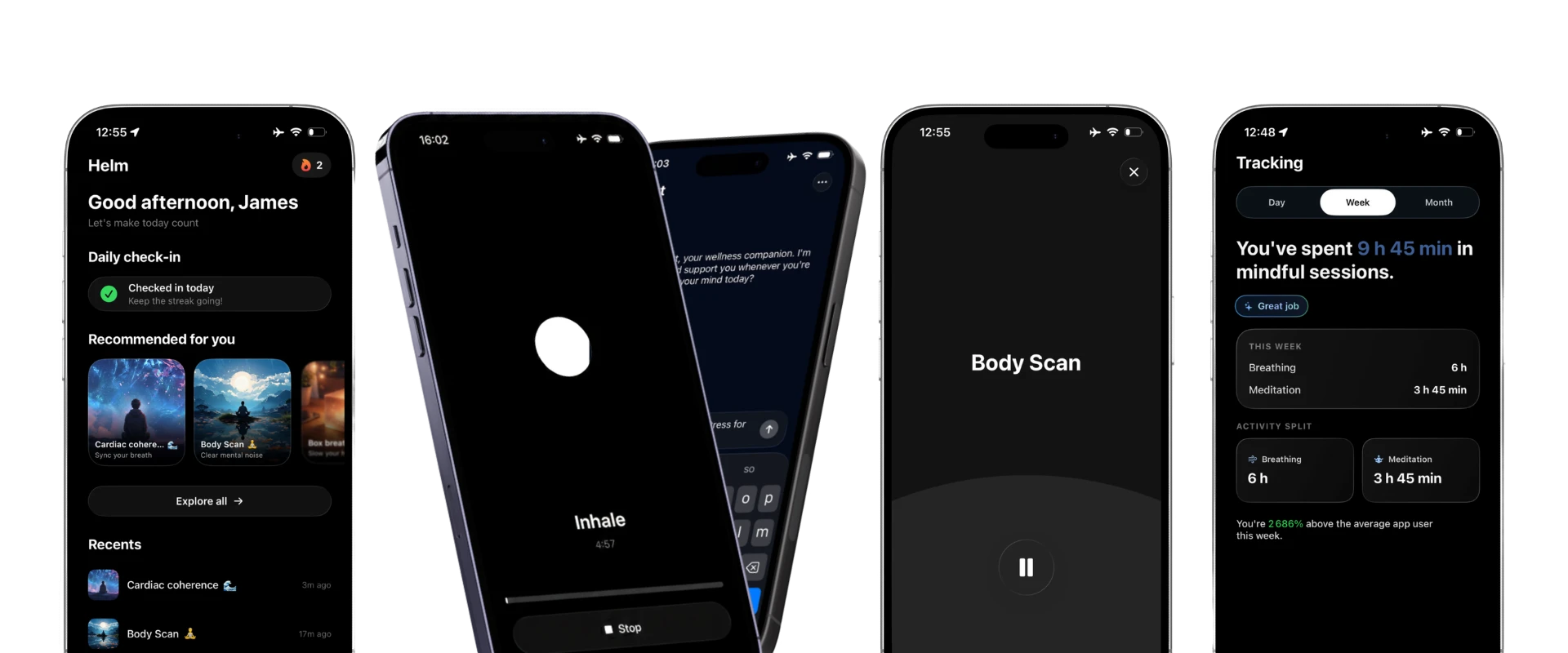
If you are looking for nsdr (non-sleep deep rest) alternatives, the goal is usually simple: you want to reset your nervous system, restore energy, and clear mental noise without fully falling asleep. That need is real, especially when you are stressed, overstimulated, or too tired to focus but not able to nap. The good news is that deep recovery does not belong to one method. A few minutes of intentional downshifting can come from breathing, body-based relaxation, sensory quiet, or guided attention. Research on breathwork and relaxation keeps pointing in the same direction: slow, structured practices can lower stress and improve emotional regulation, according to the National Center for Complementary and Integrative Health and a large Scientific Reports review on breathwork and mental health. What matters most is choosing the right tool for the state you are actually in.

Deep rest is not one experience. Some people need something quiet and eyes-closed. Others get restless the second they are told to lie still. If your mind speeds up when you try to "relax," a different entry point often works better.
Another reason is context. You may need a reset between meetings, after a stressful conversation, during an afternoon energy dip, or before bed. In those moments, the best practice is the one that matches your nervous system state, not the one that sounds ideal on paper. Slow breathing is useful when you feel keyed up. Progressive muscle relaxation can help when stress is stored physically. A short mindfulness practice may fit when your body feels calm but your thoughts are scattered. The Mayo Clinic notes that meditation and relaxation practices can support stress reduction, emotional balance, and clearer attention.
Breath is often the fastest lever because it influences both physiology and attention at the same time. When stress rises, breathing tends to become shallow, fast, or chest-led. Slowing and deepening it sends your body a different message.
A strong starting point is coherent breathing, where you breathe at an even, comfortable pace, often around five to six breaths per minute. This can create a sense of steadiness without forcing you into silence. If you want structure, this guide to coherent breathing for calm and focus explains why a smooth inhale and exhale can feel grounding when your mind is busy.
Another option is the physiological sigh, especially when tension spikes suddenly. It is short, practical, and useful when you do not have ten minutes to spare. For a gentler daily reset, diaphragmatic breathing is worth learning. Breathing low into the ribcage and belly can improve efficiency and reduce the sense of urgency that often comes with stress, as explained by Johns Hopkins Medicine.
The key is not perfection. If counting makes you tense, drop the numbers. If long exhales feel uncomfortable, shorten them. A workable breath practice should feel regulating, not performative.
When your body feels agitated, trying to think your way into rest can backfire. In those moments, bottom-up regulation often works better than mental effort.
Progressive muscle relaxation is one of the most reliable options. You tense and release muscle groups slowly, which helps convert vague tension into a concrete physical experience your body can actually let go of. This is especially useful for people who say, "I know I am stressed, but I cannot feel where." Yoga nidra style body scans can help too, but you do not need a long script to benefit. Even three minutes of moving attention from jaw to shoulders to hands to belly can interrupt overactivation.
A body scan also pairs well with improving your mechanics. Many people who feel anxious are actually breathing high in the chest all day. Learning the difference between diaphragmatic breathing vs chest breathing can make rest feel more accessible because your posture, ribs, and breath pattern directly shape how safe your body feels.
Sensory reduction is another overlooked alternative. Dim the lights, remove headphones, put your phone face down, and let your eyes rest. Less input is its own intervention. If full silence feels uncomfortable, low, neutral sound can be enough to soften the load on your system.
The most effective reset is usually the one that fits your current state in under a minute. Instead of asking, "What is the best method?" ask, "What does my system need right now?" That shift makes recovery more practical and more consistent.
Try this simple matching framework:
Keep the bar low. Five good minutes usually beats twenty aspirational minutes you avoid. It also helps to repeat the same practice at the same time each day. Predictability trains the nervous system. A brief reset after lunch, before a hard task, or in the evening can become a reliable cue for recovery.
Finally, notice what happens after the practice, not just during it. The right alternative often shows up as a softer jaw, slower thoughts, warmer hands, less urgency, or better concentration twenty minutes later. Recovery is often subtle before it is dramatic.
The best alternatives to deep rest protocols are not necessarily the most elaborate ones. They are the ones that help you shift state reliably, without friction, in real life. For some people that will be slow breathing. For others it will be muscle relaxation, sensory quiet, or a short guided body scan. The common thread is simple: rest works when your body believes it is safe enough to downshift. Start with the method that feels easiest, repeat it often, and let your experience guide the next adjustment. Over time, these small resets can become a practical way to support stress recovery, emotional balance, and clearer focus across the day. If you want a guided way to make this consistent, you can try Helm, an iOS mental wellness app designed to manage stress and improve focus through guided breathing resets.
Slow exhale breathing, coherent breathing, and progressive muscle relaxation work well because they reduce physiological arousal without requiring intense concentration.
Not always. A nap helps with sleep debt, while breathwork helps with downregulation and mental reset. They solve overlapping but different problems.
Use a body-based method first, such as muscle relaxation or diaphragmatic breathing. Rest often becomes easier after physical tension drops.
Start with 3 to 10 minutes. If the method leaves you feeling slightly calmer, clearer, or less tight, that is long enough to count.
Coherent breathing or a short body scan usually fits best. Both can lower stress load without making you groggy afterward.
Join thousands using Helm to manage stress, improve focus, and build lasting healthy habits.