HELM
The Helm Blog
Insights on nervous system regulation, mental clarity, and the science of optimal performance.
HELM
HELM
HELM
HELM
HELM
HELM
Insights on nervous system regulation, mental clarity, and the science of optimal performance.
Helm is the #1 app to optimize your mind, breathe better, and master your focus. Combine science-backed breathwork and meditation into your daily protocol to build resilience.
9d breathwork is often described as an immersive, multi-sensory breathing session that combines guided patterns, music, and spatial sound to pull your attention inward. If you have tried traditional breathwork and found your mind wandering, this format can feel unusually “sticky” for focus because it gives the brain more to track while the body settles into rhythm.
At the same time, intensity is not automatically healing. The goal is not to chase the biggest emotional release, it is to build reliable nervous system regulation you can repeat without feeling wiped out. This guide breaks down what 9d breathwork typically includes, why it can feel powerful, who should be cautious, and how to start with a short, grounded routine.

In practice, 9d breathwork is a style of guided breathwork delivered through immersive audio. The “9d” label usually points to layered, three-dimensional sound cues (for example, directional prompts, tones, and music) designed to keep attention engaged while you breathe.
Most sessions include three elements:
This combination matters because attention and breathing influence each other. When attention stabilizes, breathing often smooths out. When breathing smooths out, the mind often follows. A well-structured session uses that loop to move you from “spinning” to steady and present.
Breath is one of the fastest ways to influence arousal because it interacts with carbon dioxide tolerance, heart rhythm patterns, and the balance between sympathetic (mobilizing) and parasympathetic (restorative) activity. Slow breathing, especially with longer exhales, tends to support vagal-mediated calming and can increase heart rate variability in many people.
If you want the science in plain language, this overview of science-backed breathing exercises explains why “just breathing” can create measurable changes in stress physiology.
Research reviews suggest that slow, controlled breathing can affect autonomic function and stress perception, although outcomes depend on technique, duration, and individual differences. For a deeper technical read, see this review on slow breathing and autonomic regulation.
Why does 9d breathwork sometimes feel more intense than a quiet timer? Two reasons:
That “intensity” is not always catharsis. Sometimes it is simply awareness catching up to what your body has been holding.
Breathwork is generally low-cost and accessible, but it is not one-size-fits-all. The main risk comes from over-breathing (hyperventilation) and from pushing through fear or dizziness. Your rule is simple: comfort first, intensity second.
Consider extra caution, or ask a qualified clinician before practicing, if you have:
If at any point you feel tingling that escalates, cramping in hands or face, dizziness, or air hunger, reduce the depth, slow the pace, or return to normal nasal breathing. Those are common signs you are ventilating more than you need.
It also helps to choose a posture that supports safety and downshifting:
For general mental health safety guidance and when to seek support, this public health overview of mental health and stress can be a helpful baseline.
This is a gentle entry point that works with the most reliable levers, steady rhythm and longer exhales. Use immersive audio if you like, but keep the breathing simple.
If you prefer a structured “counts” method, you may also like what box breathing is and how to do it, which can be a cleaner fit for focus days.
Aim for calm alertness, not sedation. Signs you are in a good zone include warmer hands, a natural sigh, quieter thoughts, or a sense that sounds feel slightly farther away.
If you feel wired after, shorten the session next time and avoid breath holds. If you feel sleepy, practice earlier in the day or make the inhale and exhale equal (for example, 4 in and 4 out).
For a deeper physiological explanation of how slow breathing can influence vagal pathways and baroreflex sensitivity, this open-access review on breathing and autonomic function provides useful context.
The real benefit of 9d breathwork is not the session itself, it is what becomes easier afterward: choosing your next action without being dragged by stress chemistry. Integration means translating a strong state shift into repeatable micro-resets.
Try these low-effort bridges:
Also remember that emotional material can surface as you become more interoceptive. That does not automatically mean something is wrong. It can be the nervous system completing an incomplete stress cycle, or simply your mind finally noticing what it previously avoided. When in doubt, go slower, simplify, and build consistency.
If you want a more evidence-oriented framing for longer-term change, look into research on mindfulness and stress regulation, such as this meta-analysis on mindfulness-based programs and psychological stress. Breathwork often works best when it is paired with the skill of noticing without forcing.
9d breathwork can be a compelling way to practice regulation because immersive audio helps attention stay anchored while breathing reshapes arousal. The win is not intensity, it is learning the smallest effective dose that leaves you clearer, steadier, and more capable of meeting your day.
Start with a short protocol, prioritize nasal breathing and longer exhales, and treat symptoms like dizziness or tingling as feedback to reduce effort, not as a challenge to push through. With repetition, you can turn a once-in-a-while experience into a dependable reset that supports sleep, mood, and focus.
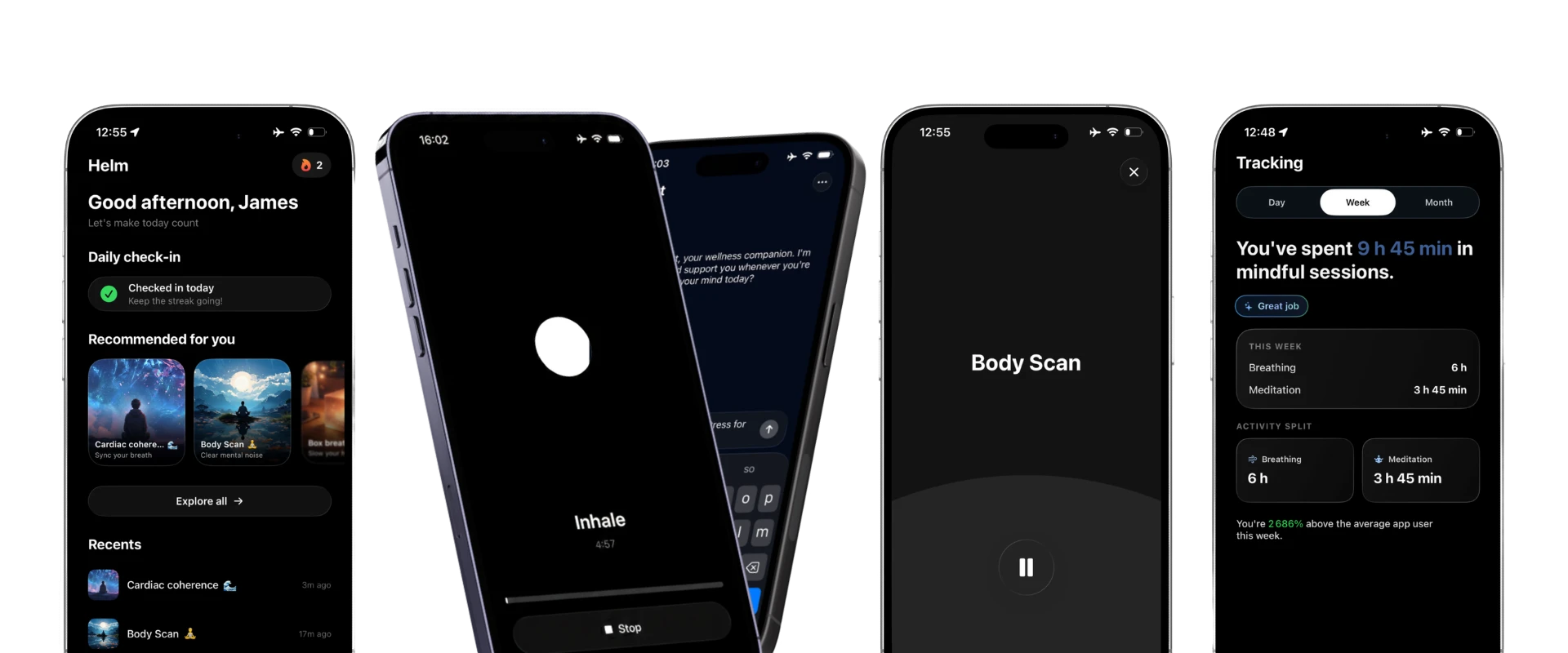
If you want guided breathing resets on your phone, try Helm, a mental wellness app designed to manage stress and improve focus through guided breathing resets.
Usually yes when the breathing is gentle and you avoid over-breathing. Start with short sessions, prioritize nasal breathing, and stop if you feel dizzy, numb, or panicky.
Most people do well with 2 to 4 sessions per week, plus brief daily micro-resets. Consistency matters more than duration, especially if you are sensitive to strong sensations.
It can support anxiety by training slower breathing and improving tolerance of body sensations. It is not a replacement for care, but it can be a practical tool alongside therapy and lifestyle basics.
Tingling often comes from breathing too fast or too deep, which shifts carbon dioxide levels. Slow down, reduce depth, and return to comfortable nasal breathing until it passes.
Some people sleep better, others feel activated. If you are prone to stimulation, choose a gentler pace and avoid breath holds, or practice earlier in the evening with a longer exhale.
Join thousands using Helm to manage stress, improve focus, and build lasting healthy habits.