HELM
The Helm Blog
Insights on nervous system regulation, mental clarity, and the science of optimal performance.
HELM
HELM
HELM
HELM
HELM
HELM
Insights on nervous system regulation, mental clarity, and the science of optimal performance.
Helm is the #1 app to optimize your mind, breathe better, and master your focus. Combine science-backed breathwork and meditation into your daily protocol to build resilience.
Breathing is the one body process that is both automatic and voluntary, which makes it a powerful entry point for self regulation. The science behind breathing exercises explains why changing your breath can shift your stress level, attention, and body sensations within minutes, even when your thoughts are still racing.
At a high level, slow and controlled breathing nudges the autonomic nervous system away from fight-or-flight and toward rest-and-digest. That shift is not mystical. It is physiology: changes in carbon dioxide tolerance, vagal signaling, heart rhythm patterns, and baroreflex function all play roles. Your breath also changes how you interpret internal cues, which can reduce panic spirals and rumination.
The goal of this guide is practical: understand the mechanisms enough to choose the right breath pattern for the moment, use it safely, and build a habit that holds up under real stress.

When you slow your breathing rate, you often increase the time spent exhaling. That single change can increase parasympathetic activity through vagal pathways, which helps the body downshift. A foundational concept here is respiratory sinus arrhythmia: your heart rate naturally rises a bit on the inhale and falls on the exhale, and slow breathing can make this rhythm more pronounced.
A second mechanism is gas exchange. Many people unintentionally overbreathe when anxious, blowing off too much carbon dioxide. Lower CO2 can contribute to lightheadedness, tingling, and air hunger, which then reinforces anxiety. Gentle, slower breathing helps normalize CO2 levels over time and can reduce those sensations.
A third mechanism is the baroreflex, a blood pressure regulation loop that interacts with heart rate. Slow breathing around 5 to 6 breaths per minute can support baroreflex sensitivity, which is associated with better autonomic balance. A systematic review summarizes these psychophysiological effects of slow breathing in accessible detail in Frontiers in Human Neuroscience.
Finally, attention matters. Directing awareness to breath sensations anchors the mind in the present and reduces threat scanning. In other words, breathwork is both a body intervention and an attention intervention.
Fast shifts happen because the breath is a control dial on arousal. When stress spikes, your body mobilizes energy, increases heart rate, and tightens breathing. If you respond with a slower, softer breath, you send the brainstem a different message: the environment may be safer than your alarm system predicts. This is one reason paced breathing can feel like a reset.
Importantly, “calm” is not the only target. Many people need “steady and clear.” Breathing techniques can reduce jittery activation while preserving alertness, especially when you emphasize a longer exhale rather than very deep breaths. If you want a rapid, in-the-moment protocol, the steps in fast relief for when stress spikes pair well with the science in this article.
There is also a cognitive layer. When you practice a consistent pattern, your brain learns an association: the pattern predicts safety, and safety predicts better decision making. Over time, this becomes a form of interoceptive training, improving how accurately you read internal sensations without catastrophizing them.
For a clinician-style overview of how breath control can reduce the stress response, Harvard Health provides a clear explanation of why breath regulation quiets stress physiology: Breath control helps quell stress response.
Most breathing methods are combinations of three levers. Getting these right is the difference between feeling grounded versus feeling more activated.
Slowing the rate tends to increase heart rate variability and support parasympathetic tone. For many people, 5 to 7 breaths per minute is a sweet spot. Go slower only if it feels comfortable and smooth, not strained.
Deeper is not always better. Huge inhales can provoke dizziness if you are already anxious and overbreathing. Think “quiet volume” with the ribs expanding naturally, and let the exhale do the calming. A practical cue is low and wide breathing, where the belly and lower ribs gently expand.
If you want a simple anatomical reference for belly breathing, Cleveland Clinic offers a straightforward guide to diaphragmatic breathing and why it supports relaxation: Diaphragmatic breathing.
A longer exhale is often the fastest path to downshifting. An inhale of 4 seconds and an exhale of 6 seconds is a common starting point. This is not magic math, but it reliably emphasizes exhalation-driven calming.
One caution: breath holds and very long exhales can be too intense for some people. If you notice chest tightness, air hunger, or rising panic, shorten the exhale or return to normal breathing for a minute.
Different goals call for different patterns. Below are evidence-informed options that cover most situations without requiring complicated choreography. Use them as tools, not tests.
Physiological sigh for acute stress: Take a normal inhale, top it up with a small second sip of air, then exhale slowly through the mouth. Repeat 1 to 3 times. This can quickly reduce respiratory tension and help you feel a drop in urgency.
Extended exhale breathing for anxiety: Inhale through the nose for 4, exhale for 6 to 8. Continue for 3 to 5 minutes. Keep the inhale gentle so you do not accidentally hyperventilate. This is a strong choice for rumination and anticipatory worry.
Resonant or paced breathing for steadiness: Breathe at a comfortable slow pace, often around 5 to 6 breaths per minute, with equal or slightly longer exhales. This supports autonomic balance and is commonly used to train vagal tone and emotional regulation.
Box style breathing for focus under pressure: Inhale 4, hold 4, exhale 4, hold 4, repeat for 2 to 4 minutes. Keep it light, not forceful. This can be useful before a meeting or performance when you need calm alertness.
Breathing meditation for mental clarity: Sit comfortably and track the natural breath at the nostrils or belly, returning gently when the mind wanders. Over weeks, this builds attentional control and reduces reactivity. If you want a deeper training approach, see the power of breathing meditation for clarity.
If you are curious about the broader nervous system logic behind these tools, a review in Frontiers in Psychology summarizes how slow breathing influences stress, mood, and resilience through multiple pathways.
Consistency matters more than intensity. A simple way to build the habit is to pair breathwork with an existing cue, like finishing breakfast or closing your laptop. When the cue happens, do 2 to 5 minutes of a single pattern. This creates automaticity through repetition.
Use these safety guidelines to keep practice supportive:
A helpful mindset shift is to treat breathwork as nervous system training, not symptom chasing. On some days you will feel immediate relief. On other days the win is smaller: you notice stress sooner, recover a bit faster, and make one better choice. That is resilience building in real time.
The science behind effective breathing is simple but not simplistic. By changing rate, depth, and the inhale-exhale ratio, you can influence autonomic balance, carbon dioxide tolerance, and the way your brain interprets internal sensations. The most useful breath practice is the one you can do gently, consistently, and under pressure. Start with extended exhales for downshifting, add paced breathing to train steadiness, and use brief techniques like the physiological sigh for acute spikes.
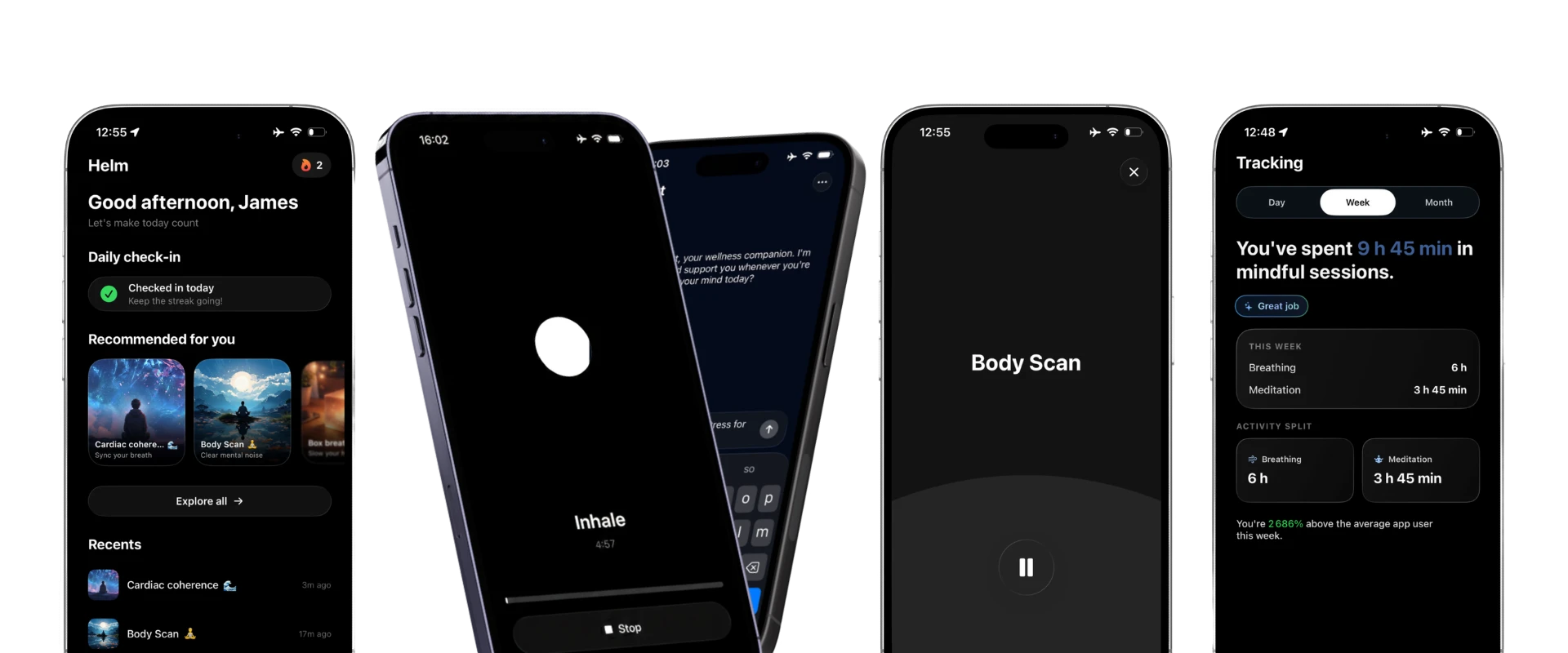
Over a few weeks, these small resets compound into a more stable baseline, better emotional regulation, and clearer focus when life gets loud. If you want a guided way to practice, try Helm, an iOS mental wellness app designed to manage stress and improve focus through guided breathing resets.
Extended exhale breathing is a reliable starting point. Inhale 4 seconds, exhale 6 to 8 seconds for 3 minutes, keeping the inhale gentle to avoid overbreathing.
Yes. Slow paced breathing, often around 5 to 6 breaths per minute, can enhance respiratory sinus arrhythmia and support autonomic flexibility, which commonly shows up as higher HRV.
Dizziness often comes from overbreathing and lowering carbon dioxide too quickly. Use smaller inhales, slow the pace, and focus on a longer, softer exhale until symptoms settle.
Some effects are immediate, but baseline change typically takes weeks. Practicing 3 to 5 minutes daily for 2 to 4 weeks often improves recovery time after stress and emotional reactivity.
Not always. Breath holds can feel activating and may be inappropriate during pregnancy or with certain cardiovascular or respiratory conditions. When in doubt, use gentle paced breathing without holds and consult a clinician.
Join thousands using Helm to manage stress, improve focus, and build lasting healthy habits.