HELM
The Helm Blog
Insights on nervous system regulation, mental clarity, and the science of optimal performance.
HELM
HELM
HELM
HELM
HELM
HELM
Insights on nervous system regulation, mental clarity, and the science of optimal performance.
Helm is the #1 app to optimize your mind, breathe better, and master your focus. Combine science-backed breathwork and meditation into your daily protocol to build resilience.
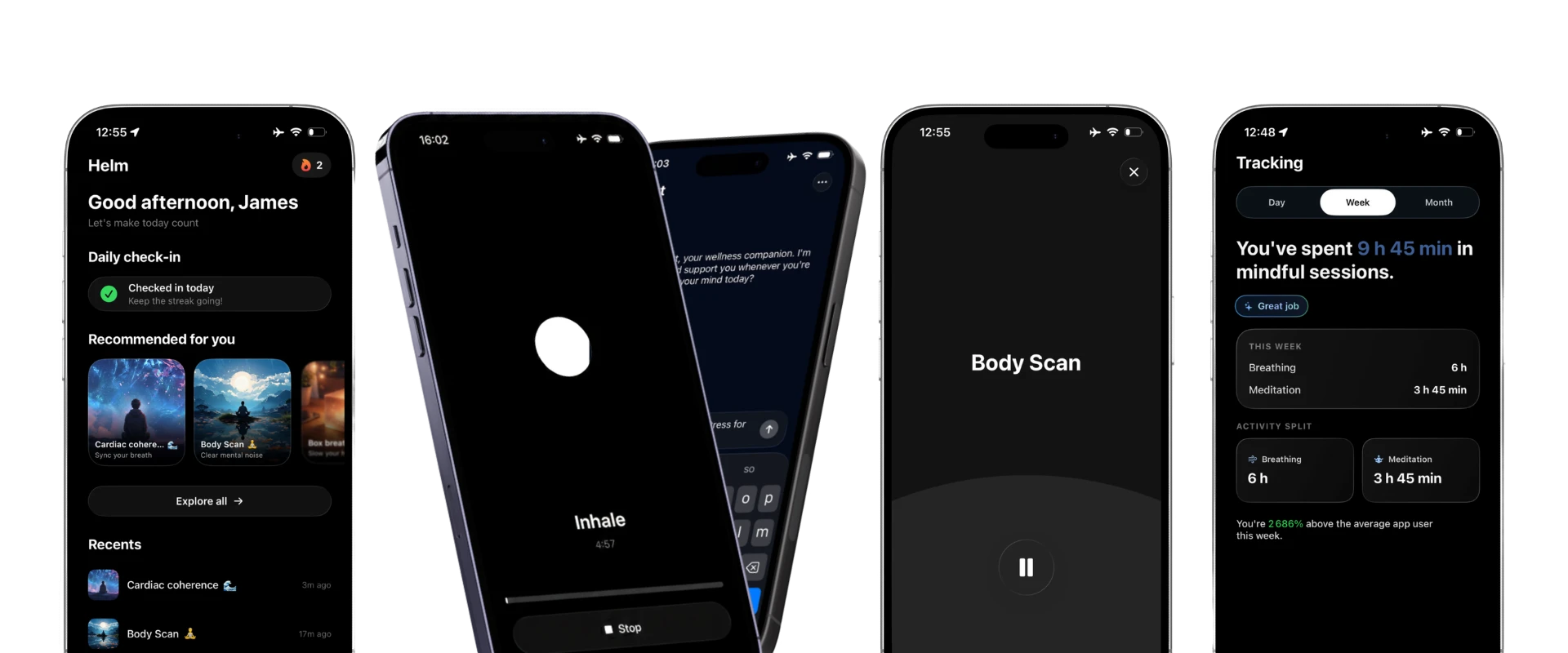
If you have ever felt your pulse race after a stressful email, a tough conversation, or a sudden wave of anxiety, you are not imagining it. Your body is doing what it is designed to do: shift into protection mode. The good news is that breathing is one of the few levers you can pull on purpose to signal safety and invite your heart rate down.
This guide focuses on the best breathing technique to lower heart rate for most people: slow, steady, nasal breathing at a comfortable pace that supports your baroreflex and vagal pathways. It is not about forcing huge inhales or “pushing through.” Instead, you will learn a repeatable method you can use at your desk, in traffic, before sleep, or during a stress spike. We will also cover why it works, what to do if it does not, and how to keep it safe.

When stress hits, your nervous system shifts toward sympathetic activation, releasing stress hormones and increasing heart rate and blood pressure. This is helpful for short bursts, but uncomfortable when it lingers. Your goal is not to “erase” stress, it is to change the signal your body is receiving.
Slow exhalation is especially powerful because it nudges the body toward parasympathetic activity, often described as “rest and digest.” This happens through vagal pathways and reflexes that regulate blood pressure and heart rhythm. Over time, practicing this can support higher heart rate variability (HRV), which is generally associated with better adaptability to stress.
Evidence supports that slow breathing can influence autonomic balance and HRV. A widely cited review in the medical literature describes how paced breathing can modulate autonomic function and cardiovascular dynamics, especially when breathing slows to around 4.5 to 6.5 breaths per minute (NIH, PubMed Central). That is the “sweet spot” many people feel as a settling sensation in the chest, throat, and belly.
If you want a deeper explanation of the mechanism and the “why” behind the method, the idea overlaps with cardiac coherence style breathing, which is designed to create a more ordered rhythm in the cardiovascular system. See cardiac coherence benefits explained for a practical breakdown.
For most readers, the most reliable option is coherent breathing: gentle nasal inhales and longer, unforced exhales, aiming for about 5 to 6 breaths per minute. It works because it is simple enough to stick with, and because it supports the reflexes that help regulate cardiovascular arousal.
The best technique is the one that keeps you relaxed while still being structured. If you feel air hunger, dizziness, tingling, or panic rising, the pace is too slow or the breaths are too big. The target is quiet breathing you can barely hear.
Here is the core idea:
This is not a performance. You are training a cue of safety. A helpful reference point from a clinical perspective is that deep breathing is commonly used as a relaxation skill to reduce stress responses (Cleveland Clinic). The “deep” part should come from the diaphragm, not from lifting the chest.
Use this when you notice your pulse climbing, you feel keyed up, or you want to downshift before sleep. The steps below are intentionally minimal because consistency beats intensity.
If 4 in and 6 out feels too slow, use 3 in and 4 out for the first week. If it feels too easy, do not force bigger breaths, keep the size small and extend the timing gradually.
During the first minute, it is normal to feel “busy” inside. By minutes two to four, many people notice a subtle drop in internal urgency. You might sigh or swallow as tension releases.
Stop and return to normal breathing if you feel chest pain, faintness, or worsening shortness of breath. Breathing practices are supportive tools, not substitutes for medical care. For general heart health context, the American Heart Association has clear guidance on understanding heart rate and what influences it (American Heart Association).
The best practice is the one you actually do when life is messy. To make this technique stick, attach it to predictable moments. For example, practice one 5-minute reset after lunch or right after you park your car at home. This builds a habit loop before you “need” it.
Use coherent breathing:
If you need something even faster during a spike, a single double inhale followed by a long exhale can be a quick bridge back to slow breathing. You can learn that approach in the physiological sigh for instant calm, then return to coherent breathing for longer stabilization.
Sometimes the heart rate does not fall quickly, even with good technique. Common reasons include over-breathing, high caffeine intake, dehydration, poor sleep, or unresolved emotional activation. Try these adjustments:
If anxiety is the main driver, pairing breathing with a grounding cue helps: feel your feet, name five things you see, or relax the tongue from the roof of the mouth. These cues reduce “threat scanning,” which keeps your pulse elevated.
Most healthy adults can practice slow breathing safely, but it should feel comfortable. Avoid intense breathwork styles that include prolonged breath holds or aggressive hyperventilation if your goal is lowering heart rate and calming the system.
Use extra caution and consider medical guidance if you have arrhythmias, uncontrolled high blood pressure, severe asthma or COPD, panic disorder with frequent hyperventilation, or you are pregnant. Start with shorter rounds and normal breathing breaks.
Seek urgent medical help if a rapid heart rate comes with chest pain, fainting, severe shortness of breath, or symptoms of stroke. Breathing tools are not appropriate for diagnosing serious conditions. For stress and anxiety education, the National Center for Complementary and Integrative Health provides an evidence-based overview of relaxation approaches, including breathing practices (NCCIH).
The best way to slow your pulse is usually not to “fight” your body, but to guide it. Coherent breathing works because it is gentle, repeatable, and built around longer exhales that signal safety. Start with 5 minutes at 4 seconds in and 6 seconds out, adjust the pace until it feels easy, and practice when you are calm so it is available when you are not.
Over time, this becomes more than a trick for stressful moments. It becomes a skill for recovery, sleep, and emotional steadiness, especially when paired with good hydration, less stimulant load, and consistent movement. If you want guided breathing resets on iOS, you can try Helm, an iOS mental wellness app designed to manage stress and improve focus through guided breathing resets.
A slightly longer exhale than inhale is usually fastest. Try 3 to 4 seconds in and 5 to 7 seconds out for 1 to 2 minutes, keeping the breath small and quiet.
Many people notice changes in 60 to 180 seconds, with a stronger effect around 5 minutes. If nothing changes, reduce breath size, extend the exhale gently, and check caffeine, dehydration, and anxiety triggers.
Nasal breathing is usually more calming because it slows airflow and encourages diaphragmatic movement. Mouth breathing can help temporarily if you are congested, but keep the exhale long and unforced.
Breathing can reduce stress-related palpitations by lowering arousal and improving autonomic balance. If palpitations are new, frequent, or paired with dizziness or chest pain, get medical evaluation.
That often means you are over-focusing or breathing too slowly or too deeply. Use a faster, smaller pace (for example 3 seconds in, 4 seconds out), then gradually slow down as your body feels safer.
Join thousands using Helm to manage stress, improve focus, and build lasting healthy habits.