HELM
The Helm Blog
Insights on nervous system regulation, mental clarity, and the science of optimal performance.
HELM
HELM
HELM
HELM
HELM
HELM
Insights on nervous system regulation, mental clarity, and the science of optimal performance.
Helm is the #1 app to optimize your mind, breathe better, and master your focus. Combine science-backed breathwork and meditation into your daily protocol to build resilience.
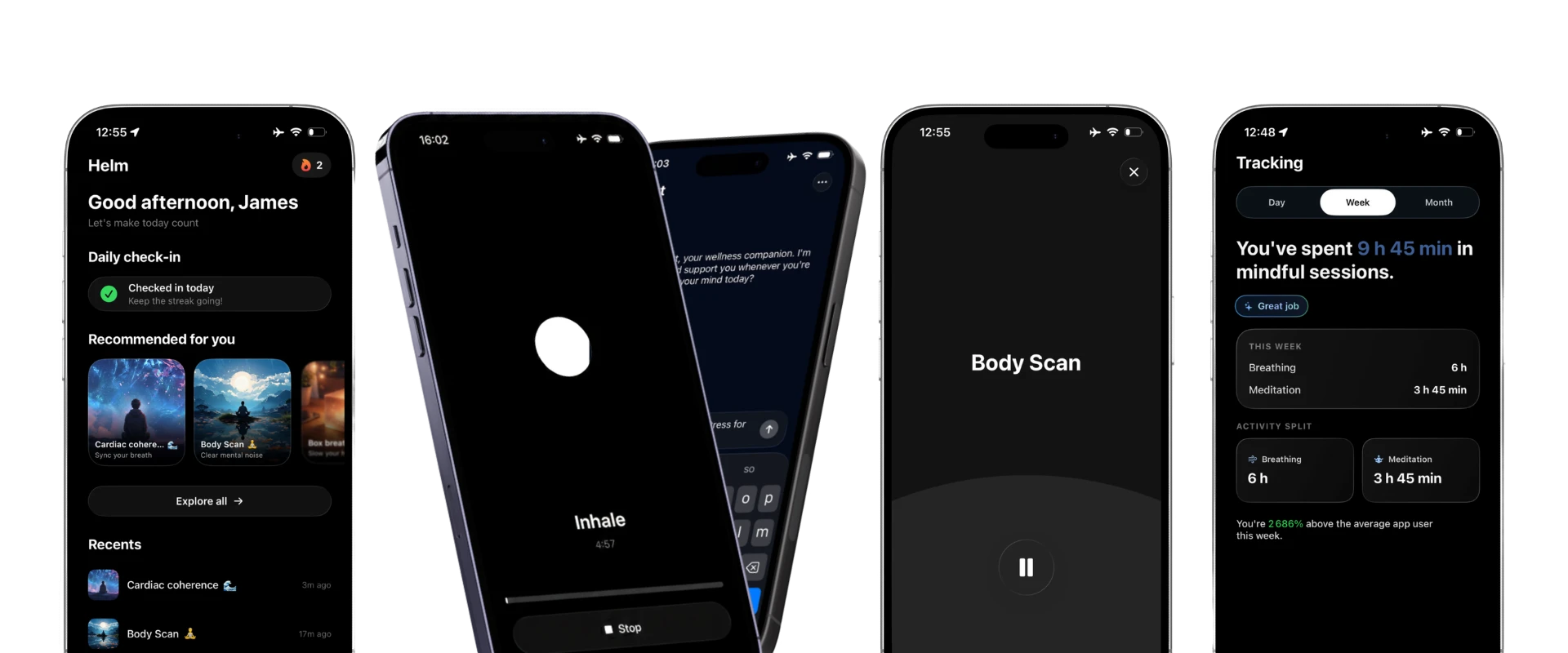
If you are searching for the best breathwork app 2026, the hardest part is not finding options. It is separating genuinely calming tools from polished products that feel busy, vague, or overly intense. A useful breathwork app should help you regulate your state in real life, not just impress you with slick visuals or endless session libraries. Good breath training is practical, easy to return to, and grounded in how stress actually shows up in the body.
The strongest options tend to support a few clear outcomes: quicker downshifts after stress, steadier focus during work, better transitions into sleep, and a growing sense that your breath is something you can rely on. That aligns with mainstream guidance on slow, diaphragmatic breathing and relaxation practices, which are often used to reduce stress and improve emotional regulation, as outlined in diaphragmatic breathing guidance and this overview of relaxation techniques.

A strong app does not try to do everything. It should do a few things exceptionally well: guide your pace, match the exercise to your goal, and help you build consistency without pressure. Clarity matters more than quantity. You want sessions labeled by outcome, such as calm, focus, sleep, or recovery, rather than vague mood words. You also want pacing that feels humane, with enough room to settle in before the pattern begins.
It also helps when the app teaches the why behind the exercise. Users stick with practices longer when they understand what inhale length, exhale length, and breath holds actually do. If you want a grounding primer, this piece on the science behind breathing exercises explains why certain rhythms feel calming while others feel activating. Education builds trust, and trust is what turns a one-off session into a dependable habit.
The other separator is friction. A helpful experience starts fast, remembers what worked for you, and lets you repeat favorite sessions easily. Too many taps, too many choices, or too much performance language can raise stress before the practice even begins. The best tools feel like a short path back to yourself.
Not every breath pattern belongs in every moment. That is where many people get stuck. If your mind is racing before a meeting, a structured pattern like box breathing can sharpen attention by creating predictable mental boundaries. If you feel flooded, though, long breath holds may be too stimulating. In that case, slower, smoother breathing with a longer exhale is often the better choice.
For daily regulation, coherent breathing is one of the most useful styles to look for. It usually means breathing at a steady, comfortable pace, often around five to six breaths per minute, which may support calm attention and heart rate variability. This coherent breathing guide for calm and focus is a good reference if you want to understand the rhythm before choosing an app. Simple patterns often work best because they are easier to repeat under real stress.
For sleep, the priority changes again. You usually want less activation, softer audio, dim visuals, and breathing that reduces effort rather than increasing it. Basic public health guidance on breathing exercise recommendations supports slow, controlled patterns over forceful methods for general wellness. If an app leans heavily on fast, cathartic, or highly intense sessions, it may be exciting, but it is probably not the right fit for every nervous system or every time of day.
A breathwork app should never assume all bodies respond the same way. Safety is a feature, not a disclaimer buried at the bottom of the screen. Beginners, people with panic sensitivity, trauma histories, respiratory conditions, or cardiovascular concerns often do better with gentler exercises that avoid long breath retention and aggressive over-breathing. If instructions make you strain, chase sensations, or override discomfort, that is a sign to back off.
The best experiences offer modifications from the start. Look for options to shorten sessions, skip holds, reduce pacing intensity, and practice seated instead of lying down if that feels safer. It is also worth noticing the tone of the guidance. Calm, plain language helps the body settle. Overly mystical or high-pressure framing can make people feel like they are failing if they do not feel immediate results. Accessibility includes emotional accessibility, not just font size and captions.
If the app also includes short mindfulness or body awareness components, that can be a plus. Breath alone is powerful, but some people regulate better when breathing is paired with attention training. Research summaries on meditation and stress reduction suggest that simple contemplative practices can complement breath-based routines, especially when the goal is not just relief but resilience.
You do not need a month to tell whether a breathwork app deserves a place in your routine. A short trial reveals a lot if you evaluate the right things.
By day seven, you should know whether the tool supports habit formation. The best option is rarely the one with the biggest library. It is the one you actually use when your shoulders are tight, your thoughts are scattered, and you need a reliable nervous system reset without extra decision fatigue.
The best breathwork app is not the loudest or most feature-heavy. It is the one that meets you at the right intensity, teaches patterns you can trust, and makes practice easy enough to repeat on ordinary days. Consistency beats novelty in breath training. If an app helps you move from overwhelm to steadiness in a few minutes, supports sleep without stimulation, and respects safety with clear modifications, that is the one worth keeping. In 2026, the smartest choice is less about trend and more about fit: your goals, your body, your schedule, and your tolerance for complexity. If you want a gentle place to start, try Helm, an iOS mental wellness app designed to manage stress and improve focus through guided breathing resets.
For most beginners, slow breathing with a comfortable exhale is the safest place to start. Avoid intense hyperventilation or long holds until you know how your body responds.
Yes, sometimes within minutes, especially if the app uses simple, low-effort breathing patterns. It works best for situational anxiety, not as a stand-alone solution for severe or persistent symptoms.
A daily practice of 5 to 10 minutes is enough for most people. Short sessions are easier to maintain and often more effective than occasional long sessions.
Look for gentle pacing, minimal stimulation, and longer exhale options. Soft audio, dim visuals, and easy repeat access also make a big difference at night.
Join thousands using Helm to manage stress, improve focus, and build lasting healthy habits.