HELM
The Helm Blog
Insights on nervous system regulation, mental clarity, and the science of optimal performance.
HELM
HELM
HELM
HELM
HELM
HELM
Insights on nervous system regulation, mental clarity, and the science of optimal performance.
Helm is the #1 app to optimize your mind, breathe better, and master your focus. Combine science-backed breathwork and meditation into your daily protocol to build resilience.
If you are searching for how to get energy without caffeine, the goal is not to “force” alertness, it is to reduce friction in your biology so energy can show up on its own. Most fatigue is not a character flaw. It is a signal that your nervous system, sleep pressure, blood sugar, or attention systems are out of sync.
Caffeine can feel like a quick fix because it blocks the sensation of sleepiness, but it does not replace sleep, movement, or recovery. For many people it also increases jittery urgency, which burns focus faster. A non-caffeinated approach aims for calm alertness: steady oxygen delivery, stable glucose, good light cues for your circadian rhythm, and short “state shifts” that reset attention.
This guide gives you practical levers you can use in 2 minutes, 10 minutes, and daily habits, so you can feel awake without feeling wired.

Your daytime energy is driven by two big forces: sleep pressure (how long you have been awake) and your circadian rhythm (your internal clock). When either is off, you get the classic mid-morning fog or afternoon slump even if you “slept enough.” Public health guidance on sleep duration is a useful baseline, but individual needs vary with stress load and activity level (sleep duration guidance).
Another common driver is glucose volatility. A fast, carb-heavy breakfast can spike glucose, then drop it, and that drop can feel like sudden sleepiness and cravings. Add dehydration, and you get a double hit: lower blood volume and a brain that interprets that as “downshift.” Even mild dehydration is associated with worse mood and lower vigilance, especially in warm rooms or after exercise.
Finally, attention itself burns fuel. Constant task switching, notifications, and emotional stress create cognitive load, which your body experiences as effort. When stress is high, your breathing often becomes shallow and fast, which can reinforce a sympathetic, on-edge state. That state can look like energy, but it is usually anxiety in disguise, and it is hard to sustain.
If you want a reliable lift without stimulants, stack the basics first. These work because they target circadian signaling, circulation, and arousal regulation rather than willpower.
Morning light tells your brain it is daytime, which supports earlier melatonin offset and better alertness. If you can, get outside within an hour of waking, even on cloudy days, and look toward a distant horizon for 1 to 3 minutes. If you are indoors, open blinds and move closer to a window. A practical overview of how circadian rhythms respond to light is summarized in clinical references like this one (circadian rhythm basics).
A full glass of water upon waking and another mid-morning can improve perceived energy and mental clarity, particularly if you tend to forget fluids. If you sweat a lot or your diet is very low in salt, consider pairing water with a balanced meal rather than chugging plain water all day. Your aim is steady hydration, not extremes.
Movement is a fast, underused energy switch because it increases blood flow, CO2 clearance, and temperature. You do not need a workout. You need a brief change in posture and muscle activation, especially if you sit.
Try this 5-step, 10-minute reset (set a timer, keep it simple):
This works best when you treat it as state hygiene, not punishment.
Breathing is not just relaxation. It is a lever on heart rate variability, vagal tone, and attention. When you slow the exhale, you tend to increase parasympathetic influence, which can create calm alertness, the kind that sustains deep work.
A simple starting point is a 5 to 6 breaths-per-minute pace with a slightly longer exhale. If you want a clear walkthrough, use this 5-minute coherent breathing practice for calm and focus and notice whether your mind feels quieter but sharper afterward. The key is comfort and consistency, not forcing big breaths.
Mechanistically, slow breathing is associated with shifts in autonomic balance and can improve measures related to stress regulation. Reviews and clinical discussions often summarize these effects, including changes in vagal activity and respiratory sinus arrhythmia (paced breathing and autonomic function).
Use this when you are foggy but do not want jittery urgency.
You are training steady CO2 tolerance and attentional control, which often reads as more energy. If you feel lightheaded, reduce volume and return to normal breathing.
Food is not only fuel, it is a signal. Energy without caffeine becomes much easier when meals support stable glucose and predictable appetite.
If mornings feel slow, aim for protein plus fiber, and keep ultra-sugary options for occasional treats. A practical template is 20 to 30 g protein, a high-fiber carbohydrate, and some fat. Examples include eggs with vegetables and oats, or yogurt with seeds and berries. The goal is stable energy, not a perfect diet.
Many people crash after lunch because of meal size, composition, and circadian timing. Try a slightly smaller lunch with a short walk afterward. If you can nap, keep it short. Evidence reviews suggest brief naps can improve alertness, while longer naps increase sleep inertia for some people (short nap performance effects).
A good rule of thumb is 10 to 20 minutes, earlier than mid-afternoon if possible. If you wake groggy, shorten the nap and add a 2-minute walk in daylight.
Your brain often waits for urgency. Instead, schedule a 25 to 50 minute block for your most important task earlier in the day, then reward yourself with a break. This reduces the stress cycle that drives reactive fatigue. If you want a complementary skill set, pair your breath reset with simple attention training like mindfulness.
Quick fixes work better when they sit on a stable base: sleep timing, stress regulation, and realistic workloads. Think of this as energy budgeting, not optimization.
A consistent wake time tends to stabilize circadian rhythm more than a perfect bedtime. If you are rebuilding sleep, keep wake time steady for 10 to 14 days, then adjust bedtime gradually. This supports morning alertness and evening wind-down.
When stress rises, your body narrows attention and speeds breathing. That can feel like energy, but it often degrades decision quality. Use a 60 to 120 second downshift before replying, presenting, or switching tasks. This is where a practiced routine matters. If you want a fast protocol library, this guide on how to calm your nervous system when stress spikes fits naturally into the same “energy without stimulants” approach.
If you use intense exercise, loud music, or highly activating content, place it earlier in the day. Later, favor downshifts: a slower walk, stretching, longer exhales, and lower light. This protects sleep quality, which is the foundation that makes caffeine-free energy possible.
Use these three signals to adjust your plan:
Over time, your energy becomes less about pushing and more about removing the drains.
Sustainable energy is rarely missing motivation. It is usually missing alignment: light that tells your brain it is daytime, movement that restores circulation, meals that prevent glucose swings, and breathing that stabilizes your nervous system. When you combine these, you stop chasing alertness and start building it.
If you only take one step today, do a 10-minute reset: drink water, get daylight, walk briskly, then breathe with a longer exhale. That sequence reliably creates calm, usable energy without the spike and crash pattern.
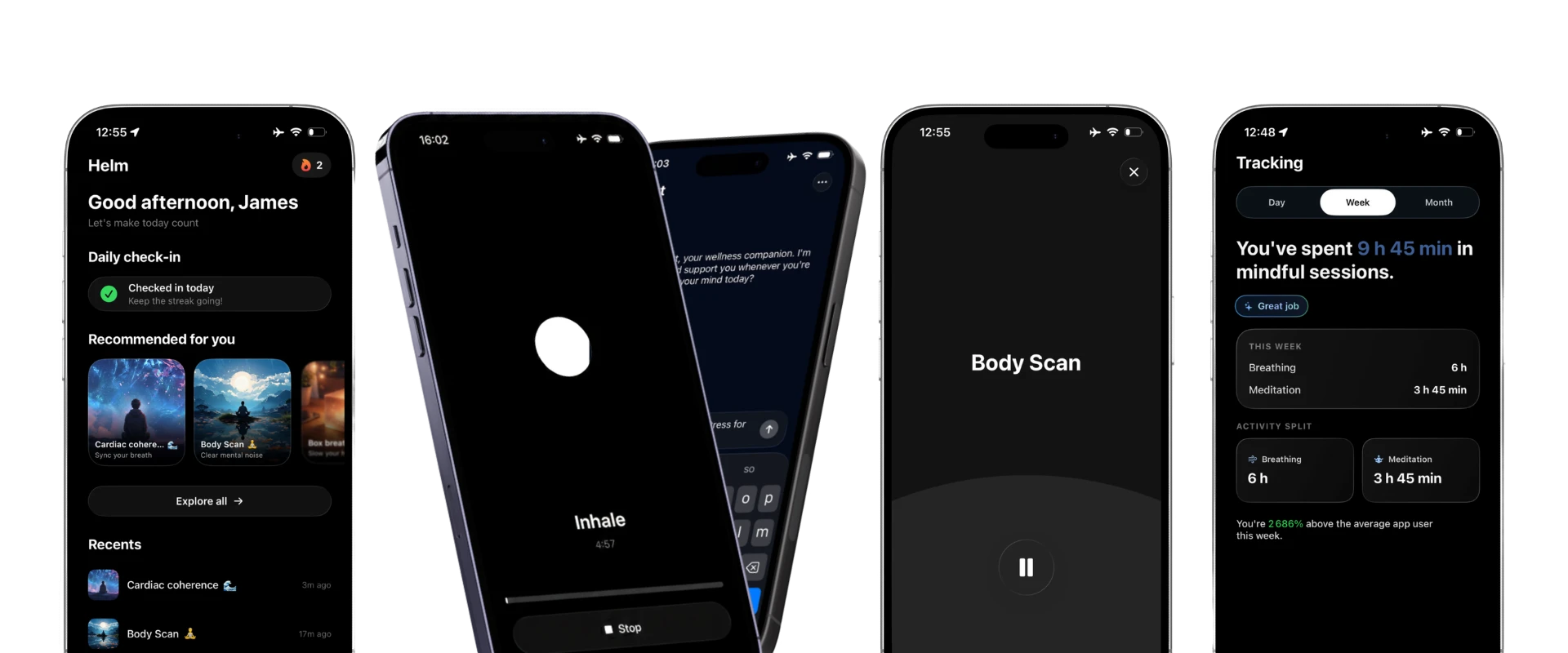
If you want guided breathing resets in your pocket, try Helm, an iOS mental wellness app designed to manage stress and improve focus through guided breathing resets.
Use outdoor light plus 2 to 5 minutes of movement first, then water and a protein-forward breakfast. This sequence improves alertness faster than scrolling or snacking.
Aim for a 10-minute walk after lunch and a smaller, protein-balanced meal. If possible, add a 10 to 20 minute nap, then get brief daylight to clear grogginess.
Yes, when it creates calm alertness by regulating arousal and attention. Exhale-lengthening breathing can reduce stress-driven fatigue and make focus easier, especially during mental overload.
Protect one or two deep work blocks early, limit task switching, and use 2-minute posture and breath resets between meetings. Stable meals and hydration prevent low-grade fatigue from stacking.
Prioritize protein, fiber, and minimally processed carbs to avoid spikes and crashes. Pair fruit with protein or fat, and keep very sugary snacks for occasional use, not your main fuel.
Join thousands using Helm to manage stress, improve focus, and build lasting healthy habits.