HELM
The Helm Blog
Insights on nervous system regulation, mental clarity, and the science of optimal performance.
HELM
HELM
HELM
HELM
HELM
HELM
Insights on nervous system regulation, mental clarity, and the science of optimal performance.
Helm is the #1 app to optimize your mind, breathe better, and master your focus. Combine science-backed breathwork and meditation into your daily protocol to build resilience.
Cortisol gets a bad reputation, but it is really your body’s mobilize-and-focus hormone. You need it to wake up, think clearly, and respond to real challenges. The issue is not cortisol itself, it is cortisol that stays high too long, or spikes too often, in a way that leaves you wired, tired, and reactive.
If you are looking for how to calm cortisol levels naturally, start by thinking in systems: your breathing patterns, your light and sleep timing, your blood sugar stability, and how quickly you can come down after stress. None of these require extreme protocols. Small, repeatable cues tell the brain and body, “we are safe now,” so cortisol can do its job and then stand down.
Below is a practical approach that blends physiology with real life, so you can feel steadier during the day and recover more fully at night.

Cortisol is produced through the HPA axis, a feedback loop between the brain and adrenal glands that helps regulate energy availability, immune activity, and alertness. It naturally follows a daily rhythm, generally higher in the morning and lower at night. When that rhythm gets distorted, you may notice sleep disruption, cravings, irritability, and a “can’t relax” feeling.
Notably, “high cortisol” is not always the right frame. Many people have normal lab values but still experience stress symptoms because their nervous system is stuck in a higher state of threat. Cortisol is only one part of the stress response, along with adrenaline, heart rate, and inflammatory signaling. A useful goal is improving recovery capacity, so the whole system returns to baseline faster.
For a clear medical overview of what cortisol does and what influences it, see this explainer from the Cleveland Clinic, which also highlights how sleep, illness, and chronic stress can shift cortisol patterns.
Breathing is the most direct way to influence state because it is both automatic and controllable. Slow, steady breathing increases parasympathetic activity, improves heart rate variability, and sends a bottom-up signal of safety. Over time, this helps reduce the “false alarm” pattern where small stressors trigger outsized physiological arousal.
A key detail is mechanics. If you breathe high in the chest, with frequent sighing or breath holding, your body may interpret that as effort or threat. If you breathe lower and slower, you reinforce efficient gas exchange and calmer signaling. If you want a simple self-check and technique guide, see our breakdown of diaphragmatic breathing vs chest breathing.
Research supports this state shift. A large review discusses how slow breathing practices can modulate autonomic function and stress-related physiology, including vagal pathways and emotional regulation, in this open-access paper on the NIH site.
Practical target: aim for nasal breathing when possible and an exhale that is slightly longer than the inhale. You do not need to chase a perfect number. What matters is the felt sense of smoothness, quiet, and continuity.
If breath is your “in the moment” tool, timing is your baseline tool. Cortisol rhythm is strongly influenced by light exposure, sleep timing, meal timing, and training intensity. The goal is not perfection, it is consistent cues that your body can predict.
Here are five high-impact timing anchors:
If sleep has been fragile, treat it as a cortisol intervention. Stress and sleep have a two-way relationship, and fragmented sleep can amplify next-day reactivity. This summary from the Sleep Foundation on stress and sleep is a helpful starting point for understanding that loop.
A cortisol spike is not always wrong, but you want a reliable off-switch. Think of this as training “return to baseline” rather than trying to never feel stress. The most effective tools are short, specific, and easy to repeat under pressure, so your brain learns stress is survivable and temporary.
Try this 60 to 90 second protocol the next time you feel keyed up:
If you want the mechanics and timing for the first step, our guide to the physiological sigh for instant calm explains why it works so quickly for many people.
The deeper skill is repetition. When you practice these resets even on “medium stress” days, you build state flexibility. That flexibility is what keeps cortisol from staying elevated after the stressor has passed.
Lifestyle levers matter because cortisol is also a metabolic hormone. Blood sugar swings, under-eating, dehydration, and alcohol can each increase physiological strain, especially when paired with poor sleep. A steady approach tends to beat an extreme one, because it reduces the number of daily stress inputs.
Start with the basics: eat protein and fiber early enough that you are not running on stress chemistry alone, and avoid long stretches of unintentional fasting if it makes you feel shaky or irritable. Hydration and electrolytes support cardiovascular stability, which can reduce the “heart racing” sensations that your brain interprets as threat.
Movement should include both challenge and recovery. Strength work and moderate cardio can improve resilience, but chronic all-out intensity with inadequate rest is a common way people unintentionally stay in a higher stress state. Balance harder days with walking, mobility, or low-intensity cardio that emphasizes nasal breathing and a long exhale.
Finally, do not underestimate social safety. Warm connection, laughter, and even brief supportive contact can downshift threat signaling. Stress biology is not purely individual, it is relational. Building small, repeatable moments of felt safety is a legitimate cortisol strategy.
Cortisol is designed to rise and fall. When you feel stuck in high gear, the most useful question is not “How do I eliminate stress?” but “How do I return to baseline faster?” Start with a breathing pattern that signals safety, then support it with consistent timing: morning light, sensible caffeine, exercise you can recover from, and a predictable wind-down. Keep your nutrition steady, reduce avoidable blood sugar crashes, and treat recovery like training.
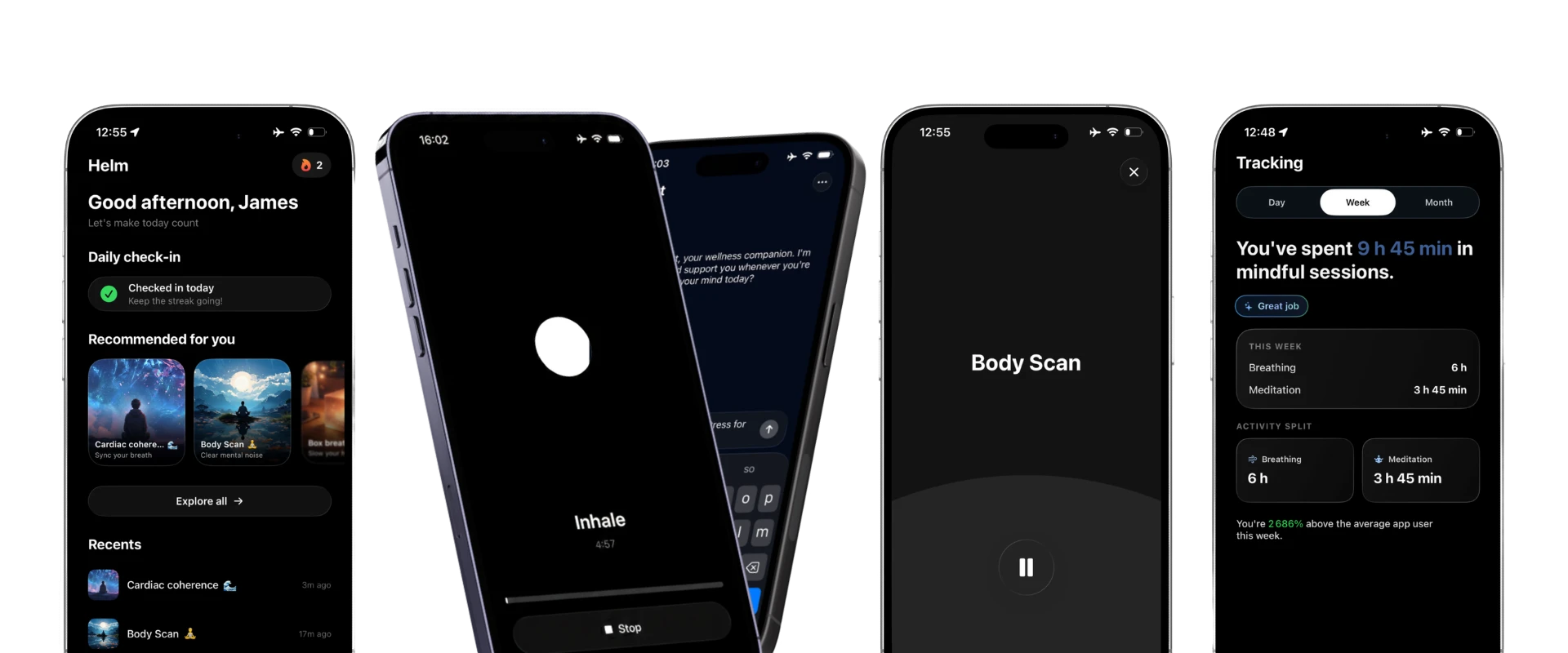
If you practice short resets daily, your nervous system learns a new default, calmer without losing drive. If you want guided breathing resets on your phone, try Helm, an iOS mental wellness app designed to manage stress and improve focus through guided breathing resets.
Use a consistent wind-down: dim lights, reduce intense content, and do 3 to 5 minutes of slow nasal breathing with a longer exhale, then keep the bedroom cool and dark.
A physiological sigh followed by one minute of slow nasal breathing often works fast because it lowers arousal and improves ventilation efficiency, making it easier for the body to exit a threat state.
Yes, especially high intensity with poor recovery. Choose recoverable training, add longer warm-downs, and avoid stacking hard workouts on short sleep or under-eating days.
Prioritize protein, fiber, and steady meals that prevent crashes. Minimize heavy late-night meals and alcohol if they disrupt sleep, since sleep loss can amplify next-day stress reactivity.
Some people feel calmer within days from better breathing and sleep timing, but baseline shifts usually take weeks of consistent cues. Focus on repeatable habits, not perfection.
Join thousands using Helm to manage stress, improve focus, and build lasting healthy habits.