HELM
The Helm Blog
Insights on nervous system regulation, mental clarity, and the science of optimal performance.
HELM
HELM
HELM
HELM
HELM
HELM
Insights on nervous system regulation, mental clarity, and the science of optimal performance.
Helm is the #1 app to optimize your mind, breathe better, and master your focus. Combine science-backed breathwork and meditation into your daily protocol to build resilience.
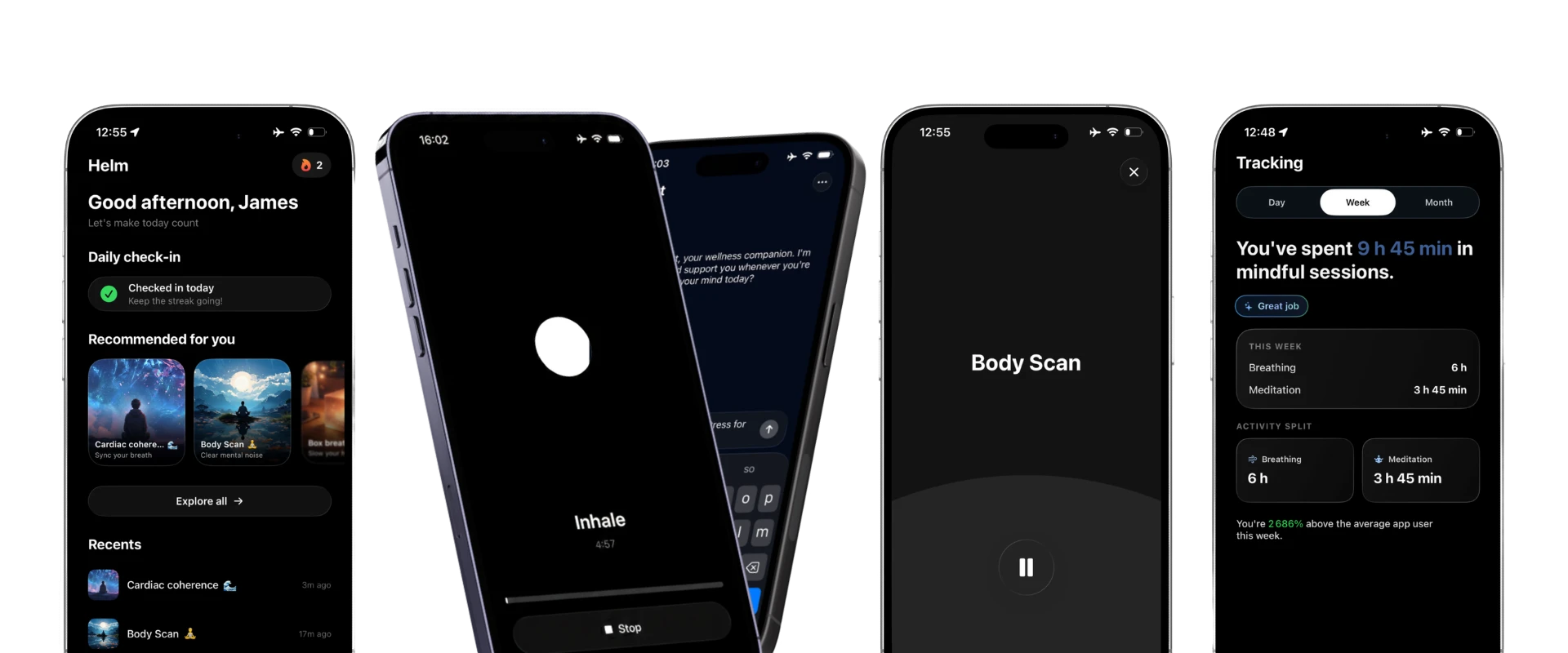
Cardiac coherence breathing is a simple paced-breathing method that helps your body shift from stress reactivity to steadier regulation. Think of it as rhythm training for your nervous system, not a hack and not a performance test. When you breathe at a slow, even cadence, you create smoother patterns in heart rate variability, the natural beat-to-beat changes that reflect how flexibly your system responds to life.
This matters because stress is rarely just “in your head.” It is a whole-body signal, shaped by the balance between sympathetic activation (mobilize) and parasympathetic recovery (restore). Cardiac coherence aims to support that balance with a repeatable pattern, usually around 5 to 6 breaths per minute, paired with a relaxed, attentive mindset.
In the next few minutes, you will learn what is happening under the hood, how to practice in a way that is sustainable, and how to avoid the common traps that make people feel lightheaded or frustrated.

Cardiac coherence is often described as a state where breathing, heart rhythm patterns, and attention become more synchronized. The practical goal is not perfection, it is predictability: a steady inhale, a steady exhale, and a calm point of focus.
Physiologically, slow, regular breathing influences a reflex loop that links respiration, blood pressure, and heart rhythm. This is one reason paced breathing is studied for autonomic regulation and emotional self-management. When the exhale is unhurried, many people feel a downshift in arousal that is noticeable within a few minutes.
A helpful way to frame it is “resonance.” At certain slow breathing rates, the cardiovascular system shows larger, smoother oscillations, which some researchers associate with improved baroreflex function and more adaptive heart rate variability patterns. If you want a deeper primer on the effects and use cases, see cardiac coherence benefits explained.
For readers who like to check primary sources, a widely cited overview of slow breathing and autonomic pathways is available in this review on slow breathing and autonomic balance. Another accessible research summary on heart rate variability biofeedback and paced breathing is here: clinical review on HRV biofeedback mechanisms.
The best routine is the one you will actually repeat. Start easier than you think you need to, because consistency beats intensity for nervous system training.
If 5 and 5 feels too slow, use 4 and 4. If it feels too fast, try 6 and 6, but only if you can keep the breath light. The right pace is the one that feels steady and sustainable, not the one that looks impressive.
You may notice your mind wandering. That is normal. Each time you return to the count, you are practicing attention regulation alongside physiology. If you want another angle on pacing and timing, this coherent breathing guide for calm and focus can help you refine your rhythm.
Cardiac coherence breathing is most useful in moments that are “too much, too fast.” It can create a pause between stimulus and reaction, especially when your body wants to rush.
Before a high-stakes conversation, you may feel fewer stress spikes in your chest and throat. That is often a sign your arousal curve is flattening, not disappearing. During an afternoon slump, the steady rhythm can reduce mental noise and support clearer next-step thinking. For some people, it helps with sleep onset when practiced earlier in the evening, since late-night effortful breath control can backfire.
What you notice varies, but these are common:
These are not guarantees, and the goal is not to chase sensations. Your target is a repeatable state shift you can access on demand.
If you are curious about the evidence base beyond the basics, this research overview on resonance breathing and HRV patterns is a solid place to start.
Most problems come from trying too hard. Over-breathing is the number one issue, and it can feel like dizziness, tingling, or a sense that you cannot get a satisfying breath.
Fix: keep the breath quiet and small. Imagine you are “sipping” air rather than filling up. Volume matters as much as tempo.
Fix: let the exhale be long but easy. If you feel strain in your belly or throat, reduce the count to 4 seconds. Ease is the signal your system trusts.
Fix: transition smoothly with no pause. Breath holds can be useful in other contexts, but coherence practice usually works best as a continuous wave. Continuity supports rhythm.
Fix: add a “neutral reps” session once per day. A calm baseline practice builds the skill so it is available under pressure. Train it like a reflex, not a rescue.
If you are pregnant, have a history of fainting, panic episodes that escalate with interoception, or significant cardiovascular or respiratory conditions, consider professional guidance before making this a daily practice. Stop if you feel unwell. A good practice leaves you steadier, not depleted.
You do not need long sessions to get value. What you need is repetition that fits your life. A tiny plan done often beats a big plan done rarely.
Try this for one week:
Place it where it naturally belongs: after brushing teeth, after shutting a laptop, or right before a commute. Context cues create habits. Over time, you can experiment with slight timing changes, but keep the structure stable so your nervous system learns what to expect.
Cardiac coherence breathing works because it is simple, rhythmic, and repeatable, and those qualities are exactly what a stressed nervous system responds to. You are giving your body a steady pattern to organize around, and that often translates into calmer emotions, clearer thinking, and fewer stress spikes.
Keep the breath light, avoid forcing the exhale, and practice briefly when you are not in crisis so the technique is available when you are. Five minutes is enough to feel a shift, and a week of consistent reps is enough to notice whether it belongs in your daily toolkit.
Try Helm, an iOS mental wellness app designed to manage stress and improve focus through guided breathing resets.
Most people do well around 5 seconds in and 5 seconds out. Use a slower count only if you can stay relaxed and avoid air hunger or strain.
It can reduce physiological arousal within minutes by slowing breathing and supporting steadier heart rhythm patterns. It is not a cure, but it is a reliable short reset for many people.
Lightheadedness often comes from breathing too deeply or too quickly, which can lower carbon dioxide levels. Make the breaths smaller, keep the pace comfortable, and stop if symptoms persist.
They are different. Box breathing uses equal sides with brief pauses, while cardiac coherence is usually continuous with no holds. Coherence tends to feel gentler for ongoing regulation.
Aim for 5 minutes daily for at least a week. Many people notice immediate calming, but the more meaningful changes come from consistent practice over several weeks.
Join thousands using Helm to manage stress, improve focus, and build lasting healthy habits.