HELM
The Helm Blog
Insights on nervous system regulation, mental clarity, and the science of optimal performance.
HELM
HELM
HELM
HELM
HELM
HELM
Insights on nervous system regulation, mental clarity, and the science of optimal performance.
Helm is the #1 app to optimize your mind, breathe better, and master your focus. Combine science-backed breathwork and meditation into your daily protocol to build resilience.
The best app for somatic healing and breathwork is usually the one that helps you feel safer in your body, not the one with the most intense sessions or the biggest library. For most people, the right choice offers gentle pacing, body-based cues, short sessions, and clear ways to pause or stop if activation rises too fast.
That matters because somatic healing is not just about taking deeper breaths. It is about learning how to notice sensation, regulate arousal, and build tolerance for presence without overwhelming the nervous system. A good app should support that process with simple guidance, flexible session lengths, and a tone that feels grounded rather than performative. If you are comparing options, look less at flashy claims and more at whether the experience feels trauma-aware, physically calming, and easy to return to consistently.

The first thing to look for is trauma-informed design. In practice, that means sessions that invite rather than command, explain what to expect, and offer choices like eyes open, seated, or shorter rounds. The best somatic tools understand that regulation often happens through small, repeatable inputs. This aligns with the core principles of a trauma-informed approach from SAMHSA, which emphasize safety, trust, collaboration, and empowerment. If an app constantly pushes catharsis, breakthrough language, or emotional intensity, it may be a poor fit for body-based healing.
The second feature is clear interoceptive guidance. Good instruction helps you notice what is happening in your chest, belly, jaw, shoulders, and heartbeat without turning the session into a performance. You want cues like soften, lengthen, notice, and rest, not just inhale bigger. That is what separates basic breathing content from an actual somatic experience. If you want a feel for what this approach can sound like, this guide to somatic breathwork for calming your body shows the kind of grounded direction that supports body awareness.
Third, pay attention to breathing style and pacing. Slow, steady breathing has growing support for downshifting stress physiology, especially when exhales are easy and unforced. A review indexed on PubMed notes that slow breathing may influence autonomic balance, emotional regulation, and stress response. In an app, that means useful sessions often stay in a sustainable range, avoid extreme breath holds for beginners, and build intensity only when appropriate.
Finally, the best option will support real-world consistency. Look for sessions in the 3 to 10 minute range, check-ins that help you notice state changes, and categories based on need, such as grounding, release, sleep, or focus. Somatic healing is usually less about doing one huge session and more about doing the right small practice at the right time.
A common mistake is choosing an app that treats every user like an advanced breathwork practitioner. Somatic healing requires titration, which means working in manageable doses. If the app jumps straight into rapid breathing, long holds, or emotionally intense music without context, that is a sign the platform may prioritize stimulation over regulation.
Watch for these red flags:
Another red flag is too much complexity too soon. You should not need to memorize ten techniques before you can benefit. The best somatic apps make it obvious what to do when you feel wired, flat, restless, or disconnected. Simple navigation matters because decision fatigue can make regulation harder, especially when stress is already high.
A smart way to choose is to run a seven-day usability test on your own nervous system. Do not judge the app by how impressive it sounds. Judge it by how your body responds before, during, and after practice. The right platform should help you feel more settled, more aware, or more connected, even if the shift is subtle.
If you want a quick screening question, ask this: Would I trust this app on a hard day? If the answer is no, keep looking. The best choice is not the one that sounds the most advanced. It is the one you would actually use when your system feels overloaded, numb, or scattered.
This kind of app can be especially helpful for people dealing with chronic stress, anxiety, shutdown, emotional numbness, or difficulty feeling present in the body. It can also support people who already know that insight alone does not change state. Somatic practices help bridge that gap by working through breath, sensation, posture, and attention. Even basic techniques like belly breathing, as explained by Cleveland Clinic, can make a noticeable difference when practiced consistently.
That said, more intense breathwork is not right for everyone. If you have a history of trauma, panic attacks, asthma, pregnancy, seizures, or cardiovascular issues, choose gentler sessions and consult a qualified clinician if you are unsure. Somatic healing should expand capacity, not flood it. A high-quality app respects that by offering calm entry points, clear warnings, and alternatives for days when breathing deeply feels like too much.
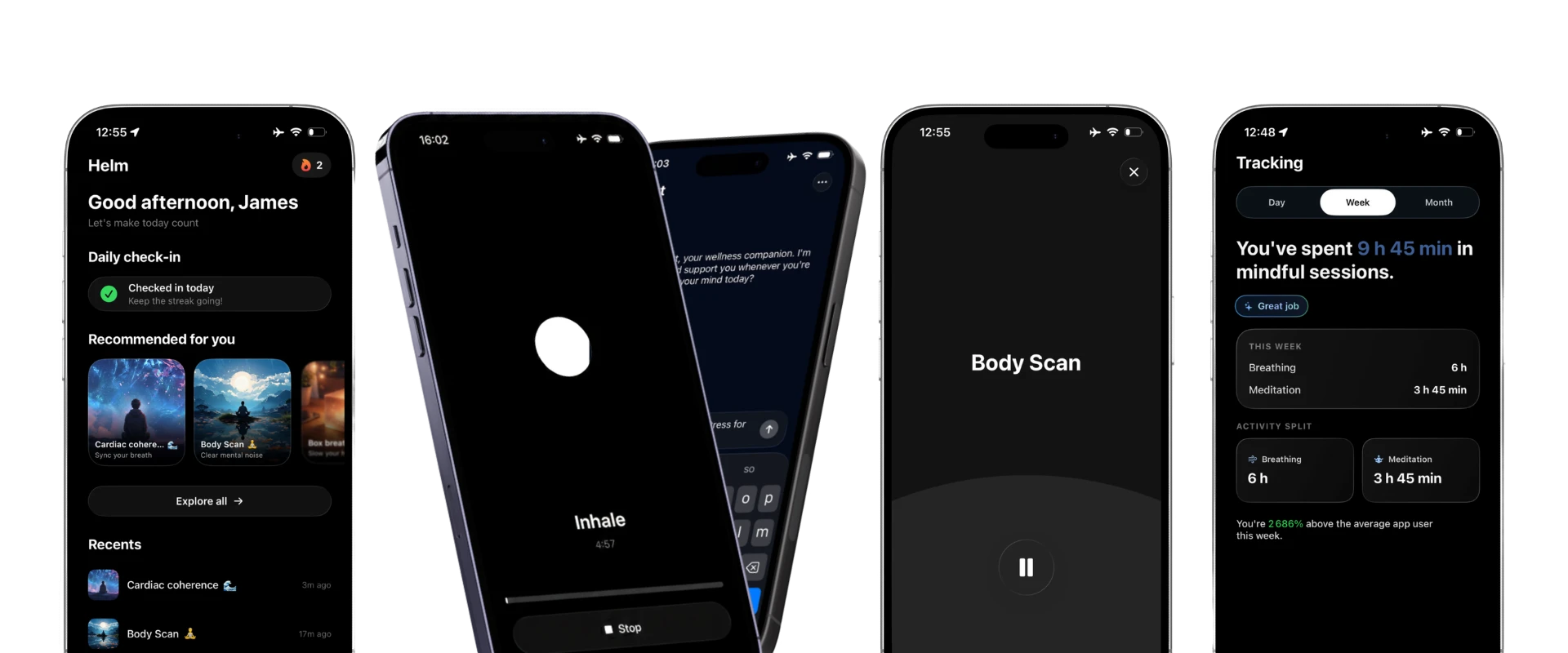
The real test of a somatic breathwork app is not whether it feels trendy. It is whether it helps you return to your body with more safety, more choice, and more regulation. The best option will guide you gently, keep the instructions clear, and make it easy to adapt the practice to your state in the moment. If you are comparing tools, prioritize trauma-informed pacing, simple body awareness cues, short sessions, and a low-pressure experience over novelty. The app that supports repeatable calm will usually do more for long-term healing than the app that promises a dramatic breakthrough. If you want a gentle starting point, you can try Helm, an iOS mental wellness app designed to manage stress and improve focus through guided breathing resets.
Slow, gentle breathwork is usually best to start. Practices that emphasize long, easy exhales, body awareness, and choice tend to support regulation better than intense rapid breathing for most beginners.
Yes, sometimes, but it depends on the design and your needs. An app can support grounding and self-regulation, but it is not a replacement for trauma therapy when symptoms are severe or persistent.
A few signs are dizziness, tingling, panic, pressure in the chest, or feeling emotionally flooded after sessions. If that happens repeatedly, switch to shorter and gentler practices or stop using that app.
Yes, if it feels supportive. Daily use can help build familiarity and nervous system patterns, but short consistent sessions are usually more useful than pushing through a long practice when your body resists.
Often, yes for beginners. Guided breathing gives your attention a concrete anchor in the body, which can feel more accessible than sitting in silence when you are stressed, numb, or easily distracted.
Join thousands using Helm to manage stress, improve focus, and build lasting healthy habits.