HELM
The Helm Blog
Insights on nervous system regulation, mental clarity, and the science of optimal performance.
HELM
HELM
HELM
HELM
HELM
HELM
Insights on nervous system regulation, mental clarity, and the science of optimal performance.
Helm is the #1 app to optimize your mind, breathe better, and master your focus. Combine science-backed breathwork and meditation into your daily protocol to build resilience.
Somatic breathwork is a body-led way of breathing that uses felt sensation as feedback. Instead of forcing calm with positive thinking, you track where stress lives in your chest, belly, jaw, throat, or shoulders and let the breath gently reorganize those patterns. Done well, it is less about a single perfect technique and more about building safety and awareness in real time.
If you tend to overthink, numb out, or feel stuck in a stress loop, somatic approaches can be especially useful because they start with what your nervous system is already doing. You will learn how to notice subtle cues, choose a pace that supports regulation, and practice in a way that is steady, grounded, and realistic for busy days.

Somatic breathwork combines breathing patterns with body awareness. The key difference is the goal: you are not chasing a special state, you are updating your nervous system by staying connected to internal signals like temperature, pressure, tightness, tingling, or emotion.
In practical terms, it often includes three ingredients: interoception, pacing, and permission. Interoception means noticing what is happening inside you. Pacing means choosing breath speed and intensity that match your current capacity. Permission means letting the body unwind in small increments, rather than trying to push through.
You can think of it as a conversation: your body speaks in sensations, and the breath answers by creating space. If you feel your chest gripping, you might lengthen the exhale. If you feel disconnected, you might slow down and emphasize gentle nasal breathing. Over time, this improves your ability to detect stress early and respond before it spikes.
Stress is not only a mental story, it is a physiological state. When your system senses threat, breathing often becomes faster and shallower, muscles brace, and attention narrows. Somatic breathwork works because the breath is one of the few levers you can use intentionally that still reaches automatic functions.
Slow, controlled breathing can support parasympathetic activity and help quiet the stress response. Harvard Health summarizes how breath control can quell an overactive stress response and promote relaxation in a way that is accessible and teachable for most people (Harvard Health).
Somatic breathwork also helps you map your patterns. Many people discover a consistent “signature” of stress, like a locked jaw, a high tight chest, or a frozen belly. If you want a deeper look at mechanisms like carbon dioxide tolerance, attention, and downshifting in minutes, read the science behind breathing exercises, which connects the dots between technique and nervous system change.
A helpful reframe is this: your breath is not just air, it is information to the brain and body. By practicing small, repeatable shifts, you teach your system that activation can resolve, and that sensations can move without becoming overwhelming.
This routine is intentionally simple. The point is to leave you feeling more resourced, not wiped out. Use a light-to-moderate intensity, and keep your breathing quiet enough that it would not draw attention in a public space.
For many people, the sweet spot is 5 to 6 breaths per minute, which is often used in heart rate variability training. Research reviews describe how slow breathing can influence autonomic regulation and increase vagal-related variability (PubMed overview). If you feel lightheaded, that is a sign to reduce intensity, breathe normally, and shorten practice next time.
Somatic breathwork is generally gentle, but safety matters because breathing can shift physiology quickly. You should prioritize stability and consent over intensity, especially if you have a history of panic, trauma symptoms, or medical conditions that affect breathing.
Use extra caution, or seek clinical guidance, if you are pregnant, have uncontrolled high blood pressure, significant cardiac or respiratory illness, seizures, or a history of fainting. Also be careful with any technique that involves breath holds or rapid breathing, which can provoke symptoms in sensitive nervous systems.
A practical safety checklist:
For evidence-based guidance on relaxation practices and how they can support stress management, see the National Center for Complementary and Integrative Health overview of relaxation techniques (NCCIH).
The biggest gains come from consistency, not long sessions. Think in terms of state shifts you can repeat: 60 seconds before a meeting, 2 minutes after an argument, or 3 minutes before sleep. The nervous system learns through repetition and predictability.
Try linking breath to an existing cue. For example, every time you wash your hands, take three slow exhales and soften your jaw. Every time you open your laptop, feel both feet and take one longer exhale. These tiny practices build interoceptive skill and make regulation more automatic.
When stress spikes, your goal is not perfect calm, it is creating enough space to choose your next step. If you want targeted strategies for those moments, read fast ways to calm your nervous system when stress spikes, then pair one tool with the 6-minute routine above.
A final nuance: if you tend to dissociate, go slower and emphasize contact points, like the chair under you. If you tend to ruminate, keep attention anchored in sensation and exhale length. In both cases, the most effective somatic breathwork is the version you can keep doing.
Somatic breathwork works because it meets stress where it lives, in the body, and uses the breath as a steady signal of safety. The win is not a dramatic breakthrough, it is reliable regulation you can access in ordinary moments. Start with the 6-minute routine, keep the intensity modest, and track small markers of change like softer shoulders, warmer hands, or an easier swallow. If strong sensations or memories show up, slow down, orient to your environment, and prioritize stability, then consider working with a qualified professional for support. If you want guided breathing resets on your phone, try Helm, an iOS mental wellness app designed to manage stress and improve focus through guided breathing resets.
Yes, when practiced gently, it can reduce physiological activation by training longer exhales and body awareness. If anxiety escalates during practice, shorten sessions, avoid breath holds, and return to natural breathing.
Regular exercises focus on the pattern, while somatic breathwork prioritizes tracking sensations and nervous system cues. The breath is adjusted based on what you feel, not just a timer or a strict count.
It can, especially with a trauma-informed approach that emphasizes choice, pacing, and safety. Avoid intense, cathartic styles without proper support, and consider professional guidance if practice triggers overwhelm.
Aim for 4 to 6 days per week, even 3 to 6 minutes. Consistency builds faster recognition of stress signals and makes downshifting easier during real-life triggers.
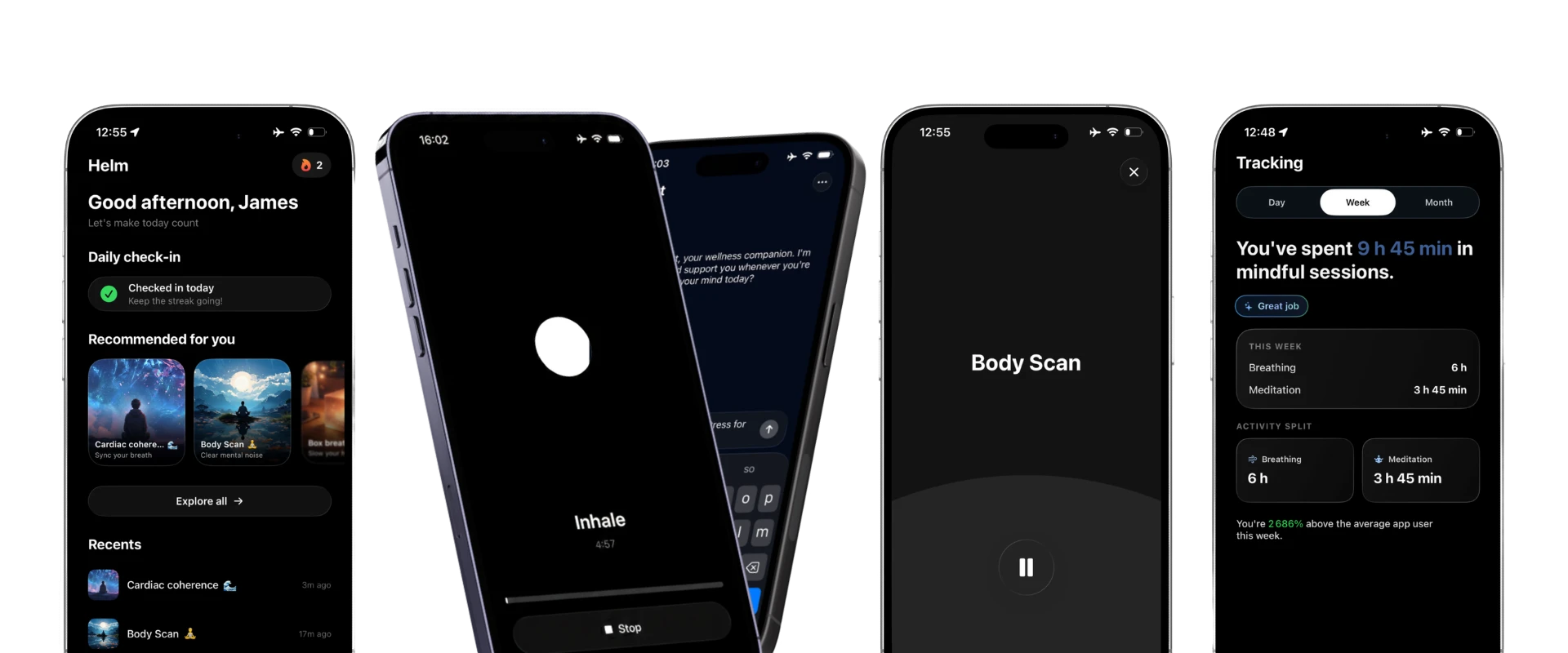
Join thousands using Helm to manage stress, improve focus, and build lasting healthy habits.