HELM
The Helm Blog
Insights on nervous system regulation, mental clarity, and the science of optimal performance.
HELM
HELM
HELM
HELM
HELM
HELM
Insights on nervous system regulation, mental clarity, and the science of optimal performance.
Helm is the #1 app to optimize your mind, breathe better, and master your focus. Combine science-backed breathwork and meditation into your daily protocol to build resilience.
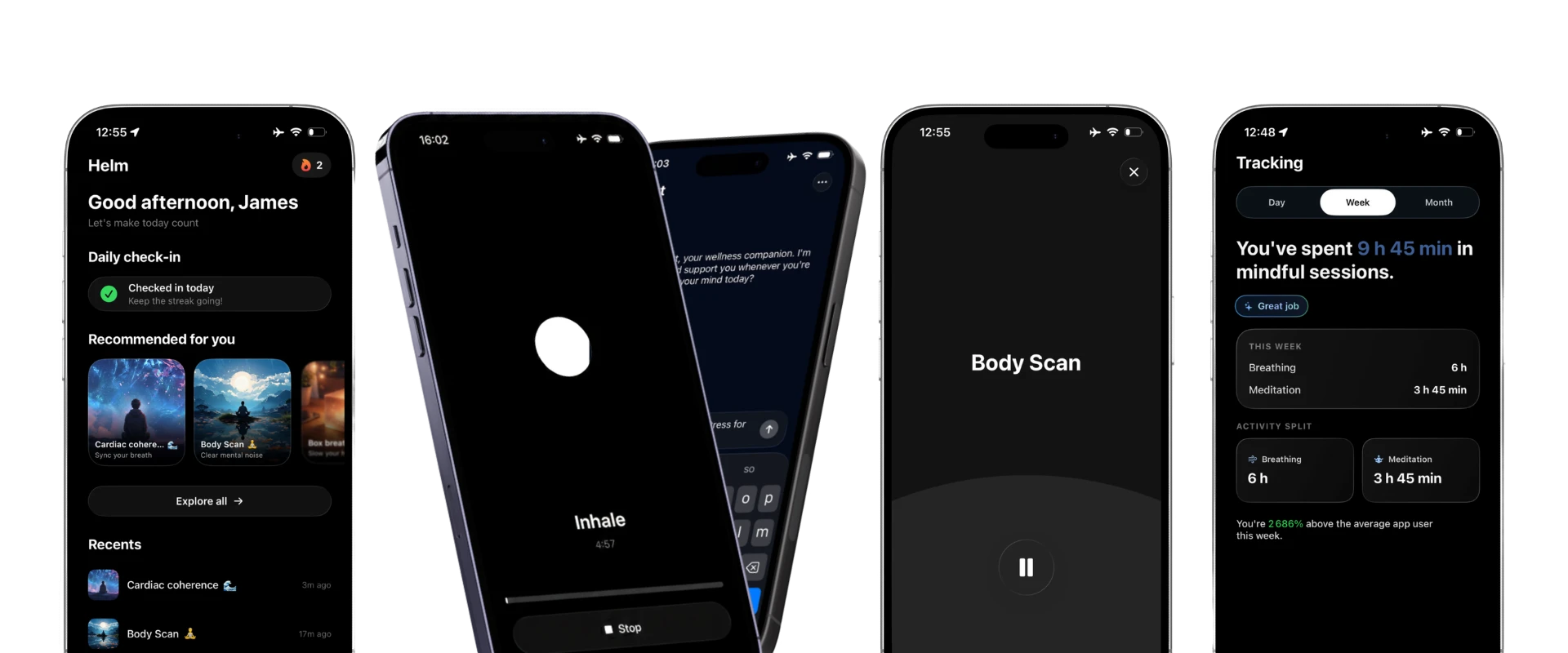
The best breathing app for apple watch is usually not the one with the biggest content library. It is the one you can open in seconds, follow without staring at a screen, and trust when stress is already rising. For most people, that means clear haptic pacing, short guided sessions, simple controls, and enough personalization to support calm, focus, or sleep.
A good wrist-based breathing tool should feel like less friction, not more self-optimization. The watch format changes what matters. On a phone, long classes and lots of options can feel useful. On your wrist, speed matters more. If you need six taps, a bright animation, or constant phone pairing, you probably will not use it when you need it most. Research on slow breathing suggests it can support autonomic regulation and reduce stress markers, especially when the pace is comfortable and repeatable, not forced or extreme, according to this review in Frontiers in Human Neuroscience.

A watch is strongest when you need a fast, low-cognitive-load reset. In real life, stress rarely arrives when you are ready for a 10-minute practice. It shows up before a meeting, after a tough message, during a commute, or right before bed when your mind will not settle. In those moments, the best experience is one you can feel, not one you have to keep looking at.
That is why haptics matter so much. Gentle taps can guide inhale and exhale timing while your eyes stay on the road, your notes, or the room around you. This makes the practice more discreet and often more sustainable. It also supports state change without social awkwardness, which is a real adoption factor people underestimate.
A watch app is not always the best place for deep education or long breathwork journeys. It shines as an in-the-moment tool for consistency. If you want the calming effect described by Cleveland Clinic's overview of diaphragmatic breathing, your device should make the technique easy to repeat, not more complicated to access.
When people search for the best option, they often compare visuals or price first. A better approach is to judge moment-to-moment usability.
Fast start. You should be able to launch a session within one or two taps. If setup takes longer than your willingness to pause, the habit dies early.
Haptic pacing. Vibrations should clearly mark inhale, exhale, and any holds. This is the difference between a wrist tool and a tiny phone screen strapped to your arm.
Phone-free usefulness. The app should still be practical when your phone is not in hand. For walks, meetings, and bedtime, independence matters.
Adjustable session length. Some days you need 60 seconds, other days 5 minutes. A rigid timer often breaks the real-life use case.
Context, not data overload. Heart rate trends, reminders, and streaks can help, but only if they support the practice. Too many metrics can make breathing feel like another task to fail.
The best apps on a watch feel quiet, immediate, and almost invisible. They remove decisions. They do not ask you to become a power user before you can take one calmer breath.
If your main goal is stress relief, look for short sessions with a longer exhale and minimal setup. In an anxious moment, the app should guide you quickly back toward a steadier rhythm. If that is your use case, it helps to understand how to calm your nervous system when stress spikes, because the app is only as helpful as the pattern it delivers.
If your goal is focus, look for steady pacing rather than sleepy language. You want enough structure to narrow attention without making you drowsy. A watch format works especially well for simple rhythms like coherent breathing, where consistency matters more than novelty. This pairs well with a deeper understanding of coherent breathing for calm and focus.
If your goal is sleep, choose an app that avoids bright visuals, aggressive reminders, and stimulating achievement cues. A softer pace, a dim interface, and silent haptics can make the difference between winding down and getting more alert. The NCCIH overview of relaxation techniques supports what many users already notice: simple, repeatable relaxation practices work best when they are easy to stick with.
The first red flag is complexity disguised as personalization. If you need onboarding quizzes, multiple menus, or too many settings before your first session, the product is solving the wrong problem. Breathing support should lower mental effort, especially when you are already overloaded.
The second red flag is intensity. Some tools push breathing as if harder is always better. It is not. If a session makes you lightheaded, tense, or air hungry, that is not a sign of progress. It usually means the pacing is too aggressive for your current state. Gentle, sustainable guidance beats dramatic sensations every time.
The third red flag is reward systems that raise pressure instead of lowering it. Constant streak alerts, performance scores, and guilt-heavy notifications can turn a calming habit into another source of stress. A useful watch app should invite practice, not punish inconsistency.
Before keeping any app, run a short real-world habit test.
After three days, the right choice is usually obvious. You are not looking for the app with the most features. You are looking for the one that creates the least resistance to daily use. If it fits your wrist, your routine, and your nervous system, you will know quickly.
The best breathing app for apple watch is the one that helps you breathe more consistently in real life, not the one that looks most impressive in screenshots. Prioritize fast access, haptic guidance, flexible session length, and a tone that matches your goal, whether that is stress relief, focus, or better sleep. Skip anything that adds friction, pushes intensity, or turns a restorative habit into performance tracking.
A good wrist-based practice should feel simple enough to use under pressure and gentle enough to repeat daily. If you want a more guided next step, you can also try Helm, an iOS mental wellness app designed to manage stress and improve focus through guided breathing resets.
Yes, they can help, especially when they make slow, steady breathing easy to start in the moment. The benefit usually comes from consistent practice and low friction, not from fancy features.
The most important features are fast launch, clear haptic pacing, phone-free use, and adjustable session length. On a watch, speed and simplicity beat variety for most people.
It depends. A watch app is often enough for short resets during the day, but a phone app may still be better for education, longer sessions, and building a deeper routine.
Yes, if it offers slower pacing, quiet cues, and a non-stimulating interface. It works best as part of a wind-down routine, not as a last-second fix after an activating evening.
If you feel dizzy, strained, or more anxious, the pace is probably too aggressive. A better rhythm should feel manageable, grounding, and easy to continue for several rounds.
Join thousands using Helm to manage stress, improve focus, and build lasting healthy habits.