HELM
The Helm Blog
Insights on nervous system regulation, mental clarity, and the science of optimal performance.
HELM
HELM
HELM
HELM
HELM
HELM
Insights on nervous system regulation, mental clarity, and the science of optimal performance.
Helm is the #1 app to optimize your mind, breathe better, and master your focus. Combine science-backed breathwork and meditation into your daily protocol to build resilience.
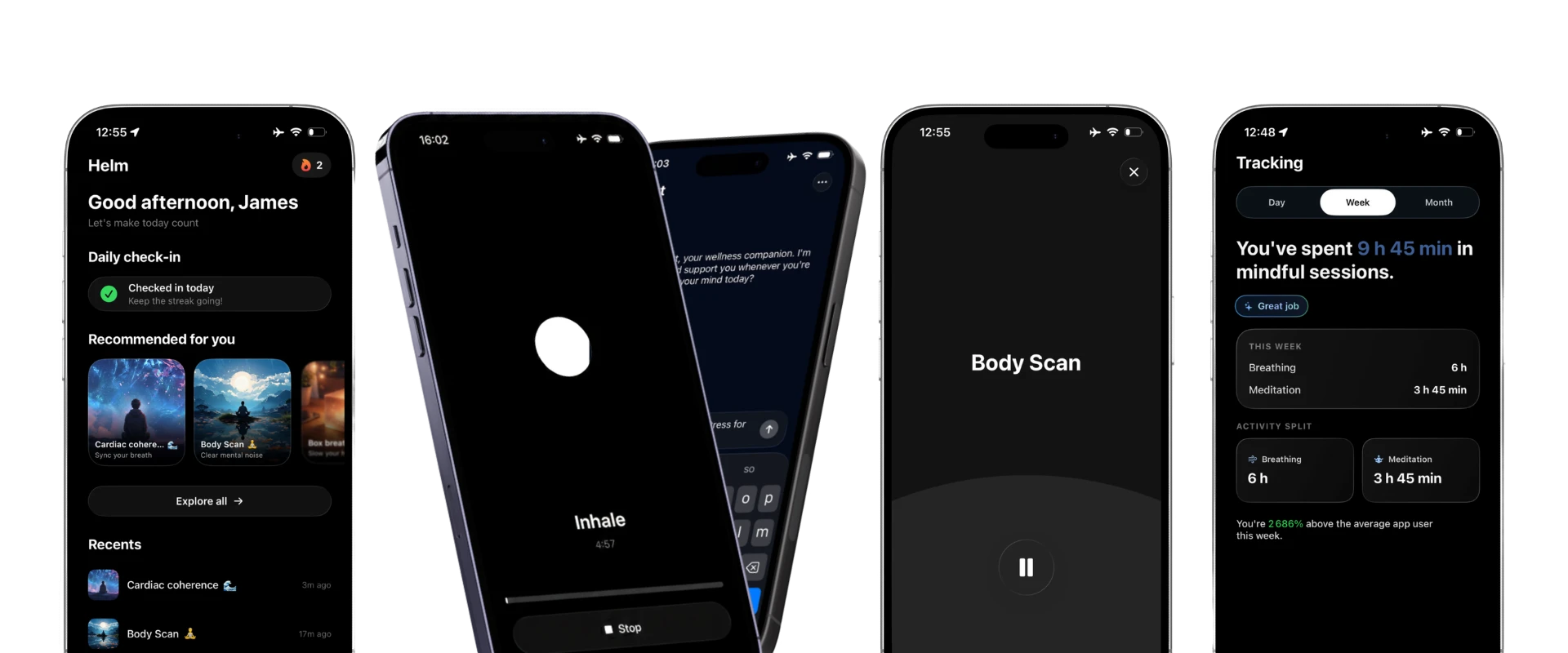
The best meditation app for men 2026 is usually the one that fits real life: short sessions, clear outcomes, low friction, and guidance that helps with stress, focus, sleep, or emotional regulation. Men are more likely to keep using an app when it feels practical instead of vague, and when progress is easy to notice within the first week. If you are comparing options, prioritize habit fit over content volume.
That matters because meditation is not just about feeling calm in the moment. Done consistently, it can support stress reduction, attention, and emotional resilience. Research summaries on meditation suggest modest but meaningful benefits for stress and mood when practice is sustained, according to the national overview of meditation safety and effectiveness and a large review of meditation programs for stress and wellbeing. The catch is simple: the best app is the one you will still open on a hard Tuesday, not the one with the flashiest promise.

For many men, adherence comes down to three things: speed, clarity, and relevance. A strong app removes hesitation by helping you start fast, choose a goal fast, and finish feeling like something shifted. That usually means guided sessions in the 3 to 10 minute range, goal-based tracks, and a tone that feels grounded rather than performative.
It also helps when the app respects how stress often shows up in men. Some need help winding down at night. Others need to interrupt irritability, mental overdrive, or that keyed-up feeling that makes deep breathing surprisingly hard. The most useful tools often combine meditation with breath pacing, body awareness, and brief coaching, instead of assuming silent sitting will work for everyone on day one.
In 2026, the strongest meditation apps are less about giant libraries and more about smart guidance at the moment you need it. Look for a clean home screen, fast-start options, and pathways based on goal, such as stress, better sleep, sharper focus, or recovery after conflict. Men tend to drop off when every session sounds similar or when the app asks for too much time too early.
Features worth prioritizing include breath-led resets, short body scans, structured sleep audio, and coaching that explains why a technique works. Stress education matters too, because understanding the body often increases follow-through. If you are constantly overloaded, even a good tool can fail when it adds choice fatigue. That is why less can be more. Good design should lower stress, not create it. Broader mental health guidance consistently points to reducing chronic stress load through practical daily habits, as covered in this overview of how stress affects mind and body.
One more feature now deserves a closer look: progress signals. You do not need endless metrics, but some form of feedback helps motivation. That might be streaks you can ignore without shame, check-ins that track how you felt before and after, or simple prompts that help you notice patterns in sleep, tension, and concentration.
If your main goal is stress relief, choose an app that starts with short, body-first sessions rather than long silent meditations. Stress spikes respond better to immediacy: paced breathing, grounding cues, and direct nervous system downshifts. If that is your biggest challenge, this guide on fast ways to calm your nervous system when stress spikes pairs well with an app that emphasizes rapid resets.
If your goal is focus, avoid apps built mostly around sleep content or abstract philosophy. Attention improves with structure, so look for brief sessions that help you settle before work, reset between tasks, or recover after distraction. Focus users usually do better with specific prompts, timed practices, and minimal audio clutter.
If sleep is the priority, pick an app with a real wind-down path, not just a few bedtime tracks. Good sleep support feels sequential: slower breathing, reduced stimulation, and gentle guidance that fades as you get drowsy. Sleep-oriented mindfulness can help some people fall asleep faster and reduce bedtime arousal, as explained in this evidence-based overview of meditation for sleep.
The biggest red flag is overload. When an app opens with hundreds of choices, vague categories, and no clear first step, motivation leaks out immediately. Another common problem is tone. If the language feels overly polished, guilt-based, or disconnected from everyday stress, many men will assume the tool is not for them and never build a habit.
Another issue is mismatch between need and method. Someone who is restless, tense, or mentally flooded may not respond well to long open-ended meditation right away. A more structured approach often works better at first, especially for workday use. If your main problem is concentration, short guided sessions like the ones discussed in meditation for focus at work are often easier to stick with than abstract mindfulness lessons.
Finally, be cautious with apps that promise transformation but hide the basics. You should know what the method is, how long a session takes, and what result it is trying to create. Clarity builds trust, and trust is what turns occasional use into a steady routine.
Before you commit, use a simple filter. The right app should make the first session obvious, not confusing.
After that, test it for three days instead of judging it on day one. A fair trial reveals fit faster than endless comparison. Notice whether you return to it when stressed, whether the sessions feel too passive or just right, and whether the app gives you tools you can use without it. That last point matters most. The best meditation app for men in 2026 should not create dependence. It should build skill.
Choosing well is less about chasing the biggest name and more about finding a tool that matches your actual pattern of stress, attention, sleep, and motivation. Men usually benefit most from meditation apps that are concise, practical, and easy to re-enter after missed days. If an app helps you start quickly, feel a real shift, and understand why the practice works, it is probably a strong fit.
Keep your standards simple: low friction, clear goals, and guidance you will use when life is messy, not just when you are already calm. If you want a simple place to begin, try Helm, an iOS mental wellness app designed to manage stress and improve focus through guided breathing resets.
The best type is a beginner-friendly app with short sessions, clear goals, and practical guidance. Most men new to meditation do better with 3 to 10 minute sessions than with long silent practices.
It depends on the goal. Breath-led apps are often better for fast stress relief, while meditation-first apps can be stronger for sleep, attention training, and emotional awareness over time.
Yes, for many people they can. The biggest benefit comes from regular use, especially when the app includes structured guidance for breathing, body awareness, and short daily practice.
Three to seven days is usually enough for a first decision. You are not testing enlightenment, just whether the app is easy to start, relevant to your goal, and helpful enough to reuse under real stress.
Join thousands using Helm to manage stress, improve focus, and build lasting healthy habits.