HELM
The Helm Blog
Insights on nervous system regulation, mental clarity, and the science of optimal performance.
HELM
HELM
HELM
HELM
HELM
HELM
Insights on nervous system regulation, mental clarity, and the science of optimal performance.
Helm is the #1 app to optimize your mind, breathe better, and master your focus. Combine science-backed breathwork and meditation into your daily protocol to build resilience.
If you are searching for how to regulate your nervous system quickly, you probably do not want a long theory lesson. You want your body to stop feeling like it is on high alert. Quick regulation does not mean you erase stress. It means you shift your state enough to think clearly, speak more steadily, and choose your next step without being hijacked.
In practical terms, you are aiming to reduce sympathetic activation (fight or flight) and increase parasympathetic tone (rest and digest), even slightly. The fastest levers tend to be breath rhythm, exhale length, muscle tone in the face and throat, and where you place attention. With repetition, these become reliable, portable skills instead of one-off hacks.

Nervous system regulation is your capacity to move between activation and rest without getting stuck. When your system is balanced, you can meet a challenge, then come down again. When it is dysregulated, you may feel wired, numb, or reactive, even when you “know” you are safe.
A helpful frame is the “window of tolerance,” a term used in trauma-informed care to describe the zone where you can process experience without becoming overwhelmed or shut down. Stress can push you above that window (anxiety, anger, panic) or below it (freeze, collapse, disconnection). Regulation skills widen the window over time and help you return to it faster.
It also helps to know what you are targeting. Slow, steady breathing can influence heart rate variability and blood pressure reflexes. The American Psychological Association describes how stress affects the body and why recovery practices matter for long-term health and performance (APA overview of stress effects). That is the big picture. Next is what to do in the moment.
This is a simple protocol you can do seated, standing, or even in a restroom stall. The goal is downshifting arousal without forcing a big emotional change.
If you want a specific micro-technique for rapid relief, the double-inhale, long-exhale pattern is widely used because it can quickly reduce air hunger and tension. You can learn the exact steps in this guide to the physiological sigh for instant calm.
For safety: keep it gentle. If you feel dizzy, tingling, or panicky, return to normal breathing and focus on orienting your eyes to the room.
Breath is effective because it is both automatic and controllable. When you change breathing rhythm, you send bottom-up cues to brainstem centers that influence heart rate and arousal. A strong baseline practice is coherent breathing, typically around 5 to 6 breaths per minute, because it supports steadier physiology without aggressive breath holds.
Try this for 3 to 5 minutes: inhale 5 seconds, exhale 5 seconds, nasal breathing if possible, shoulders loose. Keep the breath smooth rather than deep. Over-breathing is a common mistake, and it can increase symptoms. The key is slow and light, not big.
Research on slow breathing shows measurable effects on autonomic function and cardiovascular variability, which is one reason it is used in many clinical and performance settings (review of slow breathing and autonomic effects). If you are in an acute spike, pair slow breathing with a grounding cue like feeling both feet and noticing pressure points.
If you want a broader toolkit for sudden spikes, this companion guide on how to calm your nervous system when stress spikes offers additional options for different situations (work, conflict, nighttime worry).
Sometimes breathwork is not the first door to walk through. If you have a history of panic, breath sensitivity, or you are already hyperventilating, breathing changes can feel threatening. In those moments, use somatic anchors that lower arousal indirectly.
Start with contact and weight. Press your hands together for 10 seconds, then release slowly. Or push your feet into the floor as if making footprints, then soften. This uses muscle contraction and release to signal completion and safety.
Next, try temperature and pace. Splash cool water on your face, or hold something cool against the cheeks for 15 to 30 seconds. Slow your movements down by 10 percent, especially your head and hands. These cues reduce urgency and help your system exit “must act now.”
Finally, use rhythm. Gentle tapping left-right on your upper arms, slow rocking, or walking at a steady cadence can be regulating through predictable sensation. Many people find this easier than “thinking calming thoughts” in the heat of a trigger.
Quick regulation works best when it is paired with prevention. If you are constantly getting re-triggered, it is not a character flaw. It often means your baseline load is high: poor sleep, relentless screen time, dehydration, conflict, or too much caffeine. Regulation skills still help, but the nervous system will keep sounding the alarm if the inputs never change.
A practical approach is to reduce friction around recovery. Build small downshifts into transitions: after meetings, before driving, after difficult conversations. Think in terms of state hygiene, not perfection.
Also consider when to get extra support. If you have frequent panic attacks, trauma symptoms, or anxiety that interferes with daily life, professional care is appropriate. The National Institute of Mental Health outlines symptoms and treatment pathways for anxiety disorders (NIMH anxiety information). Regulation tools can complement therapy, but they should not be your only line of defense.
One more reframe: your body may be responding to uncertainty, not danger. In that case, regulation is less about “calming down” and more about creating enough stability to take one clear next action.
Regulating quickly is a skill set: orient to the present, soften facial tension, and use a longer exhale to signal safety. In acute moments, two minutes is enough to reduce intensity and restore choice. Over time, consistent practice widens your window of tolerance, so fewer things tip you into fight, flight, freeze, or shutdown.
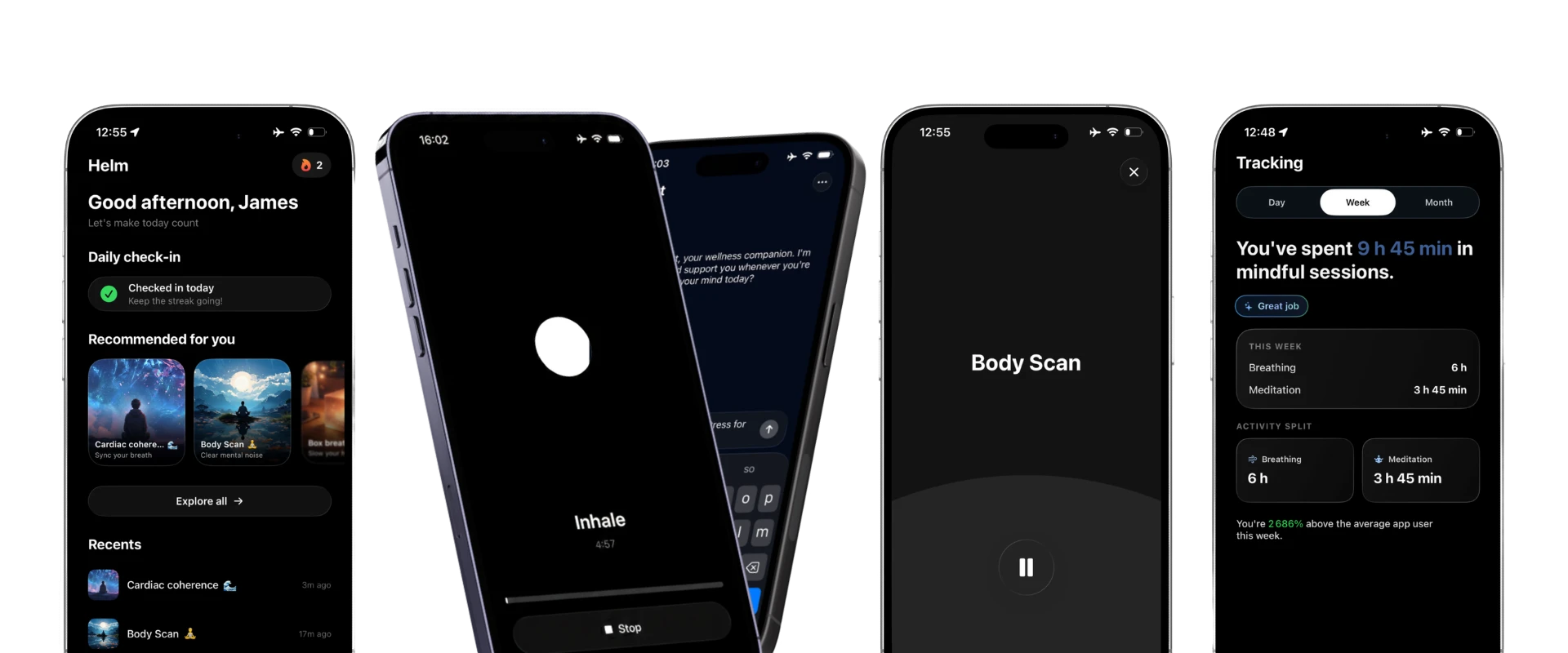
Keep it simple: light breathing, steady rhythm, and a body anchor you trust. If a technique makes you feel worse, back off and choose something more neutral, like orienting or gentle pressure through the feet. If you want guided 30-second to 5-minute resets, try Helm, an iOS mental wellness app designed to manage stress and improve focus through guided breathing resets.
A longer exhale than inhale is often the quickest. Try inhale 3 to 4 seconds, exhale 5 to 7 seconds for six cycles, keeping the breath quiet and light.
You can feel a shift in 30 to 120 seconds, but stable change comes from repetition. Daily 3 to 5-minute downshifts train your system to recover faster after stress.
Dizziness often comes from over-breathing (too deep or too fast), which lowers carbon dioxide. Breathe more softly, slow the pace, or pause and return to normal breathing.
Yes. Use gentle orienting, a longer exhale, and muscle release to reduce arousal. Avoid intense breathing practices at night, and keep the goal to “settle,” not to force sleep.
Join thousands using Helm to manage stress, improve focus, and build lasting healthy habits.