HELM
The Helm Blog
Insights on nervous system regulation, mental clarity, and the science of optimal performance.
HELM
HELM
HELM
HELM
HELM
HELM
Insights on nervous system regulation, mental clarity, and the science of optimal performance.
Helm is the #1 app to optimize your mind, breathe better, and master your focus. Combine science-backed breathwork and meditation into your daily protocol to build resilience.
If you are searching how to stop a panic attack with breathing, you likely want something simple, fast, and reliable. The good news is that breathing is one of the few tools you can use immediately, anywhere, without equipment. The more nuanced truth is that breathing does not “erase” panic on command. It changes the body conditions that keep panic looping, which makes it easier for your mind to reappraise sensations and ride the wave down.
During a panic attack, many people start breathing faster or deeper without realizing it. That pattern can lower carbon dioxide too quickly, which may intensify tingling, dizziness, chest tightness, and the feeling that something is very wrong. A better target is not “more air”, it is slower, smaller, and steadier breaths that reduce over-breathing and signal safety to your nervous system.
If you have crushing chest pain, fainting, blue lips, new one-sided weakness, or symptoms that feel medically different than your usual panic, seek urgent medical care.

Panic is not imagination, it is physiology plus interpretation. Your threat system increases arousal, your heart rate rises, muscles tense, and your attention narrows toward internal sensations. When breathing becomes rapid, you can end up blowing off CO2, which shifts blood pH and can create real physical symptoms that mimic danger.
This is why “take a deep breath” sometimes backfires. Deep breaths can increase ventilation even more. In contrast, slower nasal breathing, longer exhales, and brief pauses can reduce over-breathing and help restore a tolerable internal balance.
Research and clinical guidance consistently note that panic symptoms are fueled by misinterpreting bodily sensations and by respiratory changes. If you want a deeper, practical overview of why breathing works quickly, read the science behind breathing exercises.
For evidence-based background on panic symptoms and treatment, see this overview on panic disorder and a clinical description of panic attacks.
The goal is not perfect calm. The goal is to turn down the intensity by 10 to 30 percent, enough for your brain to update: “This is uncomfortable, not dangerous.” Try this for two minutes.
A few technique notes that matter:
If you want a very rapid option that many people find effective, practice the physiological sigh technique when you feel the first surge, then transition into the slower pattern above.
The most helpful breathing for panic is usually exhale-focused breathing. Longer exhales tend to reduce respiratory rate, discourage over-breathing, and support parasympathetic activity associated with settling. You are not “forcing relaxation”, you are shifting inputs to the brainstem and the body’s threat circuits.
Two practical markers you are doing it right:
If you are unsure, put one hand on your upper chest and one on your belly. Aim for the lower hand to move more. This helps prevent the high-chest breathing pattern that often accompanies anxiety attacks.
For additional safety-oriented guidance on panic and self-help strategies, this public health resource explains common signs and coping approaches for panic attacks.
For some people, focusing on breath increases alarm, especially if there is a history of trauma, claustrophobia, respiratory illness, or health anxiety. This is common and workable. The solution is to change the object of focus, not to quit entirely.
Try one of these adjustments:
If you have asthma, COPD, are pregnant, or have a cardiac condition, choose conservative pacing and avoid breath holds that create strain. If panic attacks are frequent, consider working with a licensed clinician. Breathing is a powerful tool, and it works best as part of a wider plan.
Stopping panic in the moment is one skill. Reducing how often it appears is another. A short daily practice trains your system to recover faster, and it makes the “panic breathing protocol” feel familiar when you need it.
Use this simple routine once or twice daily:
Over time, you are teaching your brain that these sensations can be present without requiring escape. That learning is a cornerstone of panic recovery.
If you like structured patterns, you may also benefit from box breathing for instant calm, but keep the holds gentle if you are prone to dizziness.
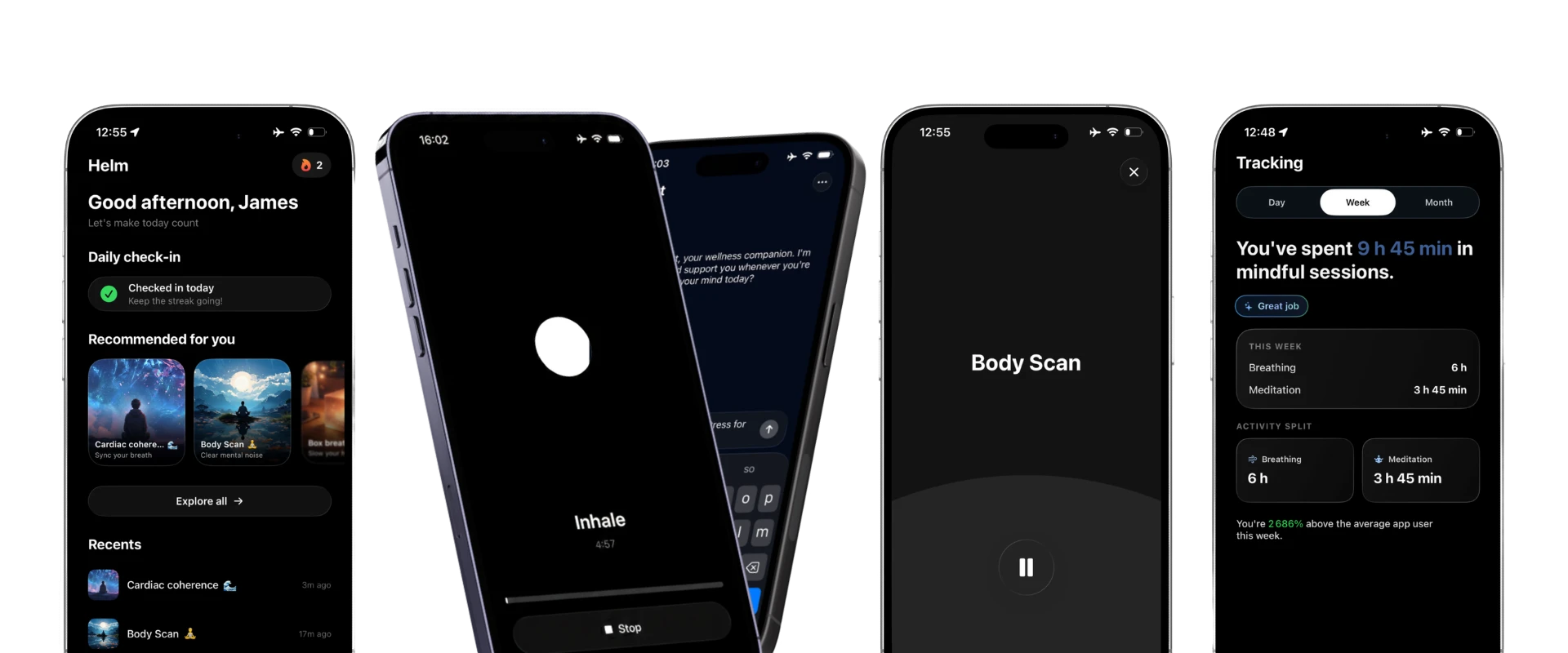
Breathing is not a magic switch, but it is one of the fastest ways to influence the body during a panic attack. Aim for smaller nasal inhales, longer exhales, and brief, comfortable pauses, and measure success by a modest drop in intensity rather than instant peace. If breath focus increases fear, widen your attention to the room, add grounding through touch or walking, and keep the breath light. With a few minutes of daily practice, your nervous system learns the route back to baseline more quickly, and panic becomes less convincing over time. If you want guided breathing resets on your phone, try Helm, an iOS mental wellness app designed to manage stress and improve focus through guided breathing resets.
Most people notice some reduction within 60 to 180 seconds if they slow breathing and lengthen the exhale. The goal is partial relief first, then steadier recovery.
Nasal breathing is usually better because it naturally slows airflow and reduces over-breathing. If your nose is blocked, exhale through pursed lips to keep the pace slow.
Choose a small inhale and a longer exhale, such as 3 to 4 seconds in and 6 to 8 seconds out, plus a gentle 1 to 2 second pause after the exhale.
Tingling can come from over-breathing, which lowers CO2 and changes blood chemistry temporarily. Slowing your breath, keeping inhales smaller, and lengthening exhales often reduces it.
Avoid forceful breath holds. A very brief, comfortable pause after the exhale can help, but straining typically increases alarm and can worsen dizziness.
Join thousands using Helm to manage stress, improve focus, and build lasting healthy habits.