HELM
The Helm Blog
Insights on nervous system regulation, mental clarity, and the science of optimal performance.
HELM
HELM
HELM
HELM
HELM
HELM
Insights on nervous system regulation, mental clarity, and the science of optimal performance.
Helm is the #1 app to optimize your mind, breathe better, and master your focus. Combine science-backed breathwork and meditation into your daily protocol to build resilience.
A joe dispenza breathing meditation guide should start with one core point: this style usually combines deep rhythmic breathing, short breath holds, and focused inward attention. Beginners do best when they treat it as a gentle awareness practice, not a willpower test. The goal is not to force a dramatic experience. The real aim is to use breath, posture, and attention to shift state, reduce mental noise, and create a steadier entry into meditation.
What many people miss is that this method sits somewhere between energizing breathwork and seated meditation. That means it can feel powerful, but it can also become too intense if you chase tingling, dizziness, or long holds. Research suggests that slow breathing can influence autonomic function, gas exchange, and emotional regulation, but more intensity is not automatically better. A calmer practice is often the more effective practice.

Most versions of this style follow a simple arc: upright posture, repeated deep breaths, a pause or breath retention phase, then a transition into stillness or visualization. The breathing phase changes your level of arousal, while the meditation phase gives that arousal direction. If your shoulders lift, jaw tightens, or chest strains, you are probably breathing too high and too hard. If you are unsure how belly-led breathing should feel, this guide to diaphragmatic breathing vs chest breathing can help you find a more stable pattern.
A useful way to think about it is this: the breath is preparation, not performance. You are not trying to prove breath retention ability. You are trying to create a noticeable but manageable shift in attention. That difference matters, because the people who struggle most tend to confuse activation with progress.
No, not for everyone in the same way. Deep repetitive breathing and breath holds can be uncomfortable for people with panic symptoms, respiratory issues, cardiovascular concerns, pregnancy, seizure disorders, or a history of trauma that makes body-based practices feel overwhelming. Fast or forceful breathing can lower carbon dioxide too quickly, and overbreathing can trigger tingling, dizziness, and chest tightness. If deep breaths already make you feel worse, a lower-volume approach may suit you better, similar to the ideas in buteyko breathing when deep breaths backfire.
Use common sense stop signs. Pause the practice and return to normal breathing if you notice:
If you have a medical condition, it is worth asking a qualified clinician before doing intense breath retention. Breathwork is a tool, not a contest.
The best beginner version is shorter, softer, and more boring than the dramatic versions online. That is a good thing. Start seated, with your spine tall but not stiff, feet grounded, and your mouth relaxed. Breathe through the nose if comfortable. Keep the inhale full but not maximal, and let the exhale fall out without pushing.
Try this 5-step setup:
One to three rounds is enough for most beginners. The key is to end while you still feel clear, present, and in control. If you finish feeling scattered, buzzy, or depleted, reduce the depth of the breaths and shorten the holds next time.
The first mistake is forcing intensity too early. People often assume the method is working only if they feel heat, pressure, tingling, emotional release, or an altered state. Sometimes those sensations happen, but they are not the goal. What matters more is whether you can stay oriented, relaxed, and attentive. If your face, throat, or upper chest is doing most of the work, back off by about 20 percent.
The second mistake is skipping the meditation part. Breath alone can change physiology, but the reflective phase is where many people notice more insight, emotional settling, or mental clarity. Evidence suggests that meditation can help with stress symptoms and attention for many people. After each round, give yourself real stillness. Even two quiet minutes can help your nervous system integrate what the breathing stirred up.
Realistic benefits are usually subtle at first: a clearer head, less mental chatter, stronger body awareness, and a smoother transition into meditation. Some people also notice better emotional regulation, especially when they stop using the breath as a way to overpower discomfort. With consistent practice, you may get better at noticing the exact point where activation turns into strain.
Unrealistic expectations cause a lot of disappointment. This is not a guaranteed shortcut to transformation, and it is not proof of progress if every session feels intense. Good sessions often feel ordinary, stable, and repeatable. The most useful question is not, "Did I have a big experience?" It is, "Did this leave me more grounded, more aware, and more able to meet my day?"
A solid joe dispenza breathing meditation guide is really a guide to pacing. The method can be meaningful when you understand its moving parts: deeper breathing changes state, brief holds amplify awareness, and stillness helps you digest the experience. But the safest and most sustainable version is rarely the most dramatic one. Start with fewer breaths, shorter holds, and lower effort than you think you need. Let comfort, clarity, and control be your markers of success.
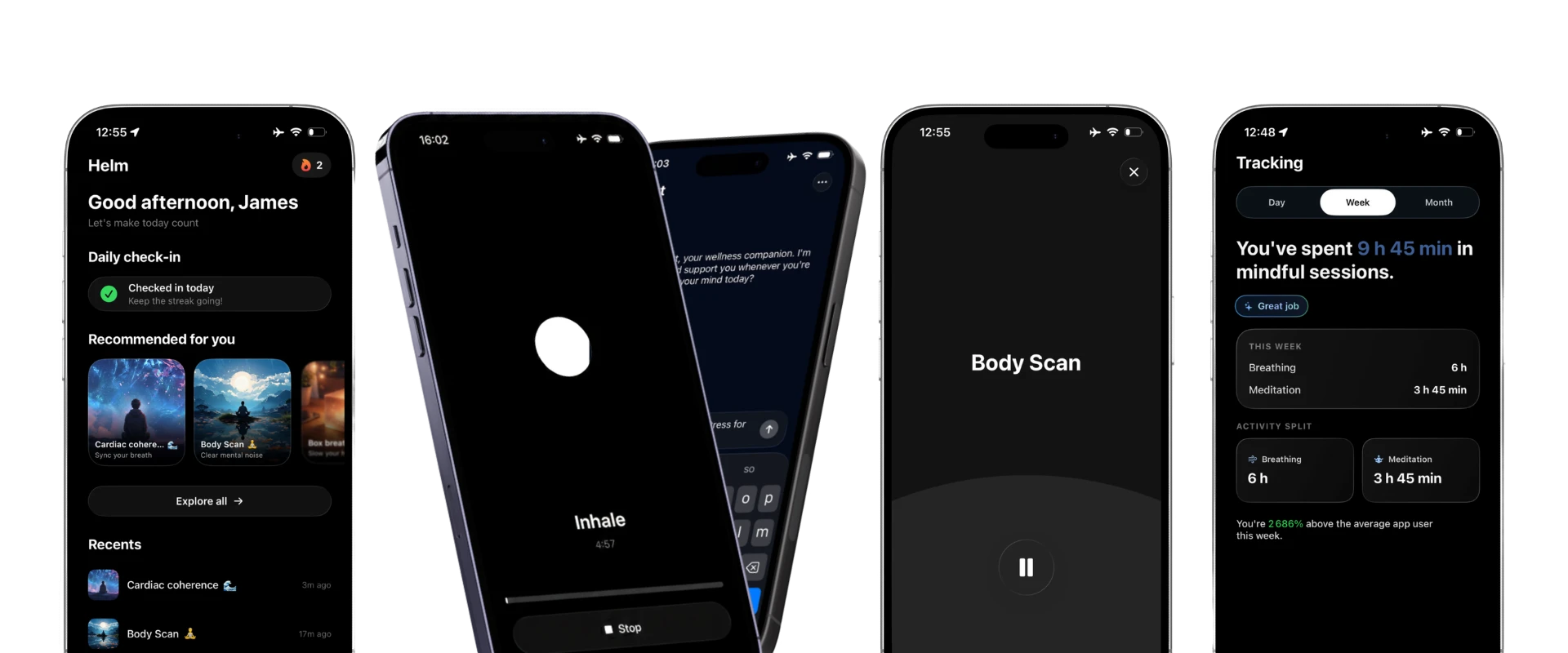
If you want a gentler way to build this habit, Helm is an iOS mental wellness app designed to manage stress and improve focus through guided breathing resets.
No. Mild lightness can happen, but building dizziness usually means you are overbreathing or holding too long. Ease up, return to normal breathing, and shorten the next round.
Short. Beginners should usually pause only until the first natural urge to inhale, not to a fixed long count. Comfort and control matter more than duration.
Yes, sometimes, but gently. People with anxiety often do better with softer breaths, shorter pauses, and more emphasis on the quiet meditation phase than on intensity.
Morning or early afternoon works well for many people. If the breathing feels activating, avoid doing stronger rounds right before sleep.
Ten minutes a day to feel calmer, sleep better, and stay sharp.