HELM
The Helm Blog
Insights on nervous system regulation, mental clarity, and the science of optimal performance.
HELM
HELM
HELM
HELM
HELM
HELM
Insights on nervous system regulation, mental clarity, and the science of optimal performance.
Helm is the #1 app to optimize your mind, breathe better, and master your focus. Combine science-backed breathwork and meditation into your daily protocol to build resilience.
If you're searching for andrew huberman morning routine breathing 2026, the most useful version is simple: do a short breathing sequence soon after waking that raises alertness without tipping into dizziness, anxiety, or over-breathing. For most people, that means starting with quiet nasal diaphragmatic breaths, adding one or two physiological sighs only if needed, and avoiding hard, prolonged hyperventilation-style rounds first thing in the morning.
That matters because early morning is a sensitive transition window. Your body is already moving from sleep toward wakefulness, cortisol naturally rises after waking, and stimulants like coffee can amplify whatever state you create. A better goal is not "more intensity." It is steady activation with control. In 2026, the smarter take on morning breathwork is less about copying a viral protocol and more about using breathing to support circadian rhythm, focus, and emotional stability.

Most people using this phrase are referring to a wake-up breathing practice meant to increase energy and focus. Online, that often gets interpreted as rapid, forceful breathing. But that is only one option, and it is not automatically the best morning choice for every nervous system.
A more grounded interpretation is this: use breath to shift from sleepy and foggy to awake, organized, and ready to work. That can include nasal breathing, diaphragmatic expansion, a slightly longer exhale to reduce jitteriness, and brief energizing breaths only if your body tolerates them well. If you want the physiology behind why different patterns feel different, the science behind breathing exercises offers a useful foundation.
Slow and controlled breathing can change heart rate variability and autonomic balance, which is one reason it affects mood and focus so quickly, according to a review on slow breathing and autonomic regulation. That does not mean stronger is better. It means the breath pattern should match the goal.
Morning is not just another time slot. Your body clock is already handling a natural wake-up transition, and your stress system is more impressionable than many people realize. A basic circadian rhythm overview explains how light, timing, and behavior shape alertness across the day.
That is why a calm-alert breathing routine often works better than an aggressive one. If you wake up groggy, a few deeper breaths can help. If you wake up tense, however, intense breathing may feel like pouring gas on a fire. This is especially true if you stack it with poor sleep, dehydration, or caffeine within minutes of waking.
A good morning protocol should do three things: open up your diaphragm, steady your attention, and leave you feeling more capable. It should not leave you lightheaded, numb in the fingers, or mentally scattered. Those are signs the routine is too forceful for the moment.
For most readers, the best 2026 update is a low-risk morning breathwork routine that respects both energy and regulation. Try this before checking messages and before coffee if possible.
This sequence works because it improves mechanics first, then adds just enough stimulation to help you wake up without overshooting. If your chest stays tight or your shoulders keep rising, it is usually a sign your pattern is too shallow. This guide to diaphragmatic breathing vs chest breathing can help you fix that.
The most common mistake is confusing intensity with effectiveness. Rapid or very deep breathing can drop carbon dioxide too fast, which may cause tingling, lightheadedness, air hunger, or a wired feeling. That is not always a sign of a breakthrough. Sometimes it is simply over-breathing. You can read more about those symptoms in clinical guidance on hyperventilation.
Another mistake is doing breathwork in a state your body already reads as high alert. If you wake up after poor sleep, high anxiety, or a pounding heart, the better move is usually slow nasal breathing, not an energizing protocol. Morning breathwork should meet your physiology where it is.
The third mistake is stacking too many wake-up tools at once. Bright light, cold exposure, a hard breathing set, and coffee may sound productive, but together they can create shakiness rather than focus. If sleep is already fragile, sleep guidance on stimulation timing is a helpful reminder that your nervous system responds to the full routine, not one habit in isolation.
Yes, some people should be more cautious. Beginners, anxious breathers, and anyone prone to dizziness usually do better with gentler patterns first. You should modify or avoid intense breathing after waking if you:
For these readers, the safest starting point is simple: nasal breathing, lower ribs expanding, and no forcing the inhale. Build consistency before intensity. If a routine leaves you more agitated than focused, it is not the right morning protocol for you, even if it works for someone else.
The best version of this routine in 2026 is not the loudest or most extreme one. It is the version that helps you wake up with stable energy, clearer attention, and less internal friction. For most people, that means a short sequence built around diaphragmatic nasal breathing, a modest exhale bias, and only brief activating breaths when they are genuinely helpful.
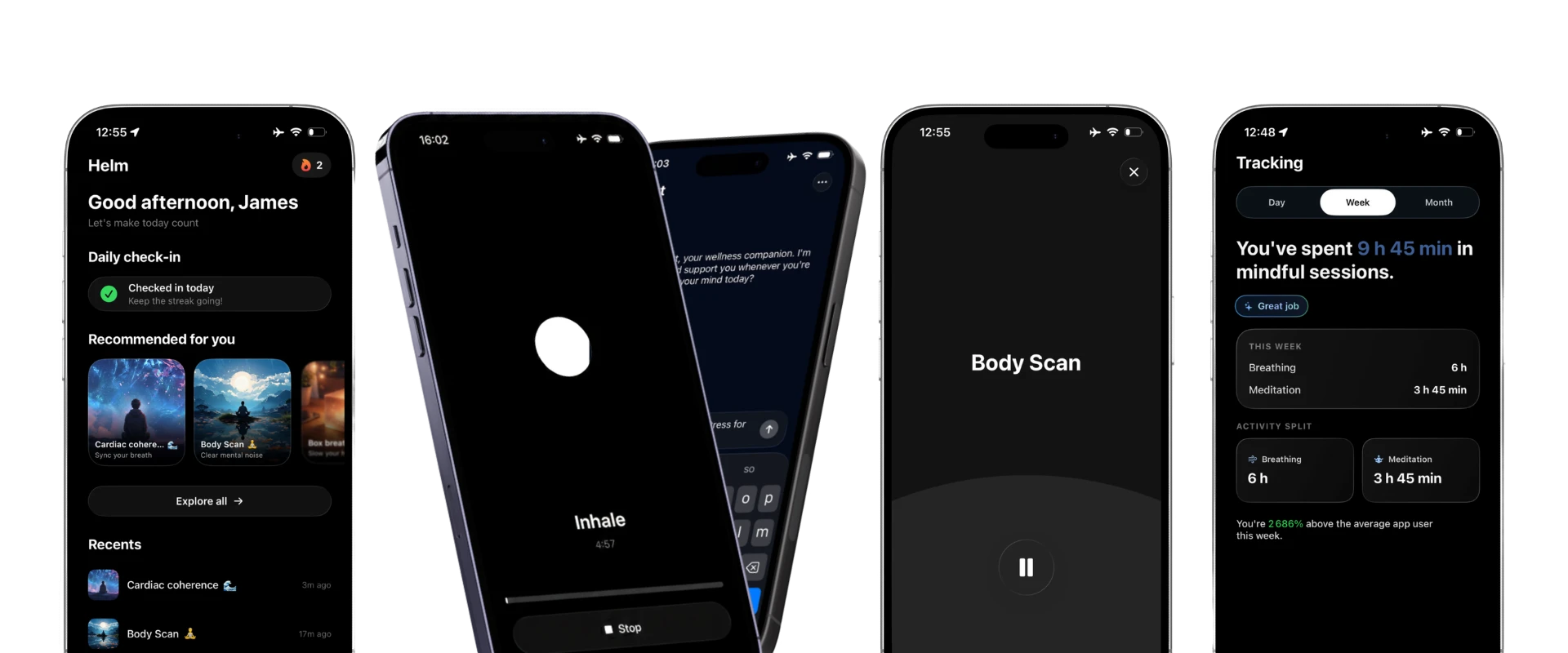
Treat morning breathing like calibration, not performance. Start small, track how your body responds, and let your routine earn your trust over a week or two rather than one dramatic session. If you want gentle guidance, you can try Helm, an iOS mental wellness app designed to manage stress and improve focus through guided breathing resets.
Yes, for many people it works better before coffee. Breathing first can help you gauge your true baseline and may reduce the chance that caffeine turns mild morning stress into jitters.
Yes, it can if the pattern is too fast or too forceful. Aggressive breathing may feel activating rather than regulating, especially if you already wake up tense, under-slept, or prone to panic symptoms.
Five to seven minutes is enough for most people. Short, repeatable sessions usually beat long, intense ones, especially when your goal is focus, steady energy, and nervous system stability.
Nose first is the better default for most people. Nasal breathing tends to slow the pace naturally and improve control, while mouth breathing is more likely to become forceful and leave you feeling overstimulated.
You should feel more awake, more grounded, and mentally cleaner. A good session leaves you alert but not buzzy, with easier posture, less chest tension, and smoother attention.
Join thousands using Helm to manage stress, improve focus, and build lasting healthy habits.