HELM
The Helm Blog
Insights on nervous system regulation, mental clarity, and the science of optimal performance.
HELM
HELM
HELM
HELM
HELM
HELM
Insights on nervous system regulation, mental clarity, and the science of optimal performance.
Helm is the #1 app to optimize your mind, breathe better, and master your focus. Combine science-backed breathwork and meditation into your daily protocol to build resilience.
Vagus nerve stimulation exercises at home usually mean simple practices like slow exhale breathing, humming, face cooling, and gentle movement that may nudge your body toward a calmer parasympathetic state. They are not the same as medical vagus nerve stimulation, but they can help many people feel less keyed up, more grounded, and more able to shift out of stress when used regularly.
The key is to think in terms of supporting vagal tone, not forcing a dramatic reset. At home, the most useful exercises are the ones that feel safe, repeatable, and easy to do when you are already overwhelmed. According to an overview of how the vagus nerve works, this nerve helps regulate heart rate, digestion, swallowing, and parts of the stress response, which is why small body-based practices can have such noticeable effects.

The vagus nerve is a major part of the rest-and-digest response. When your breathing slows, your exhale lengthens, and muscles around the jaw, throat, and belly soften, your body often interprets that as a signal of relative safety. That can reduce the feeling of internal urgency, even if your external situation has not changed yet. A useful guide to breath control and the stress response explains why slow breathing can influence autonomic arousal so quickly.
It is also important to stay precise. Home exercises do not "hack" the vagus nerve in a magical way, and the research is still developing. What they seem to do is increase parasympathetic influence through breathing, vocalization, posture, and sensory input. A review of vagus nerve stimulation shows that clinical stimulation is very different from self-care practices, so it is smarter to treat home work as a gentle regulation tool, not a cure-all. If your breathing tends to stay high in the chest, it can help to learn the basics of diaphragmatic breathing vs chest breathing before you try anything more advanced.
The best routine is one you can remember under stress. This one is short, low effort, and does not rely on extreme breath holds or discomfort.
This is not about chasing a special sensation. Consistency beats intensity here. A few minutes once or twice a day often works better than a big session you avoid because it feels like too much.
If you feel wired, restless, or mentally scattered, start with longer exhales. They are usually the fastest way to lower internal pressure without making yourself lightheaded. If your throat feels tight or your mind is racing, humming may work better because it gives your attention a single sensory target. If you feel stuck in freeze, numb, or flat, a little movement before breathwork can help more than sitting still right away. A broader summary of relaxation techniques for stress supports this idea that different nervous systems respond to different entry points.
For evenings, choose the softest tools, such as nasal breathing, a quiet hum, and reclining with the knees supported. For post-screen overstimulation, eye relief and neck rotation matter more than people expect. For digestive tension, try your practice after walking slowly for a few minutes, since a calmer vagal state and gentle movement often work well together. You do not need to do every technique every day. Match the tool to the state you are in.
The first signs are usually subtle. You may sigh naturally, swallow more easily, feel warmth in the hands, notice less jaw tension, or realize your thoughts are moving slower. Over time, you might recover faster after stress, feel less reactive to noise or notifications, or find that your sleep onset is a little smoother. These are functional signs of better regulation, and they matter more than chasing perfect calm.
It is also worth watching what happens outside the practice. Better digestion, steadier energy, and a more flexible heart rate pattern can all suggest progress. If you like tracking, a steadier trend in recovery markers can complement what you feel subjectively, which is why some people pair these exercises with the ideas in simple steps to improve HRV. Stop or scale back if you feel dizzy, panicky, numb, or worse after practice. Gentle should feel gentle, and if it does not, the technique, timing, or intensity probably needs adjusting.
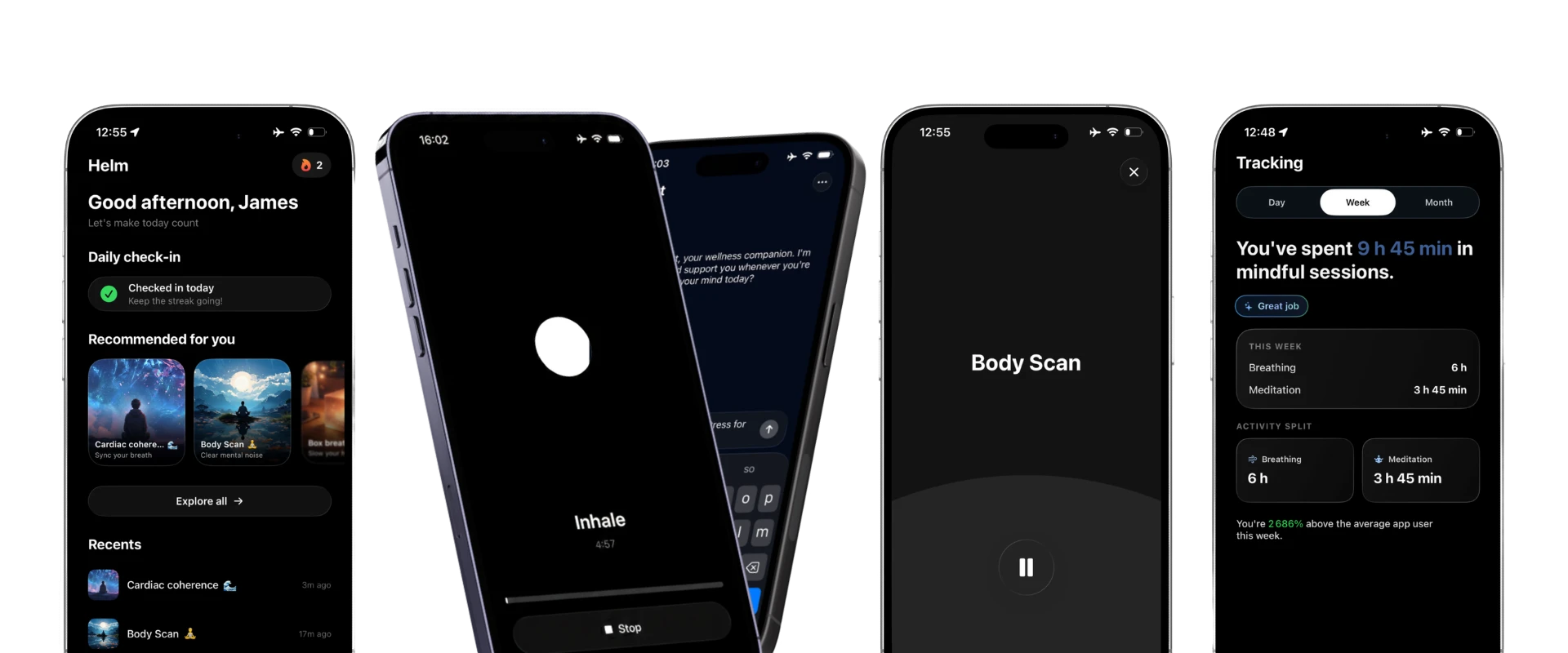
Vagus-focused exercises at home are most useful when you treat them as a daily regulation skill, not an emergency performance test. Slow exhale breathing, humming, face cooling, and easy movement can all help shift your system toward safety, but the real win is learning which input works best for your body. Start small, keep the effort low, and look for modest changes in tension, digestion, focus, and recovery. That is how these practices become practical, not just interesting. If you want a little structure, you can try Helm, an iOS mental wellness app designed to manage stress and improve focus through guided breathing resets.
Yes, for many people they can help. They work best as nervous system regulation tools, not miracle fixes, and the effects are often modest but meaningful with regular practice.
The fastest option is usually 1 to 2 minutes of slow nasal breathing with a longer exhale. A gentle hum on the exhale can make the effect feel stronger for some people.
Yes, bedtime is often a good time. Choose quiet, low-effort practices like extended exhales, humming, or a cool cloth on the face, and avoid intense breath holds.
Sometimes the method is too intense or poorly timed. If you feel dizzy, agitated, or emotionally flooded, shorten the session, reduce the inhale depth, or switch to movement first.
Once or twice a day is enough for most people. Five to ten minutes consistently usually works better than occasional long sessions that feel hard to sustain.
Join thousands using Helm to manage stress, improve focus, and build lasting healthy habits.