HELM
The Helm Blog
Insights on nervous system regulation, mental clarity, and the science of optimal performance.
HELM
HELM
HELM
HELM
HELM
HELM
Insights on nervous system regulation, mental clarity, and the science of optimal performance.
Helm is the #1 app to optimize your mind, breathe better, and master your focus. Combine science-backed breathwork and meditation into your daily protocol to build resilience.
Burnout recovery breathing exercises are gentle, low-effort patterns that help an overloaded nervous system downshift without asking you to push harder. The most useful choices are usually slow nasal breathing, slightly longer exhales, and brief humming, not big inhales, long breath holds, or stimulating drills. If you feel tired, wired, flat, or emotionally brittle, the goal is simple: reduce internal pressure so your body can start recovering.
When burnout has been building for weeks or months, your system often loses tolerance for anything intense, including breathwork. That is why burnout recovery breathing exercises should feel quiet, sustainable, and almost boring. Done consistently, they can soften muscle tension, lower your sense of urgency, and create small windows of steadier energy you can actually build on.

Burnout is not just ordinary stress. It tends to show up after prolonged overload, limited recovery, and too much output for too long. In this overview of burnout as an occupational phenomenon, burnout is described through exhaustion, mental distance, and reduced efficacy. That matters because a depleted system often responds poorly to anything that feels demanding, even if it is supposed to be calming.
Many people make the mistake of treating burnout like a motivation problem. They choose intense techniques, force deeper breaths, or turn recovery into another task to perform well. But when your reserves are low, the most helpful practice is usually the one that asks the least of you while giving your body a clear signal of safety.
Gentle breathing can influence the autonomic nervous system, especially when the exhale is unhurried and the pace is steady. Slow breathing is associated with better vagal regulation and can support heart rate variability, as discussed in a review on slow-paced breathing and autonomic function. In plain language, it can help your body move from constant guarding toward a more regulated state.
How you breathe matters as much as how long you breathe. If your chest lifts, your shoulders tense, and each inhale feels like work, your body may read the practice as effort instead of relief. If that sounds familiar, this guide to diaphragmatic breathing vs chest breathing can help you find a softer starting point. For burnout, you want less force, less air hunger, and more ease.
The right practice should lower activation, not create more. These options are intentionally simple and work best for people who feel overextended, mentally foggy, or emotionally thin. A general guide to relaxation techniques and breathing practices supports this low-intensity approach.
Extended exhale breathing
Inhale through the nose for 3 or 4 seconds, then exhale for 5 or 6 seconds. Do this for 2 to 4 minutes. A slightly longer exhale often feels grounding because it reduces the urge to brace. If 6 seconds feels strained, shorten it.
Even pace breathing
Breathe in for 4 or 5 seconds and out for 4 or 5 seconds. Keep the breath quiet and smooth. This is useful when you feel wired and tired, because it stabilizes your rhythm without the pressure of making the exhale longer.
Micro-sigh plus settling breaths
Take one small inhale, then a second tiny sip of air, and release a long sigh. After that, return to 4 slow nasal breaths. Use just one or two sighs, not a long series. For burnout, the goal is release, not stimulation.
Humming exhale
Inhale gently through the nose and hum on the exhale for 5 to 8 seconds. Repeat for 5 rounds. The vibration can be soothing, especially after work or after a hard conversation, because it encourages a longer, softer out-breath.
If any technique makes you dizzy, agitated, or short of breath, stop and return to normal breathing. Burnout recovery is about tolerance, not intensity.
Consistency matters more than depth. A short practice done once or twice a day usually works better than waiting until you are completely fried. Think of breathing as a recovery cue you stack onto moments that already exist, such as after closing your laptop, before lunch, or when you get home and need to transition.
Keep the bar low enough to succeed on bad days. On especially rough afternoons, it can help to borrow ideas from how to calm the nervous system when stress spikes, then scale them down for your current capacity.
A simple 5-minute rhythm looks like this:
That is enough. Recovery responds to repetition, not heroics.
The biggest mistake is breathing harder instead of breathing easier. Bigger breaths are not always better. For some people, especially when anxiety and exhaustion overlap, exaggerated inhales can create lightheadedness or a sense of internal pressure.
Another mistake is choosing a technique that does not match your state. If you are foggy and flattened, start with even pace breathing. If you are keyed up and clenched, use a slightly longer exhale. If you feel emotionally shut down after a long day, humming may be the gentlest entry point.
Finally, do not turn breathwork into another self-improvement scorecard. The early signs that it is helping are often subtle: a softer jaw, warmer hands, one less spike of irritation, a little more patience at dinner, a slightly easier bedtime. That is real progress.
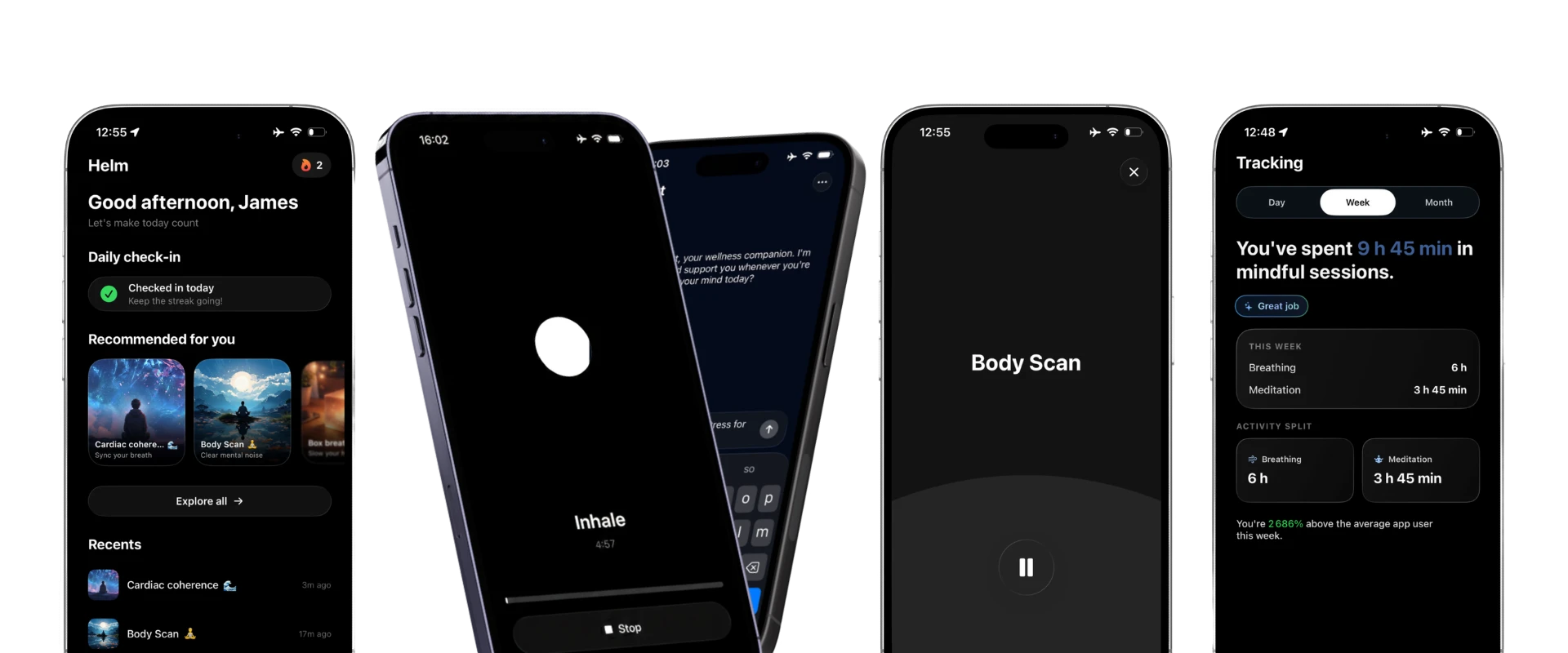
Burnout recovery breathing exercises work best when they are gentle enough for a depleted body to accept. You do not need intensity, long sessions, or perfect technique. You need a small pattern that lowers urgency, restores a sense of safety, and fits inside a life that already feels full. Start with 2 to 5 minutes, keep the breath quiet, and let the practice be restorative rather than impressive. Over time, these small resets can help you feel less brittle, more present, and a little more resourced for the next part of your day. If you want extra structure, you can try Helm, an iOS mental wellness app designed to manage stress and improve focus through guided breathing resets.
Yes. They will not solve the causes of burnout on their own, but they can reduce physiological overload, improve regulation, and make recovery habits easier to sustain.
Even pace breathing is often the safest place to start. A 4-second inhale and 4-second exhale can steady your rhythm without making the breath feel forced.
Deep breaths can backfire if you are already tense or breathing from the upper chest. The extra effort can feel activating, which is why smaller, quieter breaths often work better in burnout.
Once or twice daily is enough for most people at first. Aim for 2 to 5 minutes per session and focus on regularity rather than doing longer sessions.
Usually no, at least not early on. Breath holds can feel demanding for an already depleted nervous system, so gentler patterns with smooth inhales and relaxed exhales are usually a better fit.
Join thousands using Helm to manage stress, improve focus, and build lasting healthy habits.