HELM
The Helm Blog
Insights on nervous system regulation, mental clarity, and the science of optimal performance.
HELM
HELM
HELM
HELM
HELM
HELM
Insights on nervous system regulation, mental clarity, and the science of optimal performance.
Helm is the #1 app to optimize your mind, breathe better, and master your focus. Combine science-backed breathwork and meditation into your daily protocol to build resilience.
If you are wondering yoga nidra vs nsdr which is better for sleep, the short answer is this: yoga nidra is usually better for bedtime, while NSDR is often better for daytime recovery or for people who want deep rest without the pressure to fall asleep. Yoga nidra is a specific guided practice designed to move you toward profound relaxation with very little effort. NSDR is a broader label for wakeful rest practices, and some versions may help sleep indirectly, but they are not always built for bedtime.
That distinction matters. If your main problem is a busy mind at night, yoga nidra often feels smoother and more sleep-friendly. If your main issue is daytime depletion, stress buildup, or needing a structured reset that does not turn into a nap, NSDR may fit better. The best choice depends less on which one is trendier and more on when you need relief, how easily you relax, and whether trying to sleep tends to make you more awake.

Yoga nidra is a specific guided relaxation method, usually done lying down, that walks your attention through the body, breath, sensations, and awareness. Its aim is not to knock you out, but to bring you into deep parasympathetic downshift where sleep can happen naturally. Because the instructions are predictable and repetitive, many people find it easier than traditional meditation when they are tired or overstimulated.
NSDR, short for non-sleep deep rest, is a broader category rather than one tightly defined method. It can include guided body scans, certain lying-down meditations, or other restful practices that reduce cognitive load while you remain awake. In other words, yoga nidra can fit inside NSDR, but NSDR is not always yoga nidra.
For sleep, that difference matters because specificity helps. A bedtime practice works best when it lowers arousal, reduces effort, and gives the mind just enough structure to stop chasing thoughts. Broadly, meditation-based practices can support sleep for some adults, according to an overview of mindfulness and meditation research. Part of the effect likely comes from slower breathing and lower stress activation, which aligns with a review on breathing practices and stress regulation.
For sleep onset, yoga nidra usually wins. Its step-by-step format gives the mind a lane to stay in, which makes it useful when rumination, mental replay, or physical restlessness keeps you awake. Many NSDR recordings do something similar, but others are more neutral, more alert, or better suited to a midday reset than a true bedtime wind-down.
For middle-of-the-night wakeups, the answer is more mixed. If you wake at 3 a.m. and feel frustrated, a softer NSDR practice can sometimes work well because it removes the pressure to fall asleep right now. Ironically, that can make sleep return faster. But if your mind starts problem-solving the moment you wake, yoga nidra often gives you better attentional scaffolding.
For chronic insomnia patterns, neither practice should be treated like a magic switch. They work best as part of a broader sleep routine that includes regular timing, light management, and enough sleep opportunity, as outlined in standard sleep guidance for adults. Think of these practices as ways to reduce internal friction, not replace the fundamentals.
A useful rule is simple: choose yoga nidra for nighttime, choose NSDR for restoration without sleep pressure. If bedtime practices make you monitor yourself too much, an NSDR recording may feel less loaded. If you need more help disengaging from thoughts, yoga nidra is usually the stronger choice.
If you want a fast decision, use this filter:
People who say, “I am tired but still mentally on,” often do better with yoga nidra at night. People who say, “I need rest, but I do not want to accidentally sleep,” often do better with NSDR earlier in the day. And if bedtime anxiety is your biggest issue, a body scan meditation for insomnia may feel like an even gentler entry point.
There is also a personality factor. If you like clear instructions, yoga nidra tends to feel safer and easier. If you prefer less language and more open rest, NSDR may feel less intrusive. Neither preference is better. It is simply a matter of how your nervous system responds when it is already tired.
Run a one-week experiment instead of trying to judge after one session. Sleep tools often fail because people switch too fast, change too many variables, or treat one restless night as proof that nothing works.
Keep the experiment boringly consistent. Same room, similar timing, same volume, same posture. The goal is not perfect sleep. The goal is to learn which practice reduces effort and helps your body trust rest again.
The biggest mistake is trying to force unconsciousness. The moment you start checking, “Am I asleep yet?” you shift back into performance mode. Both yoga nidra and NSDR work better when you treat them as rest first and let sleep be the byproduct.
Another common mistake is choosing a recording that is too stimulating. For bedtime, avoid overly bright music, motivational language, or long explanations. A sleep-oriented practice should feel simple, repetitive, and almost forgettable.
Finally, do not overlook timing. NSDR can be powerful, but if you do it too late in the evening, it may refresh you rather than lull you. Yoga nidra can also miss the mark if you start it while still scrolling, snacking, or answering messages. Transition matters almost as much as the practice itself.
If your goal is specifically better sleep, yoga nidra is usually the better first choice because it is more structured, more bedtime-friendly, and better at occupying a racing mind without adding effort. NSDR is still useful, especially if you need daytime restoration or if sleep-focused practices make you tense. The smartest approach is not picking a winner in theory. It is matching the tool to the moment.
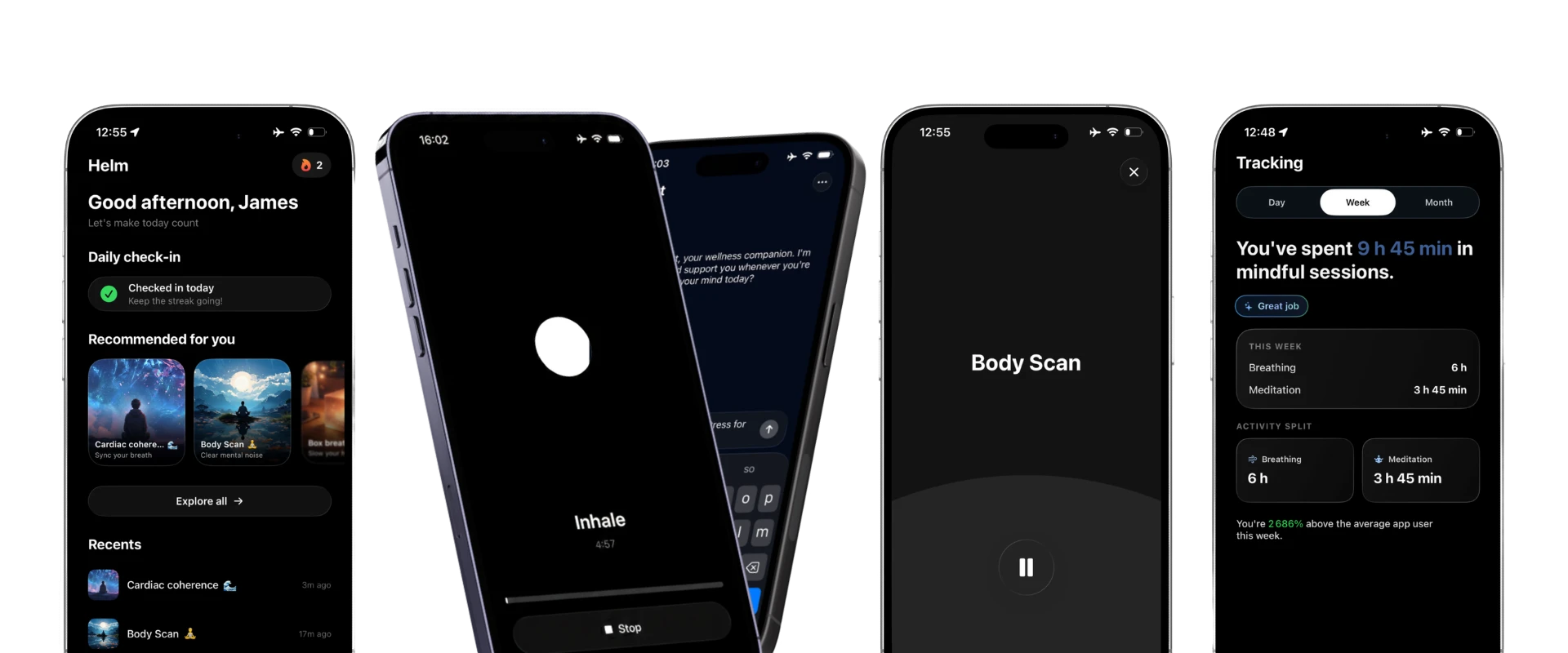
Try yoga nidra at night, NSDR during the day, and judge them by how much they reduce struggle, not by whether they “work” instantly. If you want a simple way to make these calming resets easier to practice, you can try Helm, an iOS mental wellness app designed to manage stress and improve focus through guided breathing resets.
Usually, yes. Yoga nidra is often better for insomnia because it gives the mind more structure at bedtime, which can reduce rumination and make falling asleep feel less effortful.
Sometimes, yes. NSDR can restore energy and reduce stress without full sleep, but it does not fully replace sleep debt when you are chronically underslept.
Either can work. In bed is fine if your goal is sleep, while the floor or a mat may be better if you want to stay awake and simply rest deeply.
That is normal. The point is deep rest, not immediate sleep, and many people still get a calming benefit even when they remain aware the whole time.
Yes. A shorter NSDR practice can be a good nighttime option if long guidance irritates you or makes you pay too much attention to whether sleep is happening.
Join thousands using Helm to manage stress, improve focus, and build lasting healthy habits.