HELM
The Helm Blog
Insights on nervous system regulation, mental clarity, and the science of optimal performance.
HELM
HELM
HELM
HELM
HELM
HELM
Insights on nervous system regulation, mental clarity, and the science of optimal performance.
Helm is the #1 app to optimize your mind, breathe better, and master your focus. Combine science-backed breathwork and meditation into your daily protocol to build resilience.
Breathwork before public speaking anxiety can help, especially when your heart is racing, your chest feels tight, and your voice starts to shake. The key is not taking huge breaths. It is using a slower, steadier breathing pattern that reduces physical overactivation so you can think clearly and speak with more control. In practice, that means gentle nasal inhales, longer exhales, and a pace that tells your body the moment is challenging, but not dangerous.
If stage fright hits right before a presentation, your body often shifts into a threat response. That response changes how you breathe before it changes how you think. Breathing becomes shallow, fast, and high in the chest, which can leave you lightheaded, dry-mouthed, and more aware of every symptom. A steadier rhythm helps interrupt that loop. Research on slow breathing and autonomic regulation suggests it can improve vagal activity and support a calmer stress response, while breath control techniques are known to reduce stress reactivity.

Many people think public speaking fear is mainly a confidence problem. It is often a body problem first. Before you speak, your system may interpret attention, uncertainty, and evaluation as a social threat. That can tighten the throat, increase muscle tension, speed up heart rate, and make your breath ride high in the chest.
This is why some common advice backfires. Telling yourself to “calm down” does very little when your body is already mobilized. Your breath is one of the fastest ways to influence that state because it sits at the intersection of stress, posture, voice, and pacing. When exhalation gets longer and smoother, the body often follows.
It also helps to understand the mechanics. If you habitually breathe with your shoulders and upper chest, your body can stay in a subtle readiness state even before the audience appears. This guide on diaphragmatic breathing vs chest breathing explains why lower, fuller breathing tends to feel steadier and more sustainable under pressure. For a practical overview of the physical technique itself, this explanation of diaphragmatic breathing is useful.
The best pre-talk breathwork is simple enough to remember under stress. You do not need an elaborate sequence. You need a routine that lowers physical intensity without making you sleepy.
This routine works because it targets the symptoms that derail delivery: chest tightness, rushed pace, and vocal instability. A longer exhale can reduce the “I need more air” sensation that often makes speakers speed up. Practicing your opening sentence while exhaling is especially effective because it bridges the gap between calming down and performing.
One note, do not chase perfect calm. You are aiming for steady activation, not zero adrenaline. A little energy can sharpen presence and help you sound more alive. The win is moving from panic to usable intensity.
Sometimes you do not have 10 minutes. You have one minute, maybe less, and your body is already spiking. In that moment, simplicity matters more than theory.
Use this fast reset:
The longer exhale is the important part. It tends to dampen the feeling of internal acceleration and helps prevent breath stacking, where you keep inhaling without fully letting go. If you are extremely activated, the physiological sigh for instant calm can also be a useful last-minute reset before you walk up.
Another practical tip, avoid speaking immediately after a giant inhale. That pattern often makes your first sentence sound strained. Instead, exhale a little first, then let the next inhale come naturally, and begin speaking from that steadier breath.
Not all breathwork helps in a high-stakes moment. Some techniques are great for training sessions but not ideal right before a presentation.
The biggest mistake is overbreathing. More air is not always better. Before public speaking, the goal is efficient breathing, not maximal breathing. Gentle breaths with a smooth, slightly longer exhale usually work better than dramatic deep breaths.
Another mistake is practicing only when you are already panicked. Breathwork becomes far more reliable when it is rehearsed in calm moments. Try your pre-talk routine a few times a week, then pair it with low-stakes speaking, like reading aloud or rehearsing your first minute standing up.
Breathwork is a tool, not a total treatment plan. If speaking anxiety is causing you to avoid meetings, decline opportunities, or experience intense dread for days beforehand, it may be part of a broader social anxiety pattern. In that case, breathwork can still help, but it works best alongside structured support.
Good next steps include gradual exposure, presentation practice, coaching, or therapy focused on social fear and performance situations. Persistent symptoms deserve real care, especially if they affect work or relationships. This overview of social anxiety symptoms and treatment options is a solid place to start.
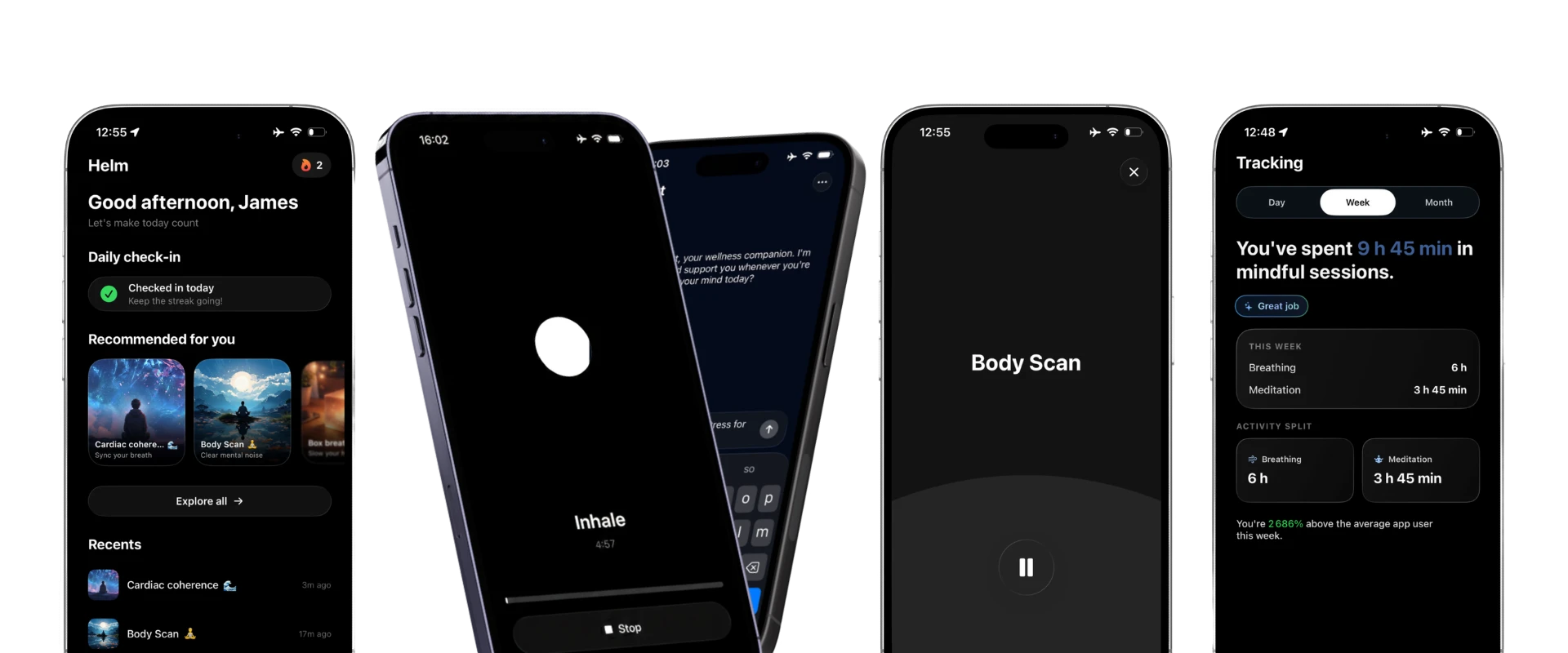
Breathwork before public speaking anxiety works best when it is specific to the moment. You are not trying to become deeply relaxed right before a talk. You are trying to steady your breathing, lower the volume of your physical stress response, and give your voice a smoother platform to land on. For most people, the most effective approach is simple: lower the breath into the ribs, lengthen the exhale, and rehearse the first line of the talk from that calmer state. If you do that consistently, stage fright often becomes more manageable, and your delivery starts to feel less like survival and more like communication. If you want guided pre-talk breathing resets on iPhone, try Helm, an iOS mental wellness app designed to manage stress and improve focus through guided breathing resets.
A 4-in, 6-out pattern is a strong starting point. It is simple, discreet, and long enough on the exhale to reduce physical tension without making you feel flat or sleepy.
Yes, it can reduce a shaky voice for many people. A steadier exhale often decreases throat tension and rushing, which makes the voice sound more grounded and controlled.
No, not usually. Stimulating techniques can increase dizziness, chest tension, or adrenaline, which is rarely helpful when you already feel keyed up before speaking.
About 5 to 10 minutes before is ideal. That gives your body enough time to settle, and it lets you practice your opening lines from a more stable breathing rhythm.
Yes, that can happen. If big breaths feel uncomfortable, make them smaller and slower, breathe into the lower ribs, and focus more on a soft extended exhale than on filling your lungs completely.
Join thousands using Helm to manage stress, improve focus, and build lasting healthy habits.