HELM
The Helm Blog
Insights on nervous system regulation, mental clarity, and the science of optimal performance.
HELM
HELM
HELM
HELM
HELM
HELM
Insights on nervous system regulation, mental clarity, and the science of optimal performance.
Helm is the #1 app to optimize your mind, breathe better, and master your focus. Combine science-backed breathwork and meditation into your daily protocol to build resilience.
If you are searching for how to enter flow state with breathing, the most effective approach is not a random breathing exercise in the middle of work. It is a short pre-task ritual that lowers excess stress, steadies attention, and gives your brain a clear starting rhythm. In practice, that means a minute of longer exhales, a few minutes of slow nasal breathing, and then beginning the first easy step of the task before your mind drifts.
Flow state is easier to enter when arousal is balanced, not too flat and not too activated. Breathing helps because it is one of the fastest ways to influence that balance on purpose. Instead of trying to force concentration, you create the internal conditions that make concentration more likely.

Flow usually appears when attention, challenge, and momentum line up. Breathing does not create flow by itself, but it can reduce the friction that blocks it: shallow breathing, mental noise, body tension, and the urge to context switch. A broad review of flow research shows that flow is linked to deep absorption, clear goals, and a strong match between skill and challenge.
Breathing matters because the body often enters work in the wrong state. If you sit down overstimulated, your thoughts race. If you sit down flat, your mind wanders. Slow breathing helps regulate that middle zone by shifting autonomic balance, improving interoceptive awareness, and reducing unnecessary effort. Research on slow breathing and autonomic function suggests that slower respiratory patterns can support vagal activity and steadier emotional regulation.
This is why a pre-flow ritual works better than waiting until you are already distracted. You are not rescuing attention after it breaks. You are shaping the entry point. If you want more background on the mechanism, this guide on the science behind breathing exercises explains why simple changes in breath rate can change how calm and focused you feel.
The goal of this ritual is simple: downshift noise, then start moving. It works best right before writing, coding, studying, designing, or any task that needs sustained cognitive effort.
The key is that the last phase happens while work begins. Many people breathe, feel calmer, then check messages and lose the effect. Flow is easier when the breath pattern becomes a bridge into action, not a separate wellness moment.
For most people, the sweet spot is comfortable, not heroic. You should not feel dizzy, tingly, or strained. A practical clinical overview of diaphragmatic breathing reinforces the same point: slower, deeper breathing works best when the body feels supported rather than forced.
Not all focus problems are the same. Low energy and high anxiety need different entry strategies.
If you feel wired and mentally crowded, use the 4 in, 6 out phase a little longer before switching to equal breathing. If you feel sleepy or foggy, keep the breath light and nasal, sit more upright, and shorten the exhale difference so you do not become even more relaxed. For verbal work like writing or presenting, smooth equal breathing often feels cleaner than very slow breathing. For analytical work, a steady 5 in, 5 out rhythm can help you hold pace without overchecking yourself.
A recent randomized study on breathwork and mood found that structured breathing practices can meaningfully improve mental state. That does not mean one method is magic. It means state follows pattern more than most people realize.
People often assume they cannot focus because they lack discipline. Usually, the issue is more mechanical. Flow blockers tend to be predictable:
The fix is not more intensity. It is less friction. Give yourself a clear target, like one paragraph, one problem set, or one page of edits. Pair the breathing ritual with a visible first action. If you want to extend the session after you start, these breathing exercises for deep work can help you sustain concentration without slipping into tension.
Another common mistake is overbreathing. If you take exaggerated breaths because you think deeper is better, you may feel lightheaded and less grounded. Calm focus usually comes from quiet, controlled breathing, especially through the nose, with the rib cage and belly moving together.
Flow becomes more available when your body recognizes a consistent entry cue. Use the same chair, same first task, same breathing cadence, and same start window each day if possible. The ritual should become boring in the best way: familiar enough that your brain stops debating and starts associating those signals with immersion.
You can also stack one environmental cue onto the breath, such as closing extra tabs, putting the phone out of reach, or setting a 25-minute timer. The breathing does the internal work. The setup does the external work. Together, they reduce the odds that attention leaks away before momentum forms.
Learning to enter flow with breathing is less about finding a dramatic technique and more about building a reliable threshold ritual. A few minutes of structured breathing can lower mental static, settle physical tension, and make the first minutes of work feel easier to enter. The most useful pattern is simple: longer exhales to reduce urgency, steady nasal breathing to stabilize attention, and immediate task initiation so calm turns into momentum.
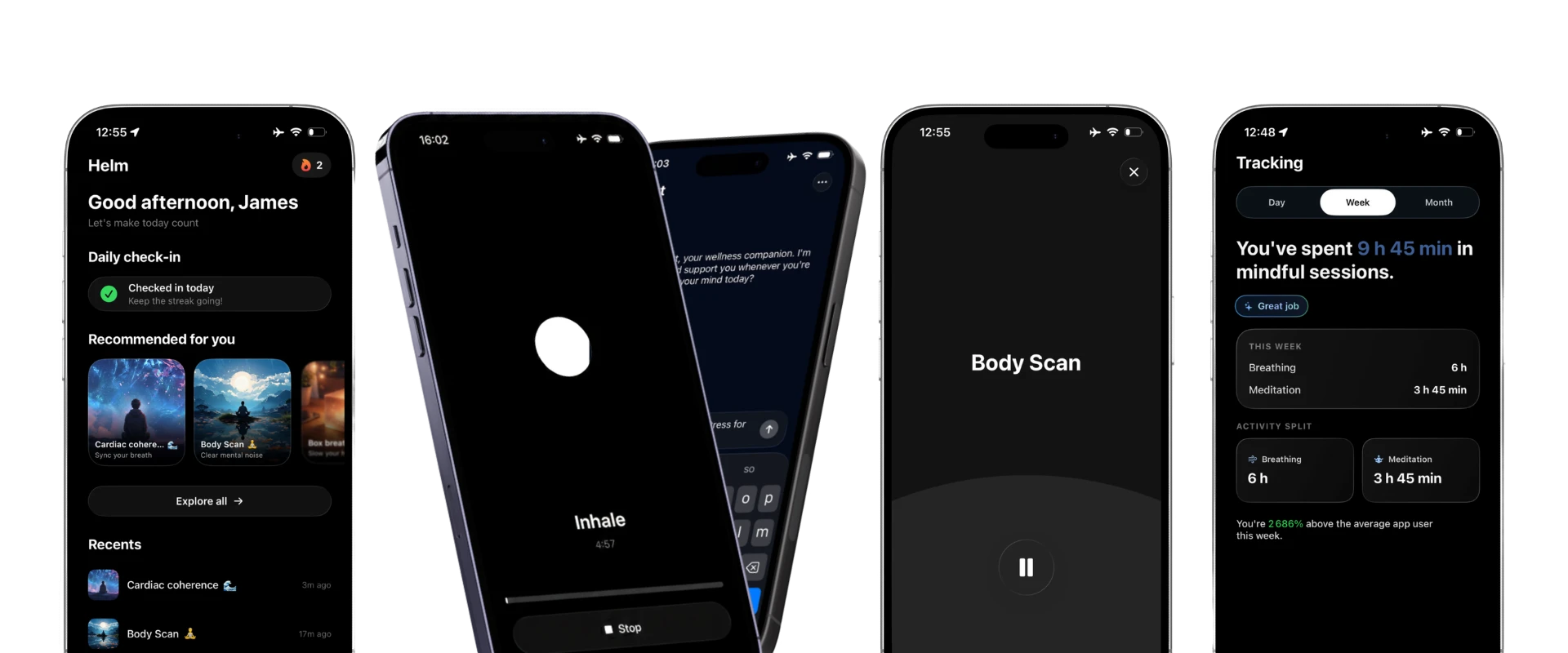
If it does not work perfectly on day one, that is normal. Flow is not a switch you force. It is a state you make more likely by matching breath, task difficulty, and a low-friction start. If you want gentle guidance, you can try Helm, an iOS mental wellness app built to manage stress and improve focus through guided breathing resets.
No, breathing alone usually does not create full flow. It helps set the right physiological state, but you still need a clear goal, the right challenge level, and a distraction-light environment.
For most people, 4 to 6 minutes is enough. Longer is not always better, because the real goal is to transition into action before your mind starts postponing the task.
Yes, nasal breathing is usually better for steady focus. It tends to feel quieter, less effortful, and more regulating than mouth breathing during desk work.
Yes, that can happen if the pace is too sedating for your current state. Sit more upright, reduce the exhale length, and begin the task sooner so the breath supports alertness instead of relaxation.
Join thousands using Helm to manage stress, improve focus, and build lasting healthy habits.