HELM
The Helm Blog
Insights on nervous system regulation, mental clarity, and the science of optimal performance.
HELM
HELM
HELM
HELM
HELM
HELM
Insights on nervous system regulation, mental clarity, and the science of optimal performance.
Helm is the #1 app to optimize your mind, breathe better, and master your focus. Combine science-backed breathwork and meditation into your daily protocol to build resilience.
A body scan meditation for insomnia is a bedtime practice where you slowly place attention on different parts of your body, noticing sensation and releasing effort without trying to force sleep. It helps because insomnia is often driven by mental and physical hyperarousal, not just by a lack of tiredness. When your mind is busy and your body is braced, a body scan gives the brain a simple job and signals safety to the nervous system.
Unlike sleep hacks that demand perfect technique, this one works best when you stop chasing results. You are not trying to knock yourself out. You are creating the conditions that make sleep more likely: less muscle tension, fewer spiraling thoughts, and softer internal pressure. Research on mindfulness and sleep suggests these practices can improve sleep quality and reduce nighttime arousal over time, especially when used consistently and gently, not as a performance test (study summary, overview of meditation evidence).

At night, many people with insomnia are still stuck in problem-solving mode. The lights are off, but the brain is reviewing conversations, anticipating tomorrow, or checking whether sleep is happening yet. A body scan interrupts that loop by moving attention away from abstract thinking and toward present-moment sensation. That shift matters because sensation is concrete, slow, and nonverbal.
A second effect is physical. Even low-grade tension in the jaw, shoulders, belly, or hands can keep the body subtly activated. A body scan helps you notice the places you are still "holding yourself up." As you soften them, breathing often deepens on its own, heart rate may settle, and the body gets a clearer message that it can stand down. If this pattern feels familiar, it may help to understand the common reasons you can't sleep even when you're tired, especially the tired-but-wired cycle.
Many sleep techniques fail because they quietly turn into effortful sleep chasing. You count breaths, repeat phrases, or lie perfectly still while internally asking, "Is it working yet?" That extra effort can keep the mind vigilant. A body scan is different because it gives you permission to observe instead of achieve.
This also makes it useful for people who dislike traditional meditation. You do not need an empty mind. You do not even need deep relaxation. The goal is simply to move attention slowly and kindly through the body. If you drift, you come back to the last place you remember. If you fall asleep halfway through, great. If you stay awake but calmer, that still counts.
There is also a practical advantage. Body scanning pairs well with what sleep medicine often recommends for insomnia: lower stimulation, less clock-watching, and fewer attempts to control the night. Reputable sleep education resources note that relaxation and mindfulness can support better sleep onset when they reduce arousal rather than create pressure (sleep guidance).
Settle into your normal sleep position. Let the practice feel plain and boring, not special. Boring is good at bedtime.
A few details make this more effective. Keep your breathing natural unless changing it feels soothing. Use a gentle pace, because rushing turns the scan into another task. If one area feels emotionally loaded, do not dig in. Skim past it and return to neutral places like the feet or hands. The practice is about safety, not intensity.
If you want an even softer landing, pair the first minute of the scan with a longer exhale. Some people also like combining it with military sleep method breathing for less effort, then switching into body awareness once the initial tension drops.
That is normal. Mind wandering is not failure, it is part of the practice. When you notice you have drifted into planning or frustration, label it lightly, thinking, planning, checking, and return to the next body region. Each return is the skill.
If restlessness is strong, make the scan more sensory. Focus on the feel of sheets on your shins, the weight of your arms, or the warmth around your eyes. Specific sensations anchor better than vague instructions to relax. You can also shorten the range and alternate between only three zones, like feet, hands, and jaw, until the mind settles enough to continue.
If anxiety spikes when you close your eyes, keep them softly open or dimly focused. If sleep still does not come after a while, do not stay in bed wrestling with it. Get up briefly, keep the lights low, and return when sleepiness rises again. This protects the association between bed and rest.
Body scan meditation for insomnia works best when you use it as a method of noticing, not forcing. It gives racing thoughts less fuel, helps hidden tension show itself, and trains the body to feel more supported at bedtime. The practice is simple, but its power comes from repetition and reduced pressure. Some nights you will fall asleep mid-scan. Other nights you will simply feel less activated. Both are useful outcomes because they move you away from struggle and toward steadier sleep.
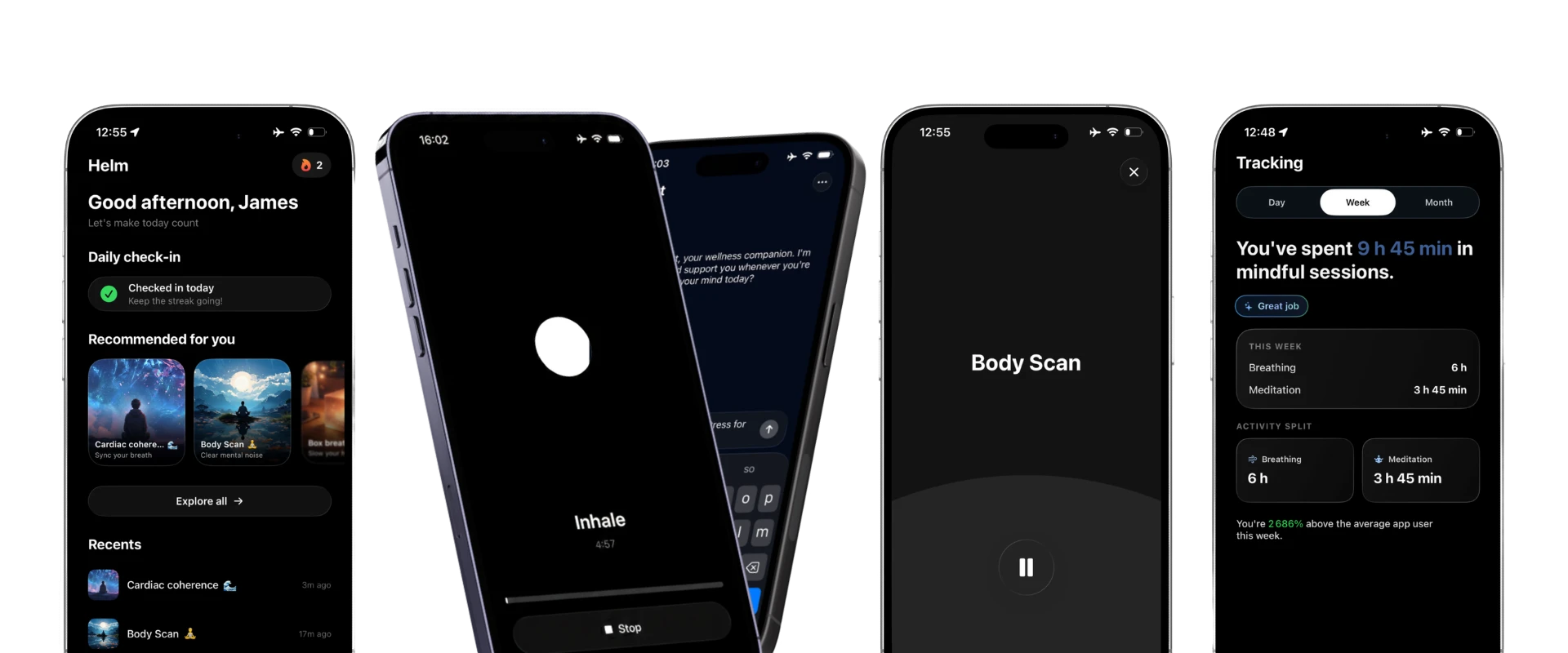
Keep it short, keep it gentle, and let boring be enough. If you want a little structure while building the habit, try Helm, an iOS mental wellness app designed to manage stress and improve focus through guided breathing resets.
Yes, sometimes, but fast sleep is not the real target. The more reliable benefit is lowering physical and mental arousal so sleep can happen with less resistance.
No, not universally. Body scans help most when tension and racing thoughts are the main issue, while breathing exercises may feel better when your system responds quickly to slower exhalations.
Both can work. In bed is best if the practice makes you drowsy, but before bed may be better if you tend to turn relaxation into pressure once your head hits the pillow.
That can happen. Yes, you can modify it by scanning more quickly, using neutral areas like hands and feet, or switching to simple contact-point awareness instead of detailed sensation tracking.
Join thousands using Helm to manage stress, improve focus, and build lasting healthy habits.