HELM
The Helm Blog
Insights on nervous system regulation, mental clarity, and the science of optimal performance.
HELM
HELM
HELM
HELM
HELM
HELM
Insights on nervous system regulation, mental clarity, and the science of optimal performance.
Helm is the #1 app to optimize your mind, breathe better, and master your focus. Combine science-backed breathwork and meditation into your daily protocol to build resilience.
If you want to know how to activate parasympathetic nervous system naturally, the most reliable approach is to give your body repeated signals of safety. A longer exhale, softer eyes, unclenched jaw, nasal breathing, gentle movement, and less stimulation can all help shift you out of fight-or-flight and into rest-and-digest. That shift often shows up as a slower heart rate, less muscle tension, easier digestion, and a mind that feels less urgent.
The key is not intensity. Most people calm down faster when they use small, steady cues instead of dramatic deep breathing or willpower. Your nervous system responds best when the message is simple: you are safe enough to slow down.

The parasympathetic branch is the part of your autonomic nervous system associated with recovery, digestion, and repair. It does not mean you become sleepy or passive. It means your body stops acting like every signal is an emergency. A helpful overview of the parasympathetic nervous system explains that this state supports a slower heart rate, digestive activity, and energy conservation.
In real life, parasympathetic activation can feel subtle. Your shoulders drop without effort. Your hands get warmer. You stop scanning the room. You can think in full sentences again. For some people, the earliest sign is not emotional calm at all, it is a physical one: a sigh, a yawn, stomach sounds, or the sudden ability to take an easy breath.
Many people try to relax by taking one huge inhale. That can work sometimes, but for an already activated body, big breaths can feel like more stimulation. If your chest lifts, your neck tightens, and you start monitoring each breath, your body may read that as pressure, not safety. This is one reason breath control can help calm the stress response, but only when it feels sustainable.
A better approach is to make the breath quieter, lower, and slightly longer on the exhale. You are not trying to prove you are calm. You are giving your body a rhythm it can trust. If your breaths keep rising into the chest, this guide on diaphragmatic breathing vs chest breathing can help you feel the difference without overthinking it.
The fastest natural cues are usually the ones that combine breath, posture, and sensory input. Slow breathing matters because it can influence heart rate variability and autonomic balance. This review on slow breathing and the nervous system helps explain why a slower respiratory rhythm often creates a calmer internal state.
Just as important is what surrounds the breath. A soft gaze, relaxed tongue, and supported posture all tell the brain there is less threat to manage. If you are standing rigidly, scrolling rapidly, and breathing through your mouth, your body gets mixed signals. If you lean back, loosen the belly, breathe through the nose, and reduce visual noise for two minutes, the shift is usually easier.
Warmth also helps. A warm drink, a blanket over the abdomen, or even warmer water on the hands can create a clear cue of safety and settling. So can humming, gentle rocking, chewing slowly, or walking at an easy pace. If you want more body-based options, these gentle vagus nerve stimulation exercises at home pair well with the breathing practice below.
Use this when you feel wired, restless, or mentally scattered, but not in full panic. The goal is downshifting, not perfect stillness.
This routine works because it stacks multiple signals at once. Longer exhales lower urgency, posture lowers guarding, and rhythm reduces unpredictability. You are not chasing instant bliss. You are helping your body choose a calmer gear.
Parasympathetic activation is much easier when your day contains regular moments of regulation. You do not need a perfect wellness routine. You need small patterns your body can recognize. Morning daylight, a few minutes of nasal breathing during a walk, slower meals, and shorter bursts of screen stimulation all reduce the load on your stress system.
Movement matters here too. Consistent light to moderate exercise improves stress resilience over time and often makes relaxation more available later in the day. This summary of the benefits of regular physical activity is a good reminder that calm is not only a breathing skill, it is also a recovery capacity your body builds.
If these techniques barely touch your symptoms, pay attention. Ongoing insomnia, chest tightness, panic episodes, digestive distress, or a constant sense of threat can mean your system is under more strain than self-help alone can solve. Natural tools are powerful, but they are not a substitute for medical or mental health care when symptoms are persistent, severe, or scary.
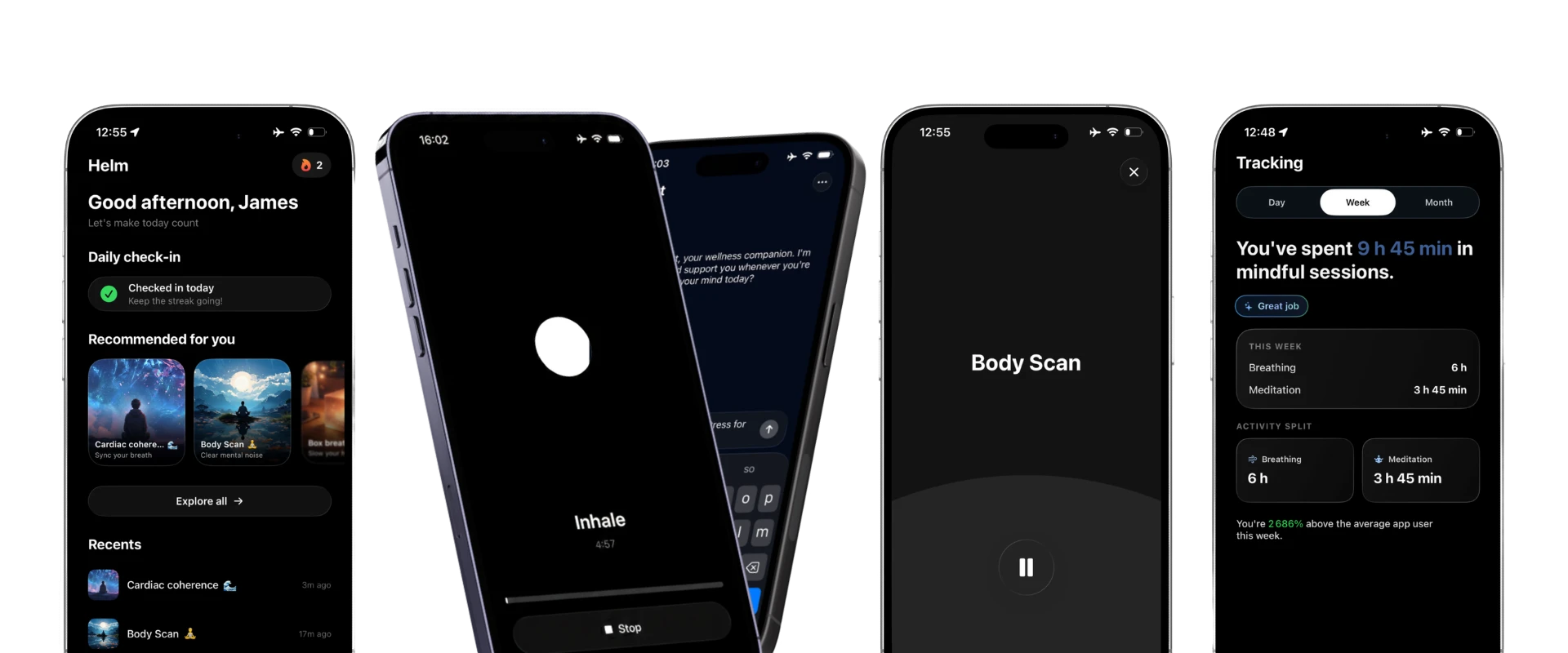
Learning to calm your body naturally is less about mastering one perfect technique and more about understanding what your nervous system trusts. Safety cues beat force. A softer exhale, relaxed face, steady rhythm, warmth, and lower stimulation can move you toward rest-and-digest more reliably than trying to overpower stress. The more often you practice when you are only mildly activated, the easier it becomes to access that state when life gets loud. Start small, repeat what works, and let your body learn that calm is allowed. If you want guided structure, you can try Helm, an iOS mental wellness app designed to manage stress and improve focus through guided breathing resets.
Usually 2 to 10 minutes is enough to notice a shift, especially with a longer exhale and less stimulation. Bigger changes often come from repeating the practice daily, not from one perfect session.
Yes. Slow nasal breathing, humming, warm showers, gentle walking, chewing slowly, and reducing sensory overload can all support a parasympathetic shift without any formal meditation practice.
Because bigger is not always calmer. If the inhale is too forceful, your chest and neck may tense up, which can feel like more activation. Smaller breaths with a longer exhale often work better.
No, not for everyone. Cold can feel energizing or stressful depending on your body and context. For most people, gentler cues like warmth, slow breathing, and rhythmic movement are more reliable for calming down.
Join thousands using Helm to manage stress, improve focus, and build lasting healthy habits.