HELM
The Helm Blog
Insights on nervous system regulation, mental clarity, and the science of optimal performance.
HELM
HELM
HELM
HELM
HELM
HELM
Insights on nervous system regulation, mental clarity, and the science of optimal performance.
Helm is the #1 app to optimize your mind, breathe better, and master your focus. Combine science-backed breathwork and meditation into your daily protocol to build resilience.
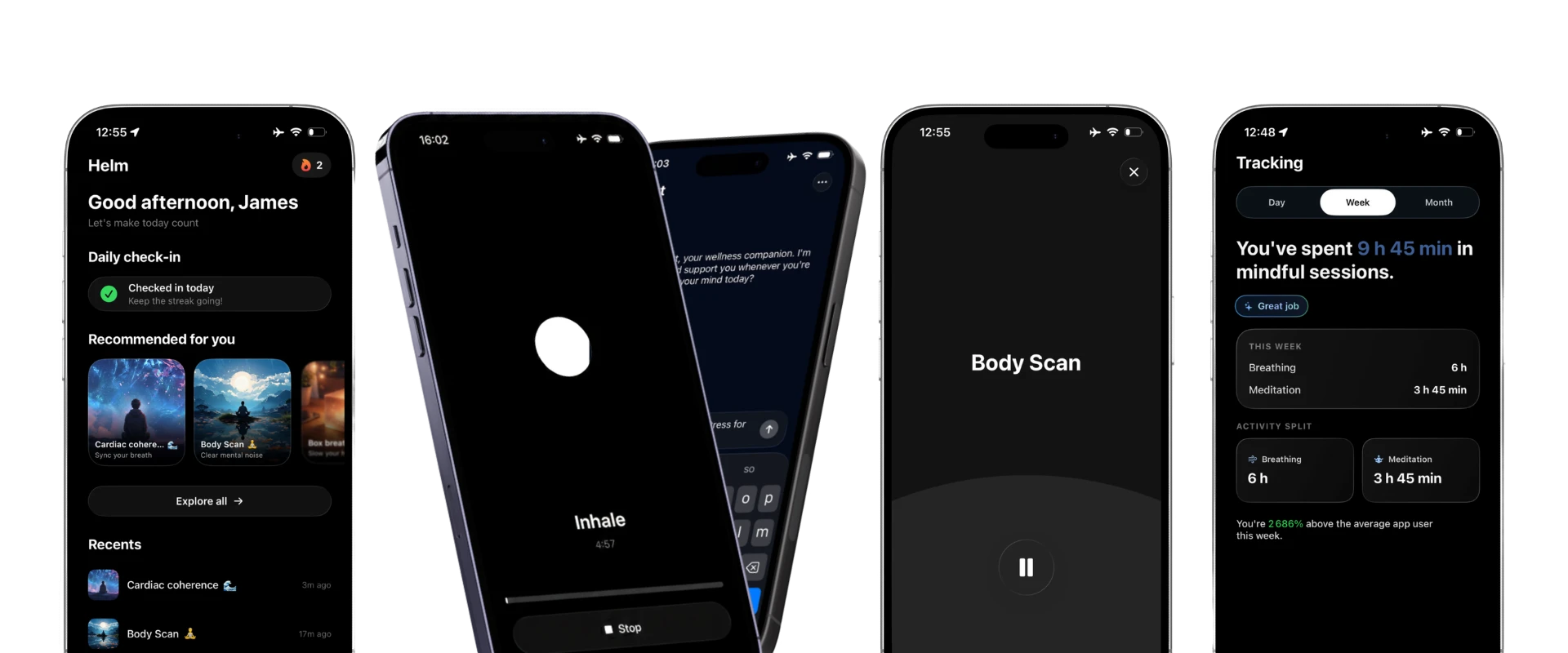
A good minimalist meditation app for adhd should reduce choices, start in seconds, and offer short guided practices you can repeat without thinking. The best fit is usually not the one with the biggest library. It is the one with the fewest steps between distraction and relief.
For many people with ADHD, the hardest part is not meditation itself. It is remembering, starting, and staying with an app that does not create extra friction. A useful tool feels quiet, simple, and forgiving. It helps you re-enter focus after you drift, instead of making you feel behind. If you are comparing options, look less at how much content an app has and more at how well its design supports executive function and quick recovery from interruption.

ADHD often involves executive dysfunction, time blindness, and difficulty shifting attention on demand. That means every extra choice, screen, and notification can raise the effort required to begin. According to the national overview of ADHD, attention regulation is not simply about willpower. An app that expects long setup, perfect consistency, or lots of menu browsing can work against the way an ADHD brain already struggles.
Minimalist design helps because it lowers cognitive load before the practice even starts. That matters more than people realize. Research on mindfulness interventions for ADHD suggests meditation can support attention, emotional regulation, and self-awareness, but adherence is a major challenge. In plain terms, the best meditation app for ADHD is often the one you will actually reopen tomorrow. Usability is part of the intervention, not a cosmetic bonus.
A huge library sounds appealing, but for ADHD it can turn into choice overload. When every session category branches into ten more categories, you spend your focus budget deciding instead of practicing. Minimalist apps do something smarter. They narrow the path, reduce visual noise, and let you start from the same simple entry point each time. That consistency lowers initiation resistance and makes meditation feel more like a reset button than another task.
Minimalism also reduces the shame spiral that comes from falling off track. If an app greets you with missed streaks, dense dashboards, or too many goals, it can trigger avoidance. A calmer design says, just begin again. That approach is especially helpful if your main goal is steady attention, not spiritual depth or long retreats. For workday concentration, short sessions can pair well with meditation for focus at work when you need a repeatable way to return to the task in front of you.
When you compare apps, think in terms of friction removed rather than features added. Meditation does not need to be long to be useful. In fact, early research found that even brief mindfulness training improved attention control. For an ADHD user, the winning setup is usually short, clear, and easy to repeat.
The most underrated feature is a clear re-entry path. You should be able to miss three days, come back, and know exactly what to do next. Look for saved favorites, a continue button, or one default practice you can reuse. ADHD-friendly design is less about novelty and more about making the next session feel obvious.
Several common app patterns can quietly make ADHD symptoms feel worse. Over-gamification is a big one. Streaks, badges, countdowns, and aggressive daily targets may motivate some users, but they often create pressure rather than consistency. The same goes for crowded home screens, autoplay content, bright animations, or long onboarding quizzes. If the app feels stimulating before you even breathe, it is probably not minimalist enough for your nervous system.
Be cautious with anything that turns practice into a scorecard. A tiny mood or focus note can be useful, especially when it helps you notice patterns over time. But the data should support awareness, not judgment. If you want a simple model for that, the ideas in benefits of daily mood tracking show how small, low-effort check-ins can be more effective than detailed logging. Less tracking, done consistently, usually beats perfect tracking done once.
Use a 7-day trial mindset. Pick one app, one time of day, and one default session length, ideally 3 to 5 minutes. Then test it in real ADHD moments: before work, after a distracting scroll, during an afternoon slump, or right before a difficult transition. Do not ask whether the app feels inspiring. Ask whether it makes starting easy when your attention is already scattered.
After a week, rate the app on four simple questions: Could I start fast? Did the design stay calm? Did I come back after missing a day? Did I feel even slightly better afterward? Those questions reveal more than feature lists. The right app is the one that reduces activation energy and gives you a reliable cue to pause, breathe, and restart. If the experience feels too busy, too guilt-heavy, or too long, that is useful information, not a personal failure.
Choosing a meditation app for ADHD is really about choosing a design that respects limited attention bandwidth. The strongest option is usually small, repeatable, and easy to re-enter. Look for short sessions, low visual clutter, gentle reminders, and a default practice you can start without thinking. Be skeptical of huge libraries, pressure-based streaks, and anything that makes meditation feel like one more productivity contest. A good tool should help you return to yourself quickly, especially on messy days when attention feels fragmented. Consistency comes from low friction, not from forcing yourself harder. If you want a low-friction place to start, try Helm, an iOS mental wellness app designed to manage stress and improve focus through guided breathing resets.
Usually, yes. A simpler app often works better for ADHD because it lowers decision fatigue, reduces visual clutter, and makes it easier to begin before motivation disappears.
For most people, 3 to 8 minutes is a smart starting range. Short sessions lower resistance and make it easier to build repeatability before extending the time.
No. Meditation can support attention, stress regulation, and self-awareness, but it is not a replacement for medical care, therapy, coaching, or prescribed treatment.
Yes, forgetting is common with ADHD. Tie the session to an existing cue, such as opening your laptop or brushing your teeth, and use one default practice instead of browsing.
Join thousands using Helm to manage stress, improve focus, and build lasting healthy habits.