HELM
The Helm Blog
Insights on nervous system regulation, mental clarity, and the science of optimal performance.
HELM
HELM
HELM
HELM
HELM
HELM
Insights on nervous system regulation, mental clarity, and the science of optimal performance.
Helm is the #1 app to optimize your mind, breathe better, and master your focus. Combine science-backed breathwork and meditation into your daily protocol to build resilience.
Resonance frequency breathing 6 breaths per minute is a slow breathing practice designed to sync your breath with the natural rhythm of your heart and blood pressure system. For many adults, about six breaths a minute creates the strongest calming effect, improves heart rate variability, and helps the nervous system shift toward a steadier state. The key detail is that six is often close, but not always exact.
If you searched for this method, the short answer is simple: breathe slowly, comfortably, and usually through the nose for about 10 minutes, aiming for a smooth rhythm near 5.5 to 6 breaths per minute. That pace can support relaxation without forcing huge breaths. In this guide, you will learn what resonance frequency actually means, why the six-breath rhythm works so well for many people, and how to tell whether your body needs a slightly different tempo.

Resonance frequency breathing refers to the breathing rate that creates the strongest, smoothest interaction between your breathing, heart rate, and blood pressure regulation. When you breathe near this rate, your cardiovascular system starts to move in a more coordinated pattern. That coordination can increase heart rate variability, which is often used as a marker of flexibility and recovery.
Researchers have studied this for years. In a foundational study on resonance frequency training, slow paced breathing near a person’s resonance point improved the size of heart rate oscillations and baroreflex response. A broader review of slow breathing physiology explains that slow breathing can influence vagal activity, gas exchange, emotional regulation, and perceived stress.
Six breaths per minute matters because it is close to the resonance zone for many adults. At that pace, each inhale and exhale is long enough to affect blood pressure rhythms, and the body has time to respond before the next breath begins. The result is often a feeling of calm with clarity, rather than sleepiness or dullness.
This is not magic, and it is not just about “taking deep breaths.” It is about timing. When breathing becomes slower and more regular, the baroreflex, the body’s blood pressure feedback loop, can work more efficiently. Another review on breathing and autonomic regulation found that slow breathing may improve vagal modulation and emotional control in both healthy people and some clinical populations. If your goal is steadier recovery over time, this guide on how to improve HRV with simple steps adds the sleep, movement, and stress pieces breathing alone cannot cover.
No, not exactly. For many people, the best rate sits somewhere between 4.5 and 6.5 breaths per minute. That is why some people feel grounded at a 5 second inhale and 5 second exhale, while others do better with 4 seconds in and 6 seconds out. Your height, lung mechanics, anxiety sensitivity, and even nasal congestion can shift what feels natural.
A useful test is simple. Your ideal pace should feel sustainable, quiet, and almost boring. If you feel air hunger, dizziness, chest tension, or the urge to “top off” each inhale, the pace may be too slow or the breaths may be too large. People with panic sensitivity sometimes do better when they focus less on depth and more on softness. In other words, the right rate is the one that steadies you without making breathing feel like a performance.
Start with ease, not intensity. Resonance breathing works best when the breath is slow and light, not dramatic. You are not trying to maximize oxygen. You are trying to create a stable breathing rhythm that your nervous system can trust.
A good beginner pattern is 5 seconds in and 5 seconds out, which equals exactly six breaths per minute. If that feels too slow, start at 4 seconds in and 4 seconds out, then gradually lengthen. If you are unsure how the belly should move, this breakdown of diaphragmatic breathing vs chest breathing can help you find a more natural pattern.
The most common mistake is turning a calming practice into a control exercise. People often try too hard, breathe too deeply, or chase a perfect count. That can lower carbon dioxide too much and leave you feeling lightheaded, buzzy, or strangely anxious.
Another mistake is ignoring context. If you have asthma, COPD, a heart rhythm condition, active panic attacks triggered by breath focus, or you are pregnant and feeling breathless, it is smart to modify the practice or speak with a clinician. For most healthy adults, though, gentle slow breathing is well tolerated when you stay within a comfortable range and stop if symptoms rise.
Resonance frequency breathing is less about chasing a magic number and more about finding the pace where your body feels organized, quiet, and responsive. For many people, six breaths per minute is an excellent starting point because it can support heart rate variability, baroreflex function, and a calmer emotional state. But the best results usually come from personalization: soft breaths, a steady rhythm, and enough patience to notice what actually helps.
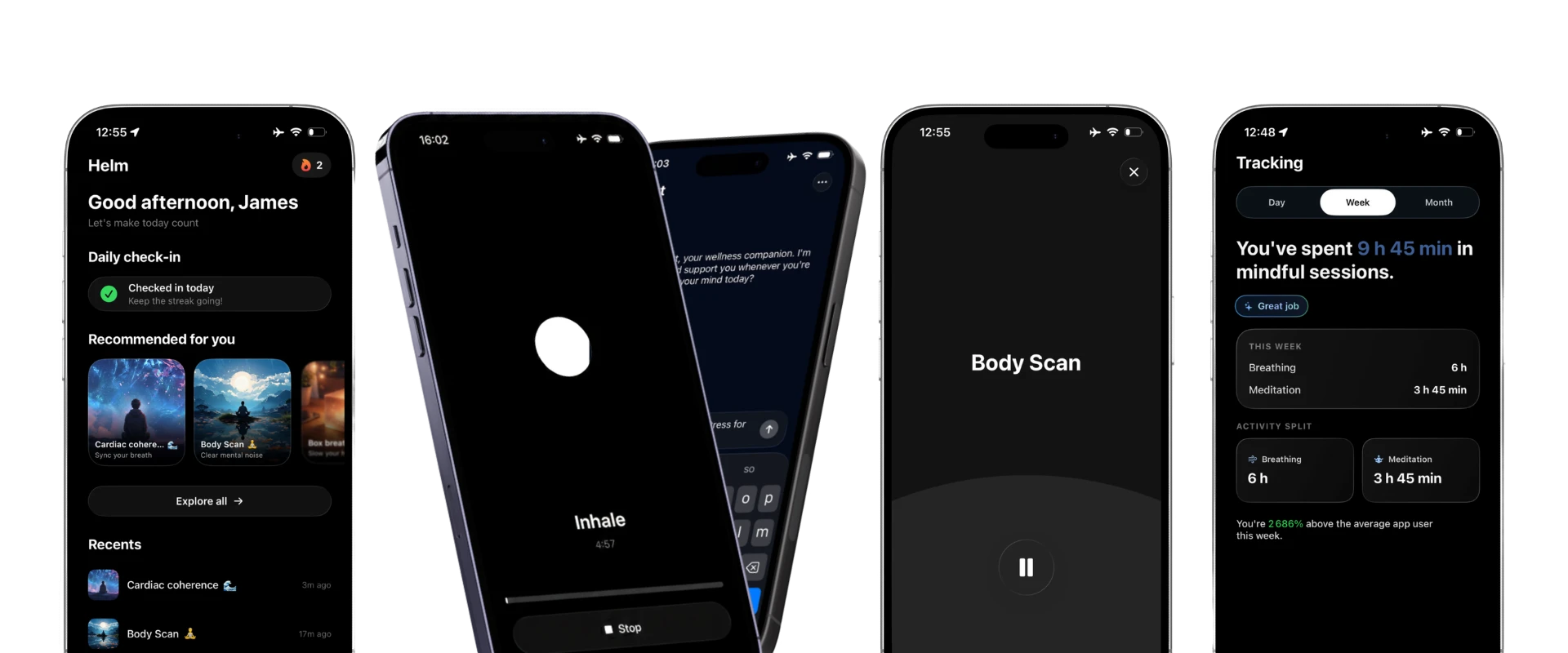
Use the six-breath rhythm as a reference, not a rule. If you feel settled, focused, and physically at ease after a few minutes, you are probably close to your sweet spot. If you want gentle structure, you can try Helm, an iOS mental wellness app designed to manage stress and improve focus through guided breathing resets.
No, not usually. Many beginners can handle it well if the breaths stay light and unforced. If it feels uncomfortable, start slightly faster and slow down over several sessions.
Five to ten minutes is enough for most people. A short daily session usually works better than occasional long sessions because consistency helps the nervous system learn the pattern.
Yes, sometimes, but not always. A slightly longer exhale can feel more calming, but the bigger priority is a smooth, sustainable rhythm that does not create air hunger.
Yes, often. It can reduce arousal and create a stronger sense of control, especially when practiced regularly before stressful moments, not only during them.
Dizziness usually means you are overbreathing. Make the breaths smaller, drop the effort level, and choose a slightly faster pace until your body feels calm rather than strained.
Ten minutes a day to feel calmer, sleep better, and stay sharp.