HELM
The Helm Blog
Insights on nervous system regulation, mental clarity, and the science of optimal performance.
HELM
HELM
HELM
HELM
HELM
HELM
Insights on nervous system regulation, mental clarity, and the science of optimal performance.
Helm is the #1 app to optimize your mind, breathe better, and master your focus. Combine science-backed breathwork and meditation into your daily protocol to build resilience.
Pranayama breathing exercises for beginners are simple yogic breath practices that help you regulate pace, depth, and attention. If you are new, the best place to start is with easy patterns like belly breathing, equal breathing, and gentle alternate nostril breathing, not forceful breath holds or fast pumping methods. Practiced for 5 to 7 minutes, these techniques can support calmer nervous system regulation and steadier focus. Research on slow breathing suggests it can influence stress physiology, heart rate variability, and the balance of the autonomic nervous system, which helps explain why it often feels grounding in real time, as described in this review on slow breathing and the nervous system.
In traditional practice, pranayama means breath regulation, not breath intensity. For beginners, the goal is comfort, consistency, and body awareness. Think of it as learning how to work with your breath before trying to control it.

For a beginner, pranayama is less about advanced technique and more about building a reliable relationship with your breath. You are learning to notice whether the inhale is strained, whether the exhale is rushed, and whether your body feels safer when breathing becomes slower and smoother.
A lot of people try to "take a deep breath" by lifting the chest and tightening the neck. That usually creates more effort, not more ease. A better starting point is diaphragmatic breathing, where the rib cage expands more naturally and the belly softens on the inhale. If that feels unfamiliar, this guide to diaphragmatic breathing vs chest breathing can help you feel the difference before you add any formal pranayama pattern.
The safest starting techniques share one quality: they reduce friction. They do not leave you dizzy, breath-hungry, or overstimulated. In most cases, beginners do well with three foundations: belly breathing, equal breathing, and alternate nostril breathing without breath retention.
Belly breathing teaches you where the breath should move. Place one hand on the chest and one on the belly, inhale gently through the nose, and let the lower hand move first. Equal breathing, often done as 4 counts in and 4 counts out, helps smooth out erratic breathing patterns and improves breath awareness. Alternate nostril breathing, done slowly and without holds, can feel especially centering because it gives the mind a simple task and reduces the urge to overbreathe.
What should you skip for now? Rapid techniques and long retentions. Practices that involve strong pumping, forceful exhalations, or extended breath holds can be useful in some contexts, but they are easy to overdo when you are new. If you have respiratory or cardiovascular concerns, or you are pregnant, it is wise to check basic guidance on yoga safety and keep your practice conservative.
Here is a simple daily routine that gives you the flavor of pranayama without overwhelming your system:
This routine works because it moves from awareness to regulation. First you observe, then you organize, then you refine. If alternate nostril breathing feels awkward, swap it for a longer exhale pattern such as 4 in and 6 out. The session should feel calm, maybe even a little boring. That is usually a sign that you are practicing at the right intensity.
The most common mistake is trying too hard. When people hear "breathwork," they often assume bigger breathing is better breathing. In practice, overbreathing can lead to tingling, lightheadedness, chest tension, and anxiety. A steadier approach, like the kind outlined in this overview of breathing exercises for stress, is usually more useful for everyday regulation.
Keep these beginner rules in mind:
It also helps to avoid practicing right after a heavy meal or when you are rushing out the door. If you want a body-based cue, try placing your hands around the lower ribs and feeling for sideways expansion instead of upper chest lifting. This gentle setup is similar to the approach described in clinical guidance on diaphragmatic breathing, and it helps many beginners breathe with less effort.
For most people, the first benefit is not mystical. It is less internal noise. A few minutes of slow, structured breathing can reduce the feeling of being pulled around by stress, urgency, or scattered attention. Over time, many beginners also notice better breath awareness during the day, fewer stress spikes, and an easier transition into focused work or rest. If you want the broader mechanism, our guide to the science behind breathing exercises explains why controlled breathing can change how you feel so quickly.
The second benefit is better self-pacing. Pranayama teaches you to notice early signs of activation, like jaw tension, shallow breathing, or a rushed exhale, before they turn into full overwhelm. That is where the practice becomes practical. You are not using breath to escape your body. You are using it to stay with your experience more skillfully. A concise explanation of how breath control can help settle the stress response appears in this summary of breath-based relaxation.
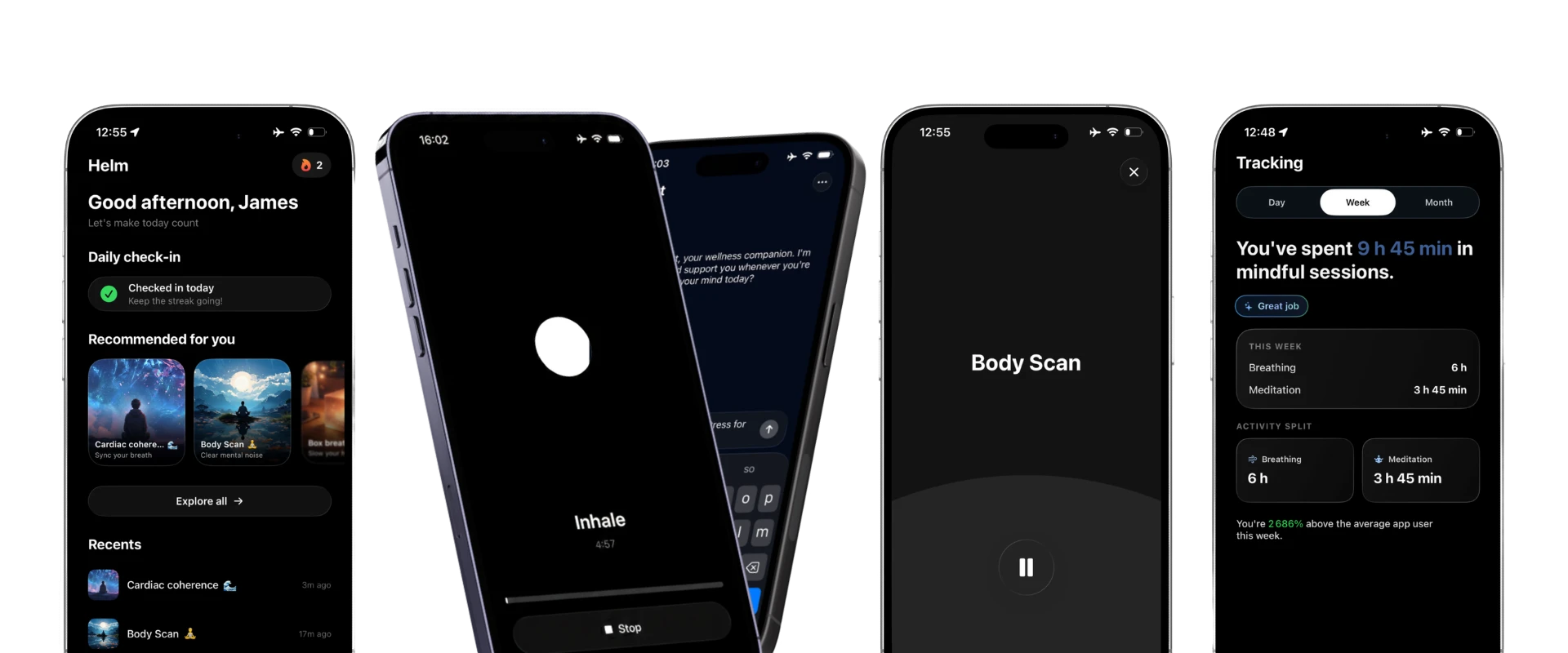
Pranayama is most helpful when you treat it as a skill, not a performance. Start with comfortable nasal breathing, short sessions, and techniques that leave you feeling steadier rather than stimulated. If one pattern makes you lightheaded, irritable, or breath-hungry, scale back and return to basics. A few calm minutes each day is enough to build trust in your breath and create a more stable response to stress over time. If you want a little structure, try Helm, an iOS mental wellness app designed to manage stress and improve focus through guided breathing resets.
Once a day is enough for most beginners. Start with 5 to 7 minutes, and focus on consistency before adding longer sessions or more technical patterns.
Yes, for many healthy adults, gentle alternate nostril breathing without breath holds is safe for daily use. Keep it easy and stop if it creates strain, dizziness, or frustration.
Usually because you are overbreathing or forcing the rhythm. Make the breath smaller, slower, and quieter, and skip rapid methods until your baseline breathing feels relaxed.
No, not at first. Beginners usually benefit more from smooth inhales and longer, relaxed exhales than from breath retention, which can add tension if your foundation is not solid.
Yes, it can. The calming effect comes from how you regulate the breath and nervous system, not from doing a full yoga class around it.
Join thousands using Helm to manage stress, improve focus, and build lasting healthy habits.