HELM
The Helm Blog
Insights on nervous system regulation, mental clarity, and the science of optimal performance.
HELM
HELM
HELM
HELM
HELM
HELM
Insights on nervous system regulation, mental clarity, and the science of optimal performance.
Helm is the #1 app to optimize your mind, breathe better, and master your focus. Combine science-backed breathwork and meditation into your daily protocol to build resilience.
A bedtime routine for racing thoughts works best when it does three things in order: lowers stimulation, gives your mind a place to put unfinished thoughts, and slows your body enough that sleep can happen naturally. The goal is not to force a blank mind. The goal is to make bedtime feel predictable and safe, so your brain stops treating the quiet as a cue to keep working.
If your thoughts speed up the moment your head hits the pillow, you are not doing sleep wrong. Nighttime removes distractions, which means worries, planning, regret, and mental replay suddenly get louder. A good routine short-circuits that pattern before you get into bed. Done consistently, it can reduce bedtime overthinking, shorten sleep latency, and help you feel less trapped by your own mind.

For many people, racing thoughts are a mix of cognitive arousal and habit. During the day, tasks, noise, and screens keep attention occupied. At night, the brain finally has room to surface what you postponed. That can look like planning tomorrow, replaying conversations, or trying to solve big life questions at 11:43 p.m. Research on hyperarousal and sleeplessness helps explain why the body can feel tired while the mind stays switched on.
There is also a feedback loop. One bad night makes you watch the clock. Clock-watching creates pressure. Pressure creates more alertness. Over time, your brain starts to associate bed with performance anxiety around sleep, not rest. That is why clinical guidance on insomnia treatment emphasizes consistent routines and behavioral strategies, not just trying harder to relax.
A useful routine is less about perfection and more about sequence. The best version usually includes a clear cutoff from stimulation, a brief mental offload, and one calming practice that you can repeat without effort. If you only focus on relaxation, but keep answering messages, checking the news, or mentally rehearsing tomorrow, the routine will feel weak because your inputs are still activating you.
Think of it as building a runway for sleep. First, reduce bright light and mental novelty. Second, empty the mind onto paper, even if the list is messy. Third, use a cue that tells the nervous system the day is over, such as slow breathing, gentle stretching, or a body scan. What matters most is repeatability, not complexity. Your brain learns from patterns. If the same few steps happen in the same order each night, sleep gets easier to trust.
Try this short sequence about 20 minutes before you want to sleep:
If your thoughts keep coming, that does not mean the routine failed. It usually means your nervous system needs repetition. Slow breathing is especially helpful because it gives the body a rhythm to follow. An evidence review on slow breathing and stress regulation suggests it can support a calmer autonomic state, which is exactly what bedtime overthinking tends to disrupt.
A few common habits quietly amplify nighttime overthinking.
If you get stuck in your head after lights out, do not immediately pile on more effort. A softer pivot often works better. For example, if breathing makes you focus too hard, shift to a guided body practice instead. This introduction to body scan meditation for insomnia can be a better fit when the mind resists silence and needs a calmer place to land.
Another mistake is judging the thoughts themselves. Racing thoughts are not always danger signals. Sometimes they are just leftover activation. The more you label them as a problem that must stop now, the more alert you become. A better stance is, "My mind is active, and I am still allowed to rest." That small change reduces urgency, which is often what keeps the cycle alive.
If racing thoughts happen occasionally, a consistent routine is often enough. If they show up three or more nights a week for months, or you dread bedtime because your mind feels impossible to slow, it may be time for more structured support. Persistent insomnia, panic symptoms, trauma-related intrusions, or depressive rumination usually need more than sleep tips.
It is also worth getting help if nighttime thinking comes with chest tightness, frequent waking in panic, or major daytime impairment. In those cases, a clinician can help you sort out whether you are dealing with anxiety, insomnia, stress overload, or another contributor. You do not need to wait until it becomes severe. Early support is often simpler and more effective.
A good bedtime routine for a busy mind is not about knocking yourself out with willpower. It is about lowering inputs, offloading unfinished thoughts, and giving your body a slower rhythm than the one your mind is trying to run. Keep it short, consistent, and boring in the best way. That is usually what helps sleep feel possible again.
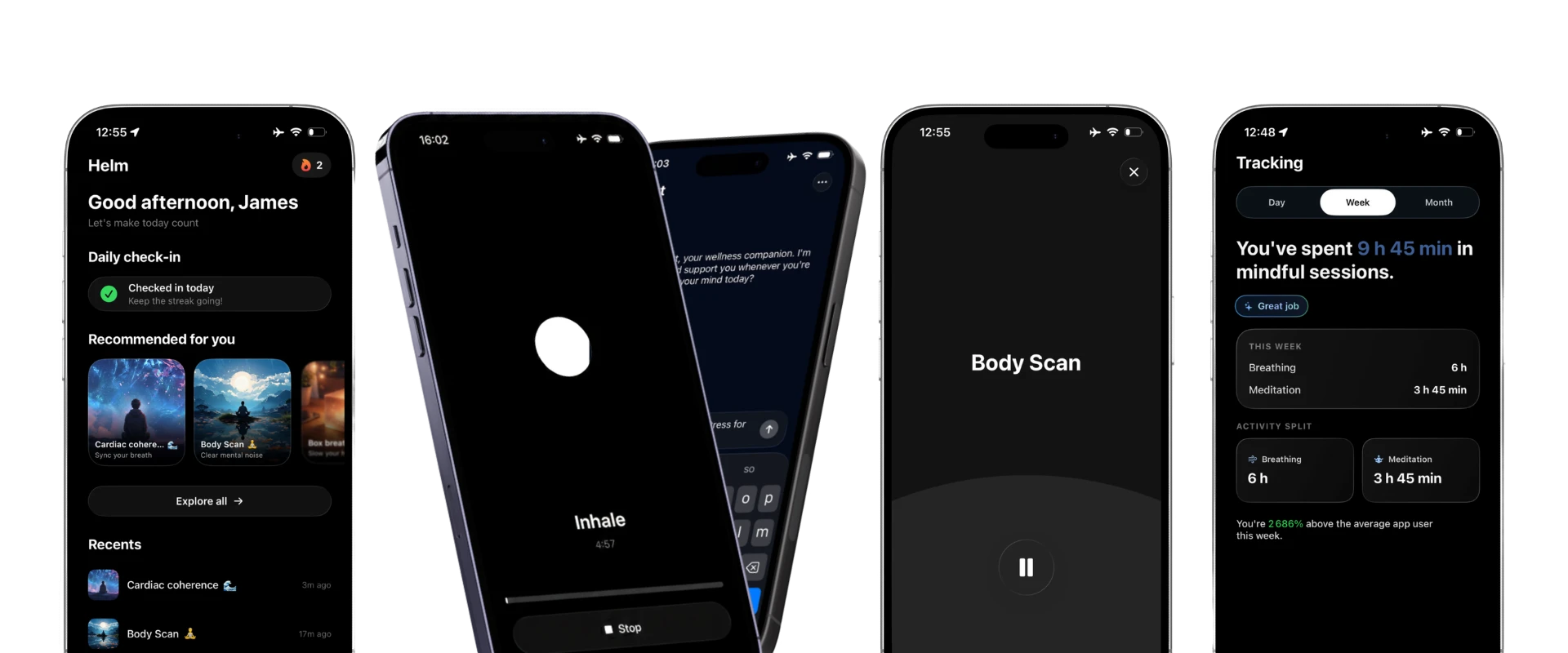
If you try this tonight, remember that success is not a perfectly quiet mind. Success is creating enough calm structure that your brain stops treating bedtime like one last shift of the day. If you want extra support, try Helm, an iOS mental wellness app designed to manage stress and improve focus through guided breathing resets.
About 15 to 30 minutes is enough for most people. Longer is not always better, because the real benefit comes from consistency and sequence, not from building a complicated ritual.
Yes, that can happen at first, especially if you turn the page into a problem-solving session. Keep it brief, write in fragments, and end with one line that says what can wait until tomorrow.
No, not for long stretches. If you have been awake and agitated for about 20 minutes, get up, keep lights low, and do something quiet until sleepiness returns.
Yes, sometimes. If a breathing pattern feels effortful or makes you monitor yourself too closely, switch to a softer exhale or use a body-based anchor like a scan or progressive relaxation.
Ten minutes a day to feel calmer, sleep better, and stay sharp.