HELM
The Helm Blog
Insights on nervous system regulation, mental clarity, and the science of optimal performance.
HELM
HELM
HELM
HELM
HELM
HELM
Insights on nervous system regulation, mental clarity, and the science of optimal performance.
Helm is the #1 app to optimize your mind, breathe better, and master your focus. Combine science-backed breathwork and meditation into your daily protocol to build resilience.
Breathing exercises before workout performance can help, but only when they match the session ahead. A short pre-workout breathing routine can improve focus, ribcage movement, and body tension control, while reducing the rushed, shallow breathing that often shows up before hard training. The goal is not to get deeply relaxed. The goal is to feel alert, organized, and ready to move.
That distinction matters. If you slow your breath too much before sprinting, heavy lifting, or a competitive session, you may feel flat. If you overbreathe or do aggressive breath holds, you may feel dizzy or tight. The best pre-workout breathing uses just enough regulation to sharpen attention, improve bracing, and set the right pace for effort. Think of it as a nervous system warm-up, not a meditation session.

Your breath affects more than calm. It changes rib position, core pressure, and muscle tension, all of which influence how efficiently you move. Before training, many people breathe high into the chest, lift the shoulders, and tighten the neck. That pattern can make you feel keyed up, but it is usually less efficient for bracing, endurance, and rhythm.
A few minutes of better breathing can improve how the diaphragm and ribcage work together, which helps create more stable trunk pressure during lifts and smoother stride or pedal mechanics during endurance work. There is also growing research on respiratory muscle warm-up and exercise performance, especially in athletes who need strong breathing under load.
Breathing before exercise also gives you a clean mental cue. Instead of walking into a session scattered, you arrive with one clear internal rhythm. If you often breathe shallowly under stress, it may help to review diaphragmatic breathing vs chest breathing before trying to use it under a barbell or on a run.
The right approach depends on the demand of the workout. Pre-workout breathwork should support the task, not force the same pattern onto every session.
For strength and power Use 4 to 6 slow breaths through the nose, then exhale slightly longer than you inhale. This can reduce extra tension without making you sleepy. After that, shift into natural breathing and use a firm brace for working sets.
For endurance sessions Start with gentle nasal breathing for 1 to 2 minutes while walking or spinning easily, then lengthen the exhale slightly. This often settles the urge to start too hard. Evidence around nasal breathing and exercise performance suggests it can be useful at lower intensities, but most people will still need mouth breathing as effort rises.
For skill, mobility, or mixed conditioning Use calm, rhythmic breathing with movement. Inhale during setup, exhale during the hardest part, and avoid breath holding unless the movement demands a brief brace. This is often the best option when you want coordination and focus more than raw intensity.
A simple rule works well: if the workout needs precision, use slower breathing first. If the workout needs aggression, use breathing to organize yourself, then let the tempo rise with movement.
This routine works well before lifting, running, circuits, or sport practice. Keep it short and repeatable.
Minute 1: Reset your posture
Stand tall or lie on your back with knees bent. Put one hand on your lower ribs. Inhale quietly through the nose and feel the ribs widen, not just the chest lift.
Minute 2: Use a 4 in, 6 out rhythm
Take five to eight breaths. Do not force a huge inhale. A comfortable inhale and a longer exhale is enough to reduce frantic breathing and improve control. Research on diaphragmatic breathing exercises supports this general pattern for more efficient breathing mechanics.
Minute 3: Add light movement
Keep the same rhythm while you squat to a box, hinge, march, or walk. This helps transfer breathing from stillness into motion.
Minute 4: Match the breath to the workout
For lifting, inhale on the setup and exhale on the easy portion of the rep. For running or cycling, try a steady rhythm such as three steps in, three steps out at easy pace.
Minute 5: Shift from calm to ready
Take two or three slightly stronger breaths, shake out the body, and begin your warm-up sets or first easy interval. If your goal is mental sharpness, a short primer like how to enter flow state with breathing can pair well with this step.
If you finish the routine feeling heavy, you slowed down too much. If you feel lightheaded, you probably breathed too deeply or too quickly. Ready should feel steady, not sedated.
The biggest error is turning pre-workout breathing into a relaxation ritual. That can be useful before bed, not before explosive training. Performance breathing is about regulation, not sedation. You want less wasted tension, not zero arousal.
Another mistake is overbreathing. Big repeated inhales can lower carbon dioxide too quickly and make you tingly, dizzy, or oddly anxious. That is the opposite of what you want before training. Keep each breath quiet and controlled.
People also get stuck on nasal breathing as a rule. At easy intensity, nasal breathing can be helpful. At higher intensity, many athletes naturally switch to mouth breathing to meet demand. Forcing the nose only can create more strain than benefit.
Finally, do not separate breathing from movement. The most useful breathing practice is the one you can keep while you walk, hinge, brace, and accelerate. Breath control should make movement simpler, not more complicated.
If you have asthma, frequent dizziness, panic symptoms, or a history of exercise-induced breathing issues, keep any pre-workout practice gentle and brief. Stop immediately if you feel faint, numb, or distressed. Breath holds and aggressive hyperventilation are poor choices before most general fitness sessions.
Modification is also smart on race day or before very heavy attempts. That is not the time to experiment. Use the lightest version of what you already know works. The best routine is the one that leaves you feeling stable, focused, and physically ready within a few minutes.
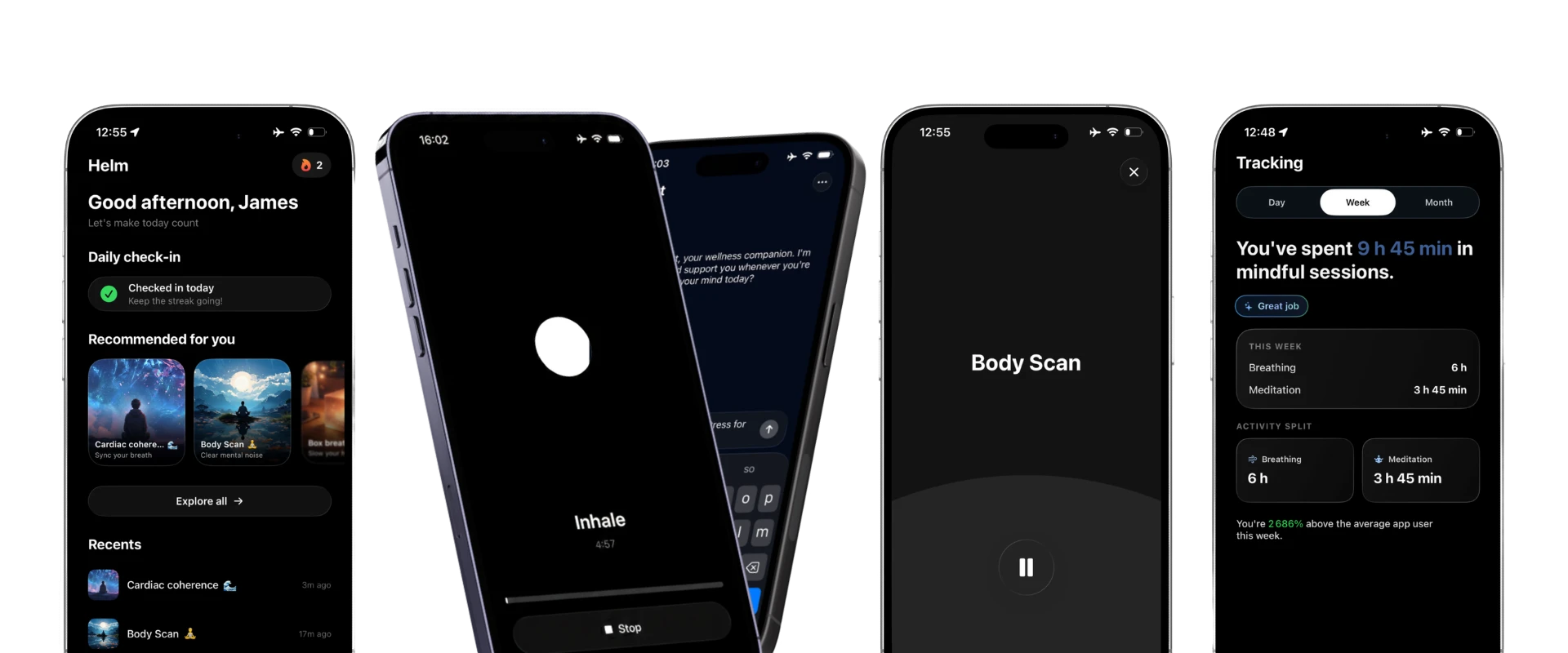
Breathing before exercise is not magic, but it is useful when applied with intent. The right routine can reduce shallow stress breathing, improve trunk organization, and help you start the session at the right gear. For most people, the sweet spot is 3 to 5 minutes of quiet, controlled breaths followed by movement that matches the workout. Keep it simple, specific, and repeatable. You are not trying to feel blissed out. You are trying to feel composed, capable, and ready to perform. If you want a guided way to build that habit, you can try Helm, an iOS mental wellness app designed to manage stress and improve focus through guided breathing resets.
Yes, for most people. A short routine can reduce unnecessary tension and improve bracing, but keep it brief so you feel ready, not overly calm.
Yes, especially at the start of a run. They can help you settle pace, reduce rushed chest breathing, and create a smoother rhythm before intensity climbs.
Three to five minutes is enough for most sessions. Longer routines can work for mobility or recovery days, but they are often unnecessary before hard training.
No, not always. Nasal breathing can be useful at low intensity, but higher effort often requires mouth breathing to meet airflow needs.
Usually, it means you are breathing too deeply or too fast. Reduce the volume of each breath, slow the pace, and stop if symptoms continue.
Ten minutes a day to feel calmer, sleep better, and stay sharp.