HELM
The Helm Blog
Insights on nervous system regulation, mental clarity, and the science of optimal performance.
HELM
HELM
HELM
HELM
HELM
HELM
Insights on nervous system regulation, mental clarity, and the science of optimal performance.
Helm is the #1 app to optimize your mind, breathe better, and master your focus. Combine science-backed breathwork and meditation into your daily protocol to build resilience.
How to unwind after work is to give your body a clear transition, not just stop answering messages. The fastest way to feel better is to close the workday mentally, move for a few minutes, slow your exhale, and do one low-stimulation activity before jumping into chores, screens, or social demands. Your nervous system needs a bridge between work mode and home mode.
That matters because most people do not struggle to relax from a lack of willpower. They struggle because their body is still carrying unfinished activation. If your mind is racing at 6 pm, or you feel oddly tired but unable to settle, the goal is not to force calm. It is to help your system downshift in the right order: signal safety, release tension, then let your attention widen again.

After a demanding day, your brain is often still scanning for problems, decisions, and incoming tasks. Work stress does not end the second work ends. It leaves a residue of muscle tension, shallow breathing, and mental looping, which is one reason work stress can affect sleep, mood, and heart health. If you go straight from meetings to cooking, commuting, parenting, or scrolling, your body may never get the memo that the threat has passed.
This is especially true if you work from home. Without a clear boundary, your home can feel like an extension of your job. The old commute was inconvenient, but it also created a transition. Now many people need to build that transition on purpose. A good unwind routine is less about luxury and more about recovery. It helps you stop carrying the emotional tone of the workday into the rest of your evening.
The most effective after-work routine is short enough to repeat and gentle enough to actually do on tired days. Think of this as a nervous system handoff, not a performance habit. Aim for 20 minutes, broken into four simple steps.
If your breath tends to stay high in your chest, learning the difference between diaphragmatic breathing and chest breathing can make this step much easier. The goal is not deep breathing at any cost, it is comfortable breathing that gives your body a cue to settle.
Your surroundings can either prolong work mode or support recovery. Bright light, endless notifications, and unfinished visual clutter keep the brain alert. A softer room, a change of clothes, and a phone out of reach can do more than people expect. You do not need a perfect evening routine. You need a few cues that say, this part of the day has a different purpose.
Small environmental shifts work because they reduce friction. Relaxation is easier when you stop feeding activation. That might mean dimming lights, taking a warm shower, playing low-volume instrumental music, or delaying social media for 20 minutes. Research also suggests that relaxation techniques can reduce muscle tension and support a calmer physiological state, which is exactly what most people need after a mentally demanding day.
For remote workers, one of the best tricks is to create a fake commute. Walk around the block, sit on a bench for five minutes, or put on a jacket and step outside before you re-enter your home life. A symbolic exit and re-entry can be surprisingly powerful.
When people search how to unwind after work, they often want something instant. That is understandable, but some common habits make the evening feel worse. Doomscrolling gives your brain more novelty and more emotional charge, even if it feels numbing in the moment. Alcohol can feel relaxing at first, but for many people it disrupts sleep quality later. And trying to multitask your way into calm, such as eating dinner while replying to messages and watching videos, keeps your attention fragmented.
It also helps to avoid forcing a huge emotional release when you are already overstimulated. Not every tense evening needs a dramatic fix. Sometimes the most effective move is smaller: fewer inputs, slower transitions, and less pressure to feel amazing right away. Calm usually returns in layers.
If you regularly feel exhausted but unable to settle, notice the pattern instead of blaming yourself. Persistent evening activation often means your recovery is too thin for your load. You may need a firmer stop time, a real break before dinner, or less caffeine late in the day. If your thoughts loop the second work ends, these breathing exercises for overthinkers can help interrupt that spiral without requiring perfect concentration.
It is also worth paying attention if after-work tension is spilling into sleep, irritability, headaches, jaw clenching, or a sense of dread before the next day begins. Those are signs your body may be staying on high alert too often. At that point, a simple unwind routine is still useful, but it may need to sit alongside broader support, better boundaries, or professional care.
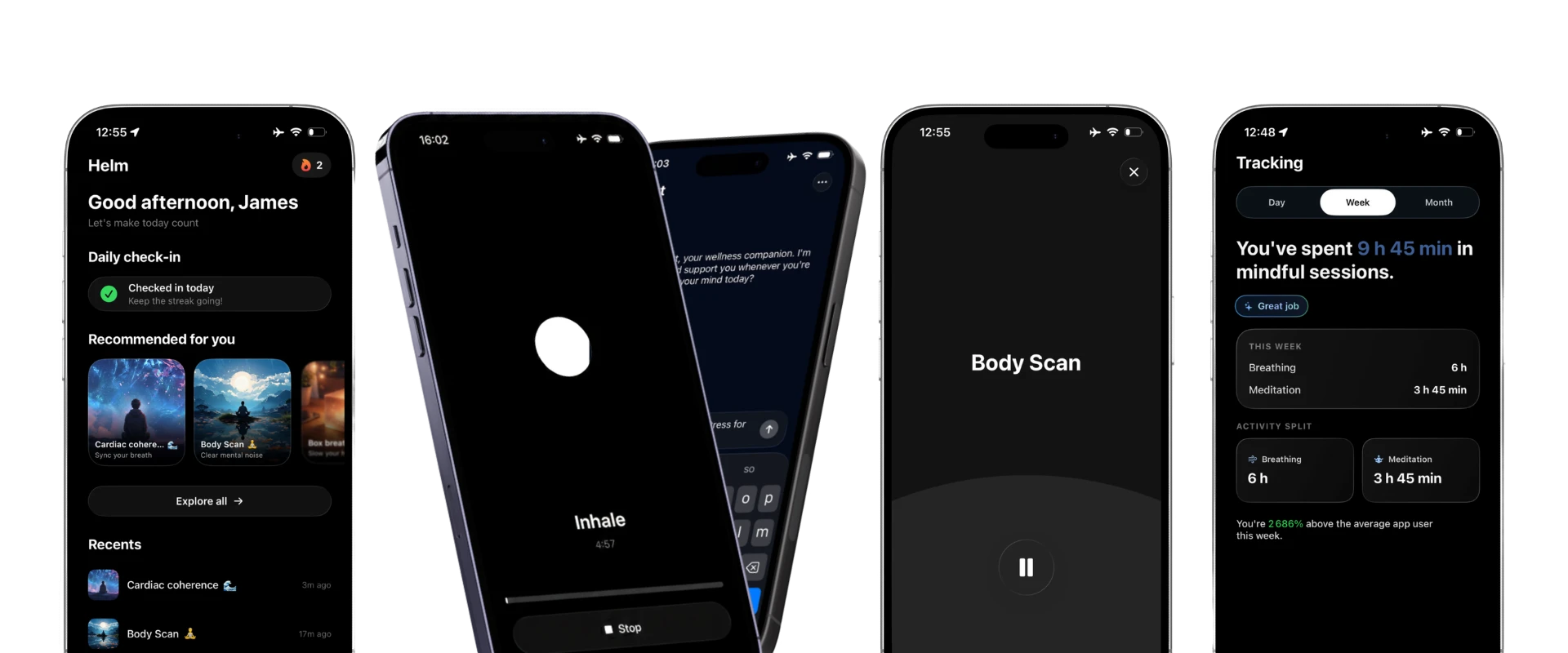
Unwinding after work is less about escaping your day and more about completing it. A short transition ritual helps your body understand that the demand has ended, which is why movement, slower exhalations, and one low-stimulation activity work so well together. You do not need a perfect routine, a long meditation session, or a total personality change. You need a repeatable way to close open loops and stop dragging work energy into the rest of your life. Start small, make it obvious, and protect the first 20 minutes after work like they matter, because they do. If you want extra structure, try Helm, an iOS mental wellness app designed to manage stress and improve focus through guided breathing resets.
Usually 10 to 30 minutes is enough to feel a noticeable shift. If your day was especially intense, your body may need a longer runway, but a short structured transition still works better than waiting to magically relax.
Yes, that is common. Mental fatigue and nervous system activation can happen at the same time, which is why you can feel drained in your head but still restless in your body.
Start by ending work clearly. Close tabs, put your phone away for a few minutes, and do a simple physical reset like walking, stretching, or slow breathing before you move into evening tasks.
Yes, for many people it can. Gentle breathing with a slightly longer exhale can lower arousal and make it easier for your body to shift out of work mode, especially when combined with movement and fewer inputs.
Because your body finally has space to notice what it was holding. Once tasks stop, accumulated tension, suppressed emotions, and unfinished thoughts can surface, which is uncomfortable but also a useful signal that you need recovery, not more stimulation.
Ten minutes a day to feel calmer, sleep better, and stay sharp.