HELM
The Helm Blog
Insights on nervous system regulation, mental clarity, and the science of optimal performance.
HELM
HELM
HELM
HELM
HELM
HELM
Insights on nervous system regulation, mental clarity, and the science of optimal performance.
Helm is the #1 app to optimize your mind, breathe better, and master your focus. Combine science-backed breathwork and meditation into your daily protocol to build resilience.
How to reset between meetings is simpler than most people think. The goal is not to fully relax, zone out, or fix your whole day. It is to give your nervous system a brief signal that one interaction is over, your mind can let go of it, and you can arrive fresh for the next one. In practice, that means a short sequence of breathing, movement, and attention shifting that takes 1 to 5 minutes.
If you move from meeting to meeting without a transition, your body often stays in low-grade activation while your mind carries leftovers from the last conversation. That combination creates irritability, mental fog, and the odd feeling of being busy but not fully present. A good reset helps you clear that residue, lower unnecessary tension, and switch from reactive mode to intentional mode before the next call starts.

Back-to-back meetings are tiring because your system is doing more than listening and talking. You are reading tone, tracking tasks, deciding what to say, and often managing self-presentation at the same time. That creates cognitive load, especially when every meeting asks for a different role from you. The friction is partly attention residue, the lag that happens when part of your mind is still processing the last task, a pattern described in attention residue research.
Even a short pause can help. A meta-analysis on micro-breaks found that brief breaks can improve vigor and reduce fatigue, especially when they interrupt prolonged mental effort. In other words, small resets matter. You do not need a long lunch, a silent room, or perfect conditions. You need a repeatable transition ritual that tells your brain and body, this part is done, now we shift.
The best between-meeting reset does three things quickly. First, it lowers physical arousal by extending the exhale or slowing the breath. Second, it releases muscular bracing, especially in the jaw, shoulders, eyes, and hands. Third, it gives your attention a new anchor so you are not mentally replaying the last conversation. That is why checking email is not a reset. It changes the task, but it does not settle the system.
There is also good reason to use the breath first. A review of slow breathing and autonomic function suggests slower breathing can support parasympathetic activity and improve emotional regulation. That does not mean every breath practice is right for every moment. For work transitions, the safest choice is usually gentle, exhale-led breathing rather than intense, energizing techniques that may leave you more activated.
Use this sequence when you have a few minutes between meetings. The order matters because it moves from body regulation to mental clarity.
Done consistently, this ritual helps you feel less swallowed by the day. It is short enough to use in real life, but structured enough to change your state.
Sometimes there is no five-minute gap, only the awkward half-minute after one meeting ends and the next one opens. In that case, simplify. A short reset still counts if it changes your physiology and your focus.
Try this 60-second version:
That tiny sequence helps because it interrupts the automatic chain of reaction. Instead of carrying urgency forward, you create a clear transition cue. Over time, your brain starts to associate this mini ritual with resetting, which makes the effect stronger and faster.
A reset works best when you stop treating it like a luxury. If your calendar is packed wall to wall, the problem is not only stress tolerance, it is lack of transition design. Protecting even two minutes between calls can improve how you think, speak, and listen. The most effective approach is to make the reset automatic, not motivational. Put a buffer between meetings when possible, keep a glass of water nearby, and end calls a minute early when you are the host.
It also helps to notice what sabotages recovery. If your first move is scrolling, snacking under stress, or slumping deeper into your chair, your body never gets a real downshift. Many people also think they are taking deep breaths when they are actually lifting the chest and tightening the neck. If that sounds familiar, learn the difference between diaphragmatic breathing and chest breathing. Better mechanics make short resets more effective because the body receives a cleaner signal of safety.
The point of a between-meeting reset is not to become perfectly serene. It is to become available again, less defended, less scattered, and more capable of choosing your next response. Some meetings call for calm. Others call for energy, precision, or a steadier voice. A good reset gives you enough space to access the right state instead of dragging the last one into the next room.
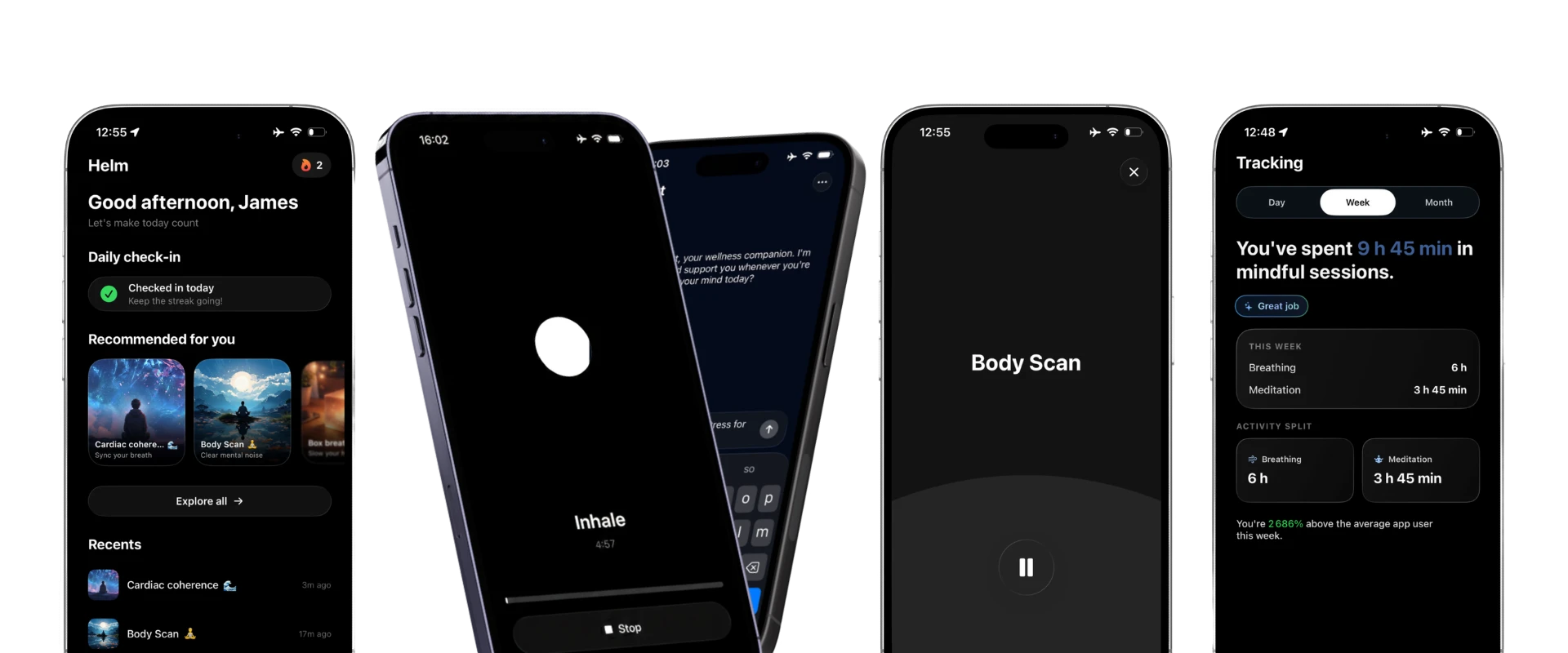
Start small and repeat it often. One minute is enough to change the tone of your next conversation, and five minutes can change the feel of your whole afternoon. The more often you mark a clean transition, the less buildup you carry through the day. If you want a little structure, you can try Helm, an iOS mental wellness app designed to manage stress and improve focus through guided breathing resets.
One to five minutes is usually enough. The best duration is the one you will actually use consistently, especially before high-stakes or back-to-back calls.
Yes, even 30 to 60 seconds can help. Focus on one long exhale, relaxing your jaw and shoulders, and choosing one clear intention for the next conversation.
No, not if your goal is recovery. Email keeps your attention externally hooked and often adds fresh stress before your nervous system has had a chance to settle.
Yes, gentle breathing can improve focus by lowering unnecessary arousal. When your body feels safer and less tense, it is easier to listen, think clearly, and respond on purpose.
Ten minutes a day to feel calmer, sleep better, and stay sharp.