HELM
The Helm Blog
Insights on nervous system regulation, mental clarity, and the science of optimal performance.
HELM
HELM
HELM
HELM
HELM
HELM
Insights on nervous system regulation, mental clarity, and the science of optimal performance.
Helm is the #1 app to optimize your mind, breathe better, and master your focus. Combine science-backed breathwork and meditation into your daily protocol to build resilience.
To calm nerves before a job interview, lower your body’s stress response first, then guide your attention. Start with a longer exhale than inhale, relax your jaw and shoulders, feel both feet on the floor, and give your mind one job: answer the next question, not the whole future. Interview nerves usually settle fastest when you calm the body before trying to think positively.
A little activation is normal. You are not trying to feel sleepy or blank. You are trying to feel steady, alert, and able to think in full sentences. That means working with adrenaline, not fighting it. A short breathing reset, a simple physical grounding cue, and one clear mental script are usually more effective than repeating confidence affirmations you do not fully believe.
If your hands shake, your heart races, or your mind goes blank before interviews, that does not mean you are unprepared. It means your nervous system reads evaluation as a threat. The good news is that this response is trainable. You can feel nervous and still come across as calm, thoughtful, and credible.

Job interview anxiety is not just in your head. When you expect to be judged, your body may shift into a mild fight-or-flight state. That can raise heart rate, tighten breathing, dry your mouth, and narrow attention. An overview of how stress shows up in the body explains why stress often feels physical before it feels mental.
The common mistake is trying to talk yourself out of feeling nervous while your breathing is still shallow and your muscles are braced. A stressed body produces stressed thoughts. Slow breathing and muscle release help signal safety upward to the brain. An evidence summary on relaxation techniques notes that breath-based practices can reduce stress and improve regulation.
There is also a performance trap here. Many people think they need to eliminate nerves completely. You do not. Your real goal is controlled activation. Enough energy to sound engaged, not so much that you rush, ramble, or forget the question.
The best pre-interview routine is short, repeatable, and physical. Do not wait until you feel calm to begin. Start the routine, and calm usually follows.
This works because a longer exhale tends to reduce arousal more effectively than forceful deep breathing. If you need an even faster option, try this 30-second physiological sigh reset before entering the building. If slow breathing makes you lightheaded, reduce the size of the inhale. A clinical guide to diaphragmatic breathing describes the same principle: breathe low, easy, and without strain.
Right before the interview, avoid checking your notes for the twentieth time. Last-minute cramming often raises anxiety instead of improving recall. A better move is to review three anchors only: who you help, one strong example, and one thoughtful question to ask. Your brain performs better when it feels oriented, not overloaded.
The waiting room is where anxiety often spikes again. You are close enough for your body to anticipate the moment, but not yet able to act. Use that gap to ground, not to spiral. Put both feet flat on the floor. Notice 3 things you can see, 2 things you can feel, and 1 sound you can hear. This widens attention and interrupts tunnel vision.
Next, lower your speaking speed before you even start. Quietly read one sentence from your notes at 90 percent of your normal pace. A calmer pace changes how confident you feel and how confident you sound. Most interview nerves become obvious through rushed speech, not through the feeling itself.
If you notice catastrophic thoughts, do not argue with them. Replace them with a performance cue: “Slow first sentence.” “Answer one part at a time.” “Pause before examples.” This is more useful than trying to manufacture certainty. A simple set of breathing exercises for stress can also help if your chest feels tight while you wait.
Once the interview begins, your best strategy is to buy yourself two extra seconds. After each question, inhale softly through the nose and let the exhale start before you speak. That tiny pause prevents blurting, gives your brain time to organize, and makes you appear composed.
If your mind goes blank, use a bridge sentence instead of panicking. Say, “That is a good question. Let me think about the clearest example.” Then breathe out as you begin. Structure creates calm. Your nervous system likes predictability, so rely on simple patterns such as situation, action, result.
When your body still feels buzzy, shift attention below the neck. Press your feet into the floor for three seconds, relax your toes, and let your shoulders drop on the exhale. That kind of grounding can stop anxiety from hijacking your working memory. If you want more on that skill, this body-based guide to feel grounded when stressed explains why physical cues help attention return.
Remember that interviewers rarely penalize a thoughtful pause. They do notice rambling, apologizing, and overexplaining. Calm communication is often slower, simpler, and shorter than anxious communication.
A few habits reliably intensify pre-interview nerves:
The hidden issue is not just anxiety, it is self-monitoring overload. When you keep checking, “Do I look nervous? Do I sound nervous? Am I messing up?” you split your attention. A better question is, “What is this person asking me to help them understand?” That shift moves you from self-protection to connection.
The night before matters too. Prepare your clothes, route, documents, and first answer early, then stop. Confidence grows from reducing friction, not from endless rehearsal.
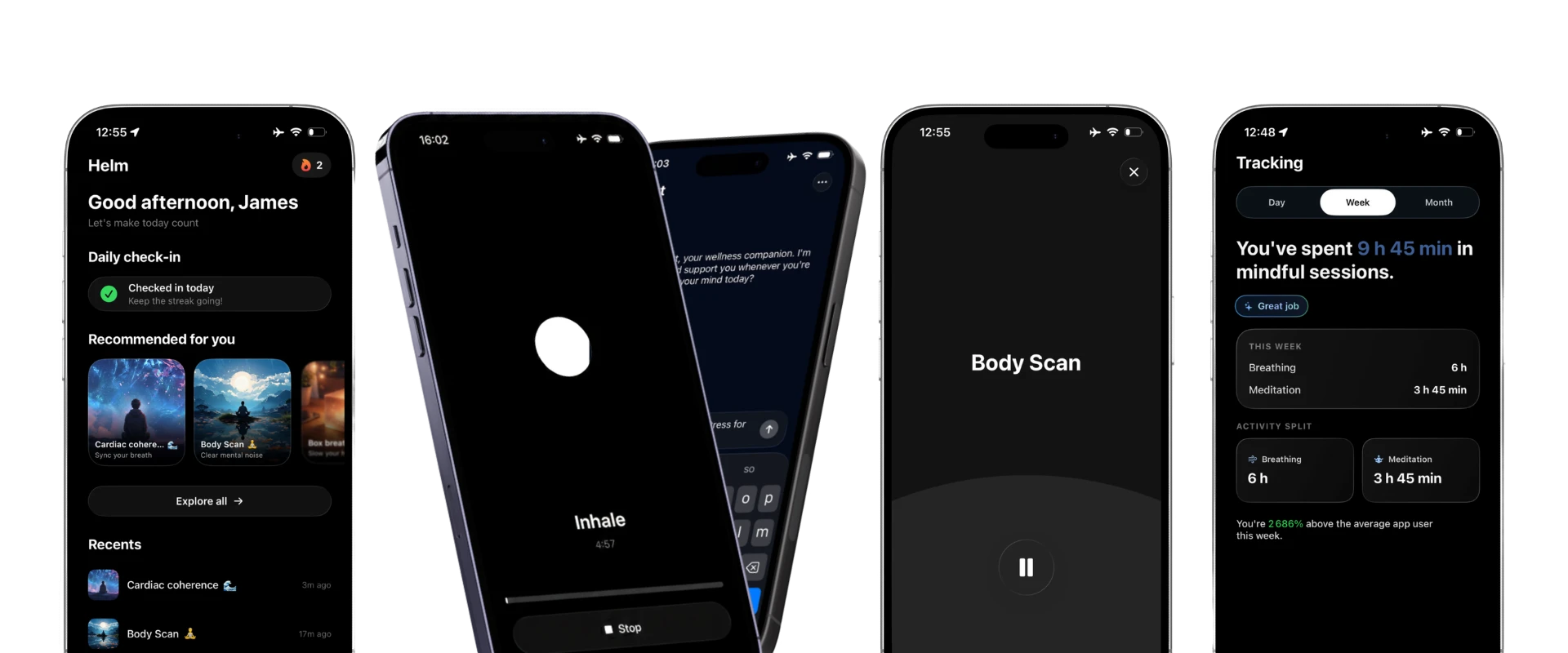
If you want to know how to calm nerves before a job interview, the fastest path is simple: settle the body, narrow your focus, and aim for steady rather than perfectly calm. A longer exhale, relaxed shoulders, grounded feet, and one clear mental cue can change how you think, speak, and listen within minutes. You do not need to erase adrenaline to interview well. You only need to keep it from driving the conversation. Practice the same short routine before lower-stakes conversations, and your body will learn that being evaluated is uncomfortable, not dangerous. If you want guided help building that habit, try Helm, an iOS mental wellness app designed to manage stress and improve focus through short guided breathing resets.
Yes, you usually can reduce shaking within a few minutes. Lengthen your exhale, press your feet into the floor, unclench your hands, and slow your first sentence instead of trying to force total calm.
No, a little nervousness is normal and often invisible to other people. It becomes a problem mainly when it speeds up your breathing, speech, or thinking so much that your answers lose structure.
Do three things: breathe out longer than you breathe in, relax your jaw and shoulders, and review three talking points only. That is usually more effective than rereading every possible answer.
Yes, they can help because they target the physical side of anxiety first. Slower, easier breathing can lower arousal enough for your memory, attention, and speaking pace to recover.
Ten minutes a day to feel calmer, sleep better, and stay sharp.