HELM
The Helm Blog
Insights on nervous system regulation, mental clarity, and the science of optimal performance.
HELM
HELM
HELM
HELM
HELM
HELM
Insights on nervous system regulation, mental clarity, and the science of optimal performance.
Helm is the #1 app to optimize your mind, breathe better, and master your focus. Combine science-backed breathwork and meditation into your daily protocol to build resilience.
A mental reset after zoom meetings works best when you reduce sensory input, relax the muscles that stayed braced during the call, and lengthen your exhale for a few minutes. Video meeting fatigue is real, and it is different from ordinary work stress. Your attention stays locked on faces, your body often stays still, and many people unconsciously monitor their own image, voice, and timing the whole time.
That mix can leave you foggy, tense, and oddly overstimulated, even if the meeting itself went fine. The good news is that you do not need a long meditation or a full walk outside to recover. A short, body-first routine can help your nervous system register that the social performance is over and that it is safe to shift back into focused work. Below, you will learn why video calls feel so draining, how to reset in about seven minutes, and how to prevent the next crash before it starts.

Video calls ask more of your brain than most people realize. Research on videoconference fatigue suggests that prolonged close-up eye contact, reduced mobility, and constant self-presentation all increase cognitive load and stress. One widely cited explanation from researchers studying videoconference fatigue points to exactly these patterns.
There is also a physical layer. Many people breathe shallowly while staring at a screen, tighten their jaw, and keep their shoulders slightly raised. Add visual strain from near-focus and glare, and your body may stay in low-grade activation even after the meeting ends. Guidance on digital eye strain and screen habits helps explain why your eyes and attention can feel cooked after a long call block.
This is why simply jumping into the next task often backfires. Your mind says the meeting is over, but your body has not caught up yet. If you only have a few minutes, a 5 minute nervous system reset between meetings can help. If you have seven, use the fuller reset below.
The goal is not to force calm. The goal is to give your brain clear signals that the social demand has ended. Think less performance, more decompression.
This routine works because it addresses the three main leftovers of virtual meetings: visual overload, muscular bracing, and mental residue. If breathing feels irritating, skip counting and simply make the exhale soft and slightly longer.
Not every post-call crash is the same. If you identify the type, your reset becomes more effective.
A useful rule is this: match the reset to the symptom, not to the ideal version of wellness. If your eyes ache, do not force a long journaling session. If your chest feels tight, do not jump straight into a high-stakes task. Meet the body where it is.
Recovery gets easier when you stop stacking strain. Most post-meeting fatigue builds gradually across the day, not in one dramatic moment.
Keep these habits simple:
Breathing mechanics matter more than people think. If you notice upper chest tension, it helps to understand the difference between diaphragmatic breathing and chest breathing. A steadier baseline breath gives you more capacity when meetings pile up.
Another overlooked habit is ending meetings with a note to self. Write one sentence before you leave the call: what matters now? Loose mental loops are exhausting, and unfinished cognitive threads often create the feeling that the meeting is still happening in your head.
Sometimes the problem is not the meeting, it is overload. If every call leaves you shaky, irritable, or unable to concentrate, take that seriously. Persistent stress can show up as headaches, poor sleep, muscle tension, and mood changes. General medical guidance on stress symptoms and when to pay attention is worth reviewing.
If breathing exercises make you dizzy, panicky, or more activated, keep them gentle and stop counting. And if you are dealing with anxiety, trauma, burnout, or panic symptoms, personalized support may be more useful than another generic reset. A short routine is a tool, not a cure-all.
A strong post-call reset is less about doing more and more about sending your body a clear signal that the demand has ended. Video meetings drain attention in a specific way: they combine visual strain, social self-monitoring, stillness, and shallow breathing. When you answer that with less screen input, softer muscles, a longer exhale, and one clear next action, you recover faster and carry less residue into the rest of your day.
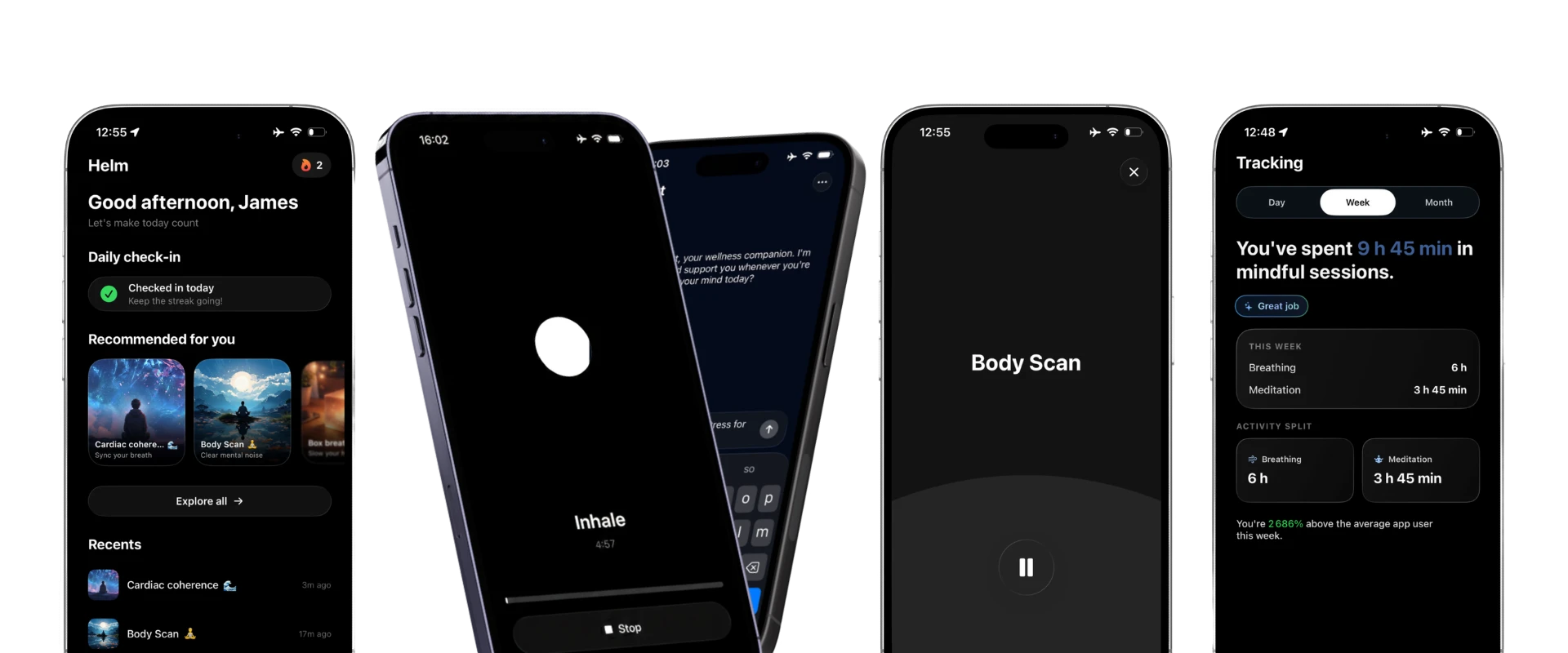
The most useful reset is the one you will actually use, especially after ordinary meetings that leave you subtly fried rather than dramatically stressed. Start small, repeat it often, and treat recovery as part of work, not a reward you earn later. If you want guided 5-minute resets on iPhone, Helm offers a simple way to practice breathing routines that reduce stress and support focus.
Yes, they often can. Video meetings increase close-up visual focus, reduce natural movement, and make many people monitor their own face and voice more than they would in person.
Five to seven minutes is enough for most people. Even two minutes can help if you focus on looking away from the screen, releasing muscle tension, and extending the exhale.
Yes, you can. Rest your eyes on a distant point, unclench your jaw and shoulders, breathe out longer than you breathe in, and write one next action before reopening tabs.
Yes, that happens for some people. Keep the breath natural, avoid big inhales, and focus first on posture, eye relief, and light movement instead of strict breath counts.
Not always, but it can be a clue. Occasional fog after heavy call days is common, but frequent exhaustion, irritability, poor sleep, and trouble recovering may point to a larger stress load.
Ten minutes a day to feel calmer, sleep better, and stay sharp.