HELM
The Helm Blog
Insights on nervous system regulation, mental clarity, and the science of optimal performance.
HELM
HELM
HELM
HELM
HELM
HELM
Insights on nervous system regulation, mental clarity, and the science of optimal performance.
Helm is the #1 app to optimize your mind, breathe better, and master your focus. Combine science-backed breathwork and meditation into your daily protocol to build resilience.
How to transition from work mode to home mode? The simplest answer is this: create a short, repeatable shutdown ritual that tells your brain and body the workday is over. Close open loops, move your body, slow your exhale, and change the cues around you. That sequence helps you shift out of performance mode and into recovery mode, especially if you work from home or finish the day feeling mentally wired.
Most people do not need a perfect evening routine. They need a reliable handoff. Work mode is a state of alertness, problem-solving, and unfinished attention. Home mode asks for something different: presence, softness, and enough recovery to feel like yourself again. When you treat the transition as a nervous system skill, not a motivation problem, it gets much easier to stop carrying the day into dinner, bedtime, and the next morning.

Your brain uses context to change states. A commute used to provide built-in cues: standing up, walking out, changing scenery, and leaving work talk behind. Without those cues, the body often stays in low-grade activation. Research on recovery from work shows that psychological detachment matters for restoring energy, mood, and focus, not just free time itself, as outlined in this foundational paper on recovery from job stress.
That is why you can be technically done for the day and still feel mentally on call. Notifications, unfinished tasks, and the same physical environment keep signaling, "stay available." If that sounds familiar, it helps to understand why you may feel overstimulated after work. The problem is often state carryover, not weakness. Your system has not received enough evidence that the demand period is finished.
A short ritual works best when it is simple enough to repeat on tired days. Try this sequence at roughly the same time each evening, even if your day ended messily.
What makes this effective is not intensity. It is consistency and sequencing. First you close loops, then you discharge activation, then you downshift physiology, then you mark the new context. Done daily, this becomes a learned cue your nervous system starts to trust.
Rituals work because repetition becomes prediction. If you always end work by clearing your desk, taking ten slow breaths, and stepping into a different room, your brain begins to associate those actions with safety and release. Over time, the transition gets faster because you are not deciding from scratch every evening.
If you work from home, make the boundary visible. Even a tiny environmental change helps. Cover the monitor, place work items in a drawer, switch lamps, or sit in a different chair for your evening. When work and home happen in the same room, your cues need to do the job the commute used to do.
When you have almost no gap between tasks and family life, borrow the logic from a 5 minute nervous system reset between meetings and apply it to the end of the day. Small resets are often more realistic than ideal routines. A five to ten minute transition done consistently beats a complicated plan you skip three times a week.
Mental spillover usually needs containment, not more effort. If your brain keeps replaying conversations or tomorrow's tasks, set a seven-minute "worry window" before dinner. Write every loose concern down, then add one next action beside each item. This tells the brain the issue has a parking spot.
If the mind is spinning, start with the body before you try to reason with yourself. The body often exits work mode before the mind does. Exhale longer than you inhale, unclench your jaw, drop your shoulders, and look at a farther point in the room or outside. That wider visual focus can soften the tunnel vision that often comes with stress.
Finally, protect the evening inputs that pull you back into activation. Checking email, reviewing one last message, or sliding into stress-heavy scrolling can undo your reset. Good sleep guidance consistently emphasizes regular wind-down cues and lower stimulation in the evening, as summarized in this evidence-based sleep hygiene guide. Home mode needs protection, not just intention.
A few common habits make the transition harder than it needs to be:
The best transition is not the fanciest one. It is the one your tired self can actually do. If your evenings keep feeling hijacked, simplify the ritual until it is almost impossible to skip.
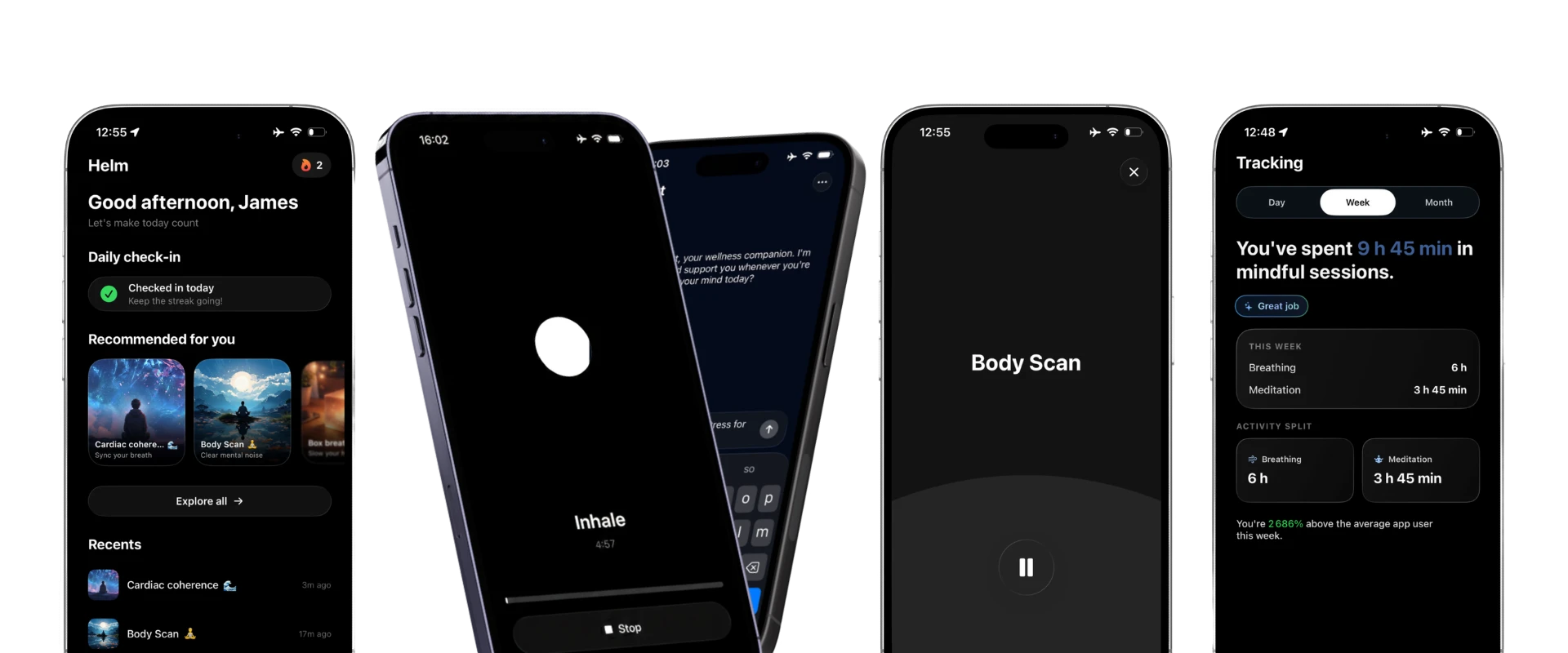
Learning how to transition from work mode to home mode is really about teaching your system when effort ends and recovery begins. You do not need to feel blissful the second you log off. You only need a reliable handoff that closes mental loops, changes your body state, and makes your environment feel different from work. Start small, repeat the same cues for a week, and notice whether you arrive at dinner, family time, or bedtime with more of yourself available. If you want extra structure, you can try Helm, a mental wellness app designed to manage stress and improve focus through guided breathing resets.
Usually, 5 to 15 minutes is enough to start the shift. Full emotional decompression can take longer, but a short shutdown ritual should noticeably reduce mental carryover within the first few minutes.
Yes, you can still create a strong boundary without a separate room. Use visual and sensory cues like closing the laptop, changing clothes, switching lights, and moving to a different seat after work.
For most people, move first, then breathe. Light movement helps discharge built-up activation, and slow breathing works better once your body is a little less tense and restless.
Because logging off is not the same as recovering. Your mind may still be carrying unfinished tasks, stress hormones may still be elevated, and your environment may still be signaling work instead of rest.
Ten minutes a day to feel calmer, sleep better, and stay sharp.