HELM
The Helm Blog
Insights on nervous system regulation, mental clarity, and the science of optimal performance.
HELM
HELM
HELM
HELM
HELM
HELM
Insights on nervous system regulation, mental clarity, and the science of optimal performance.
Helm is the #1 app to optimize your mind, breathe better, and master your focus. Combine science-backed breathwork and meditation into your daily protocol to build resilience.
If you are asking why do i feel overstimulated after work, the short answer is this: your nervous system may still be stuck in high-input mode. A day full of screens, decisions, conversations, noise, deadlines, and emotional self-control can leave your brain overloaded, even if your job is not physically demanding. That is why home can suddenly feel too loud, too bright, or too demanding.
This after-work buzz is often a mix of mental fatigue, stress chemistry, and delayed recovery. Research on stress and sleep and relaxation techniques shows that the body does not always switch from alert to rest on command. You usually need a transition, not just the end of the workday.

Overstimulation is what happens when your brain has taken in more input than it can comfortably process. That input can be sensory, like noise, light, traffic, and notifications. It can also be cognitive, like multitasking, constant problem-solving, and unfinished tasks still looping in your mind. By the time work ends, your body may feel tired while your mind still feels switched on.
This is not always the same as burnout or anxiety, though it can overlap with both. Sometimes the clearest signs are ordinary: you feel irrationally annoyed when someone talks to you, you want silence immediately, small choices feel impossible, or you scroll for an hour because you cannot tolerate one more demand. According to work stress research, ongoing pressure can affect mood, attention, and the body at the same time.
One reason is attention residue. When your day is fragmented by meetings, messages, tabs, and task-switching, part of your attention stays attached to what you were just doing. Even after logging off, your brain may still be half-processing unresolved work. That lingering activation can feel like restlessness, irritability, or the strange sense that you are home but not fully off.
Another reason is suppressed stress. Many people do not feel the full load of the day until they finally stop. During work, performance mode keeps things moving. After work, the body has enough space to notice the accumulated strain. That delayed drop can look like anger, shakiness, zoning out, or a strong urge to be left alone.
There is also the sensory pileup factor. Commutes, open offices, bright screens, background noise, and social interaction all tax the nervous system. Even remote workers can hit the same wall through back-to-back calls and constant digital input. If your evenings also involve more scrolling, you may need a stronger transition. A structured 20-minute transition ritual after work can help create a cleaner handoff between work mode and home mode.
Plain tiredness usually improves with food, hydration, or a little rest. Overstimulation tends to feel more jagged. Your system wants less input, not just less effort.
Common signs include:
The goal is not to force instant calm. The goal is to give your body a clear signal of safety and reduce input for a few minutes. If you regularly feel overstimulated after work, try this sequence before dinner, chores, or more screen time.
This works because recovery is state-dependent. You calm down more easily when your environment, breathing, posture, and attention all point in the same direction. You do not need a perfect ritual. You need a repeatable one.
If this happens occasionally, it is usually a load-management issue, not a sign that something is wrong with you. But if you feel overstimulated after work most days, or the reaction is intense, it may be worth looking at bigger patterns. Anxiety, ADHD, autistic sensory sensitivity, poor sleep, chronic stress, migraines, hormonal shifts, and burnout can all lower your threshold for input.
Pay attention if overstimulation is paired with panic symptoms, persistent insomnia, regular shutdowns, or conflict that is hurting your relationships. Chronic stress can affect sleep, focus, and irritability in ways that build over time, as noted in this mental health overview of stress. If your evenings never feel restorative, or your body stays keyed up long after work ends, it may help to talk with a clinician who can look at the full picture.
Feeling overstimulated after work usually does not mean you are fragile or doing relaxation wrong. It often means your brain and body absorbed more input than they finished processing during the day. The fix is rarely more discipline. It is usually better transitions, lower evening input, and a few minutes of deliberate downshifting before you ask yourself to socialize, decide, or perform again.
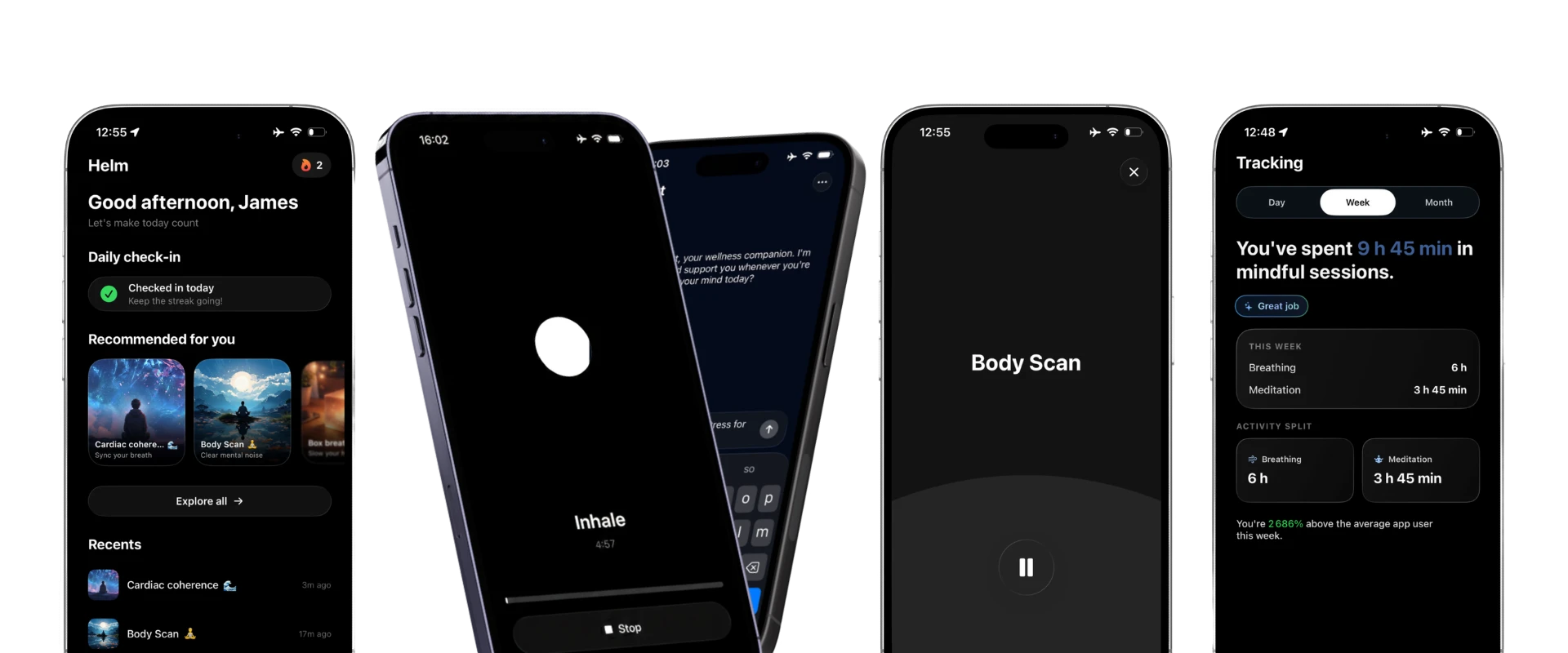
If you start noticing your personal pattern, like noise sensitivity, irritation, craving silence, or getting stuck in your phone, you can intervene earlier. Small resets work best when they happen before overload spills into the rest of the night. If you want extra structure, Helm is an iOS mental wellness app designed to manage stress and improve focus through guided breathing resets.
Yes, that is common. Noise irritation after work often means your nervous system has reached its input limit, so normal sounds feel sharper and more intrusive than they would earlier in the day.
Yes. Video calls, chat notifications, multitasking, and constant screen-switching can create just as much cognitive overload as a noisy office, sometimes more because there are fewer natural breaks.
For many people, 10 to 30 minutes helps. The exact time depends on sleep, stress load, and how intense your workday was, but a short transition usually works better than pushing through.
Not always. Scrolling can feel numbing in the moment, but fast visual input often keeps the brain stimulated, which is why you may feel more restless or drained afterward.
Ten minutes a day to feel calmer, sleep better, and stay sharp.