HELM
The Helm Blog
Insights on nervous system regulation, mental clarity, and the science of optimal performance.
HELM
HELM
HELM
HELM
HELM
HELM
Insights on nervous system regulation, mental clarity, and the science of optimal performance.
Helm is the #1 app to optimize your mind, breathe better, and master your focus. Combine science-backed breathwork and meditation into your daily protocol to build resilience.
The best evening phone habits for better sleep are simple: stop active scrolling 30 to 60 minutes before bed, dim your screen earlier in the evening, mute notifications, avoid emotionally charged content, and replace the last check with a short wind-down routine. These habits work because they reduce light exposure and mental stimulation, which are two of the biggest reasons phones push sleep later.
Most people blame blue light alone, but that is only part of the problem. A phone can keep the brain alert through novelty, social tension, unfinished tasks, and easy access to endless content. If sleep feels unpredictable, changing the last hour before bed often gives you more leverage than trying to force sleep once you are already in bed.

Your brain does not experience a late-night phone session as neutral. Bright light and fast-changing content can delay the shift into a sleep-ready state, especially when phone use happens close to bedtime. General sleep hygiene basics emphasize regular timing and limiting stimulating activities before sleep, and what happens during normal sleep and circadian timing helps explain why late light and late alertness matter.
But for many adults, the bigger issue is cognitive arousal, not just the screen itself. News, messaging, short videos, shopping, and work email all tell the nervous system to stay ready. Even when the content feels relaxing, scrolling can create time loss, emotional carryover, and a habit of checking the phone whenever the mind goes quiet.
If you want better sleep without overhauling your whole life, focus on a few repeatable phone boundaries instead of chasing perfect discipline.
The goal is not perfection. Consistency beats intensity. A gentle routine repeated most nights trains your brain to expect sleep instead of stimulation.
If you usually pick up your phone when the day finally gets quiet, you need a substitute, not a lecture. A good wind-down routine starts before exhaustion. Finish practical tasks, set tomorrow's top priority, then let the bedroom signal rest instead of decision-making. If racing thoughts are part of the loop, this bedtime routine for racing thoughts can help you bridge from mental noise to a calmer state.
Keep it small enough to do on stressful days. Ten low-friction minutes is better than an ideal routine you skip. Many people do well with dim lights, a short wash-up, one page of reading, and no phone in bed. Predictability is calming because it reduces the tiny choices that keep the mind active.
Sometimes avoiding phones completely is not realistic. Parents, caregivers, people on call, and anyone coordinating late logistics may need access. In that case, shift from entertainment use to functional use only. Open the one tool you need, keep brightness low, stay out of feeds, and finish the task while sitting up instead of half-scrolling in bed.
After unavoidable phone use, give your body a downshift cue. Two rounds of longer exhales, a few shoulder drops, or a 30-second physiological sigh reset can reduce the sense of mental momentum. Broader public guidance on healthy sleep habits also supports keeping sleep timing steady, which matters even more when evenings are imperfect.
You may not think of yourself as someone with a phone-at-night issue because you are not scrolling for hours. But small nightly delays add up. Common signs include bedtime drifting later, feeling tired but mentally alert, checking the phone after lights out, waking to notifications, and feeling oddly restless when the phone is out of reach.
Another clue is when you try breathing, meditation, or supplements, but sleep still starts late. In that case, the problem may be late stimulation before bed, not a lack of calm once your head hits the pillow. Protecting the last 30 to 60 minutes often improves sleep onset faster than adding more tools.
Start with one boundary: no active scrolling in bed. Once that feels easy, add a screen cutoff and a short replacement ritual. You do not need a perfect detox. You need an evening that asks less of your attention and gives your brain a clear signal that the day is ending.
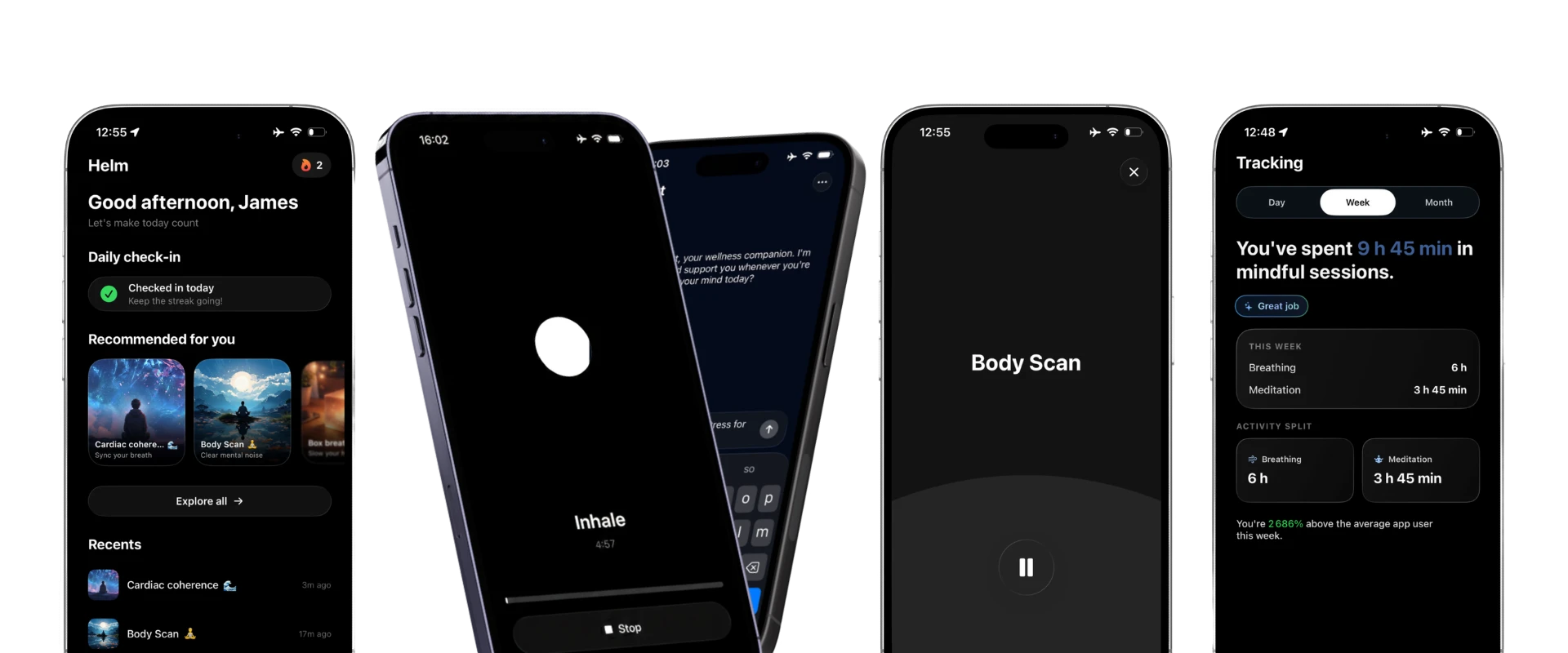
When you make your phone less available, sleep usually feels less like a battle and more like a natural next step. That is the real win: not strict rules, but fewer cues pulling you back into alert mode when your body is ready to rest. If you want extra structure, try Helm, a mental wellness app designed to manage stress and improve focus through guided breathing resets.
Ideally, 30 to 60 minutes. That window reduces both light exposure and mental activation, and it gives your brain time to shift out of task mode before sleep.
No, not by itself. Warmer screen settings can help, but content, notifications, and time loss still keep the brain alert and can delay bedtime.
Choose one low-stimulation replacement. Reading a few pages, stretching, preparing clothes for tomorrow, or slow breathing works because it is boring enough to let sleep pressure do its job.
Because phones trigger attention quickly. Novelty, emotional content, and unfinished social or work loops can wake the mind up faster than you notice, even when your body is tired.
Ten minutes a day to feel calmer, sleep better, and stay sharp.