HELM
The Helm Blog
Insights on nervous system regulation, mental clarity, and the science of optimal performance.
HELM
HELM
HELM
HELM
HELM
HELM
Insights on nervous system regulation, mental clarity, and the science of optimal performance.
Helm is the #1 app to optimize your mind, breathe better, and master your focus. Combine science-backed breathwork and meditation into your daily protocol to build resilience.
To stop feeling overwhelmed at work, lower the pressure in two places at once: your body and your workload. First, bring your stress response down with slower breathing and a longer exhale. Then make the day smaller by identifying one must-do task, one task that can wait, and one item to delegate, defer, or drop. Overwhelm feels like a time problem, but it is often a nervous system problem first.
When your brain treats everything as urgent, clear thinking gets harder. That is why willpower alone usually fails. The fastest path is not to "try harder." It is to create enough calm to think in sequence again. Once your body is less activated, decisions get simpler, communication gets cleaner, and work stops feeling like a wall you have to climb.

Work overwhelm often builds through accumulation, not weakness. A few competing deadlines, nonstop notifications, unclear expectations, and too many open loops can push your system into threat mode. When that happens, attention narrows, short-term memory gets less reliable, and even easy tasks can start to feel impossible. Occupational stress is linked with trouble concentrating, irritability, and reduced performance, which is why the spiral can feel so personal even when the cause is structural, as noted by guidance on job stress.
There is also a common mental trap here: your brain starts labeling everything as equally urgent. That creates frantic switching instead of progress. The result is a familiar pattern, open tabs, a racing mind, shallow breathing, and the feeling that you are behind before the next hour even starts. You do not need a perfect system in that moment. You need a fast way to reduce alarm and restore order.
When you feel flooded, do less before you do more. Slow breathing works because it can shift autonomic balance and lower physiological arousal, especially when the exhale is slightly longer than the inhale, which is supported by research on slow breathing and the nervous system. Try this at your desk, in a restroom break, or before replying to a difficult message.
This is not about becoming deeply relaxed. It is about becoming usable again. If a slow breath feels hard to start, use a 30-second physiological sigh reset first, then return to the 4 in, 6 out pattern. The goal is simple: reduce internal noise enough to make one clean decision.
Once your body is steadier, switch from emotional urgency to practical triage. Most overwhelmed people do not need more motivation. They need fewer simultaneous commitments. A good rule is to sort tasks by consequence, not by guilt. Ask: what truly matters today if I only complete one meaningful thing?
Use this quick filter:
The mistake is keeping everything in the must-do bucket. That keeps your stress chemistry high and makes avoidance more likely. If you can, convert vague work into visible chunks. "Finish report" becomes "draft intro" or "review numbers for 15 minutes." Small specificity reduces cognitive load and gives your brain a starting line instead of a fog bank.
A lot of work overwhelm persists because people wait too long to communicate capacity clearly. They hope they can catch up, then the pressure becomes shame, then they go silent. A better move is early, calm clarity. You do not need a dramatic explanation. You need a brief signal about tradeoffs.
Try language like this: I can complete A by today, but if B also needs today, I need help deciding what drops. Or: I am at capacity for the next two hours. I can start this at 3 p.m., unless it is higher priority than the current deadline. This kind of script lowers ambiguity and protects your attention. Early coping steps matter because stress tends to compound when it is ignored, which is echoed in public guidance on recognizing and managing stress.
The best long-term fix is not constant calm. It is reducing the number of moments that tip into chaos. That usually means fewer context switches, better recovery between tasks, and a more realistic picture of capacity. If every hour is packed to the edge, one surprise will always feel catastrophic. Chronic overload also raises the risk of burnout, which is associated with exhaustion, detachment, and reduced effectiveness, according to mental health at work guidance.
Two habits help more than most people expect. First, book tiny transition windows, even 3 to 5 minutes, after intense meetings. Second, do a daily shutdown that answers three questions: what did I finish, what is first tomorrow, what can wait. If your schedule is part of the problem, a 5 minute reset between meetings can help you stop carrying one stress spike into the next. The aim is not perfection. It is a lower baseline of activation.
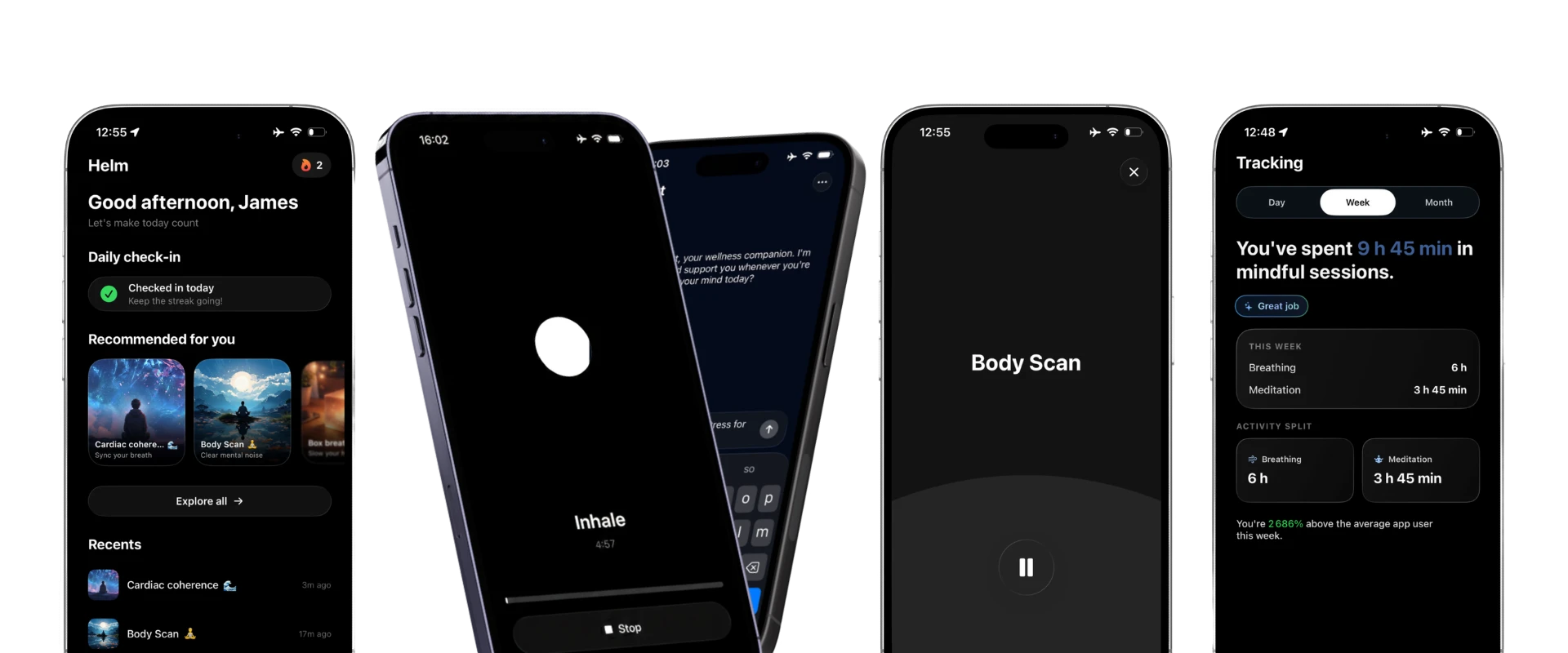
Feeling overwhelmed at work is not a sign that you are bad at your job. It usually means your body is carrying too much activation while your task list is asking for more clarity than your brain can give under pressure. Start with a short physiological reset, then shrink the day into one true priority, one delay, and one clear communication. Repeat that sequence whenever everything suddenly feels urgent. Over time, the real skill is learning to notice overwhelm earlier, before it turns into shutdown, reactivity, or late-night catch-up. If you want extra structure, you can try Helm, an iOS mental wellness app designed to manage stress and improve focus through guided breathing resets.
Yes, that is a common stress response. When demands pile up, your brain can shift into threat mode, which makes planning, memory, and decision-making feel much harder.
Often, 2 to 5 minutes is enough to lower the first wave of activation. You do not need to feel totally calm, only calm enough to choose one next step.
Not always, but it can be an early warning sign. If overwhelm is frequent, paired with exhaustion and cynicism, or spills into sleep and recovery, it is worth taking seriously.
Yes, that can happen for some people. Try shorter, gentler breaths, keep the exhale only slightly longer than the inhale, or focus first on grounding through posture, vision, and your feet on the floor.
Ten minutes a day to feel calmer, sleep better, and stay sharp.