HELM
The Helm Blog
Insights on nervous system regulation, mental clarity, and the science of optimal performance.
HELM
HELM
HELM
HELM
HELM
HELM
Insights on nervous system regulation, mental clarity, and the science of optimal performance.
Helm is the #1 app to optimize your mind, breathe better, and master your focus. Combine science-backed breathwork and meditation into your daily protocol to build resilience.
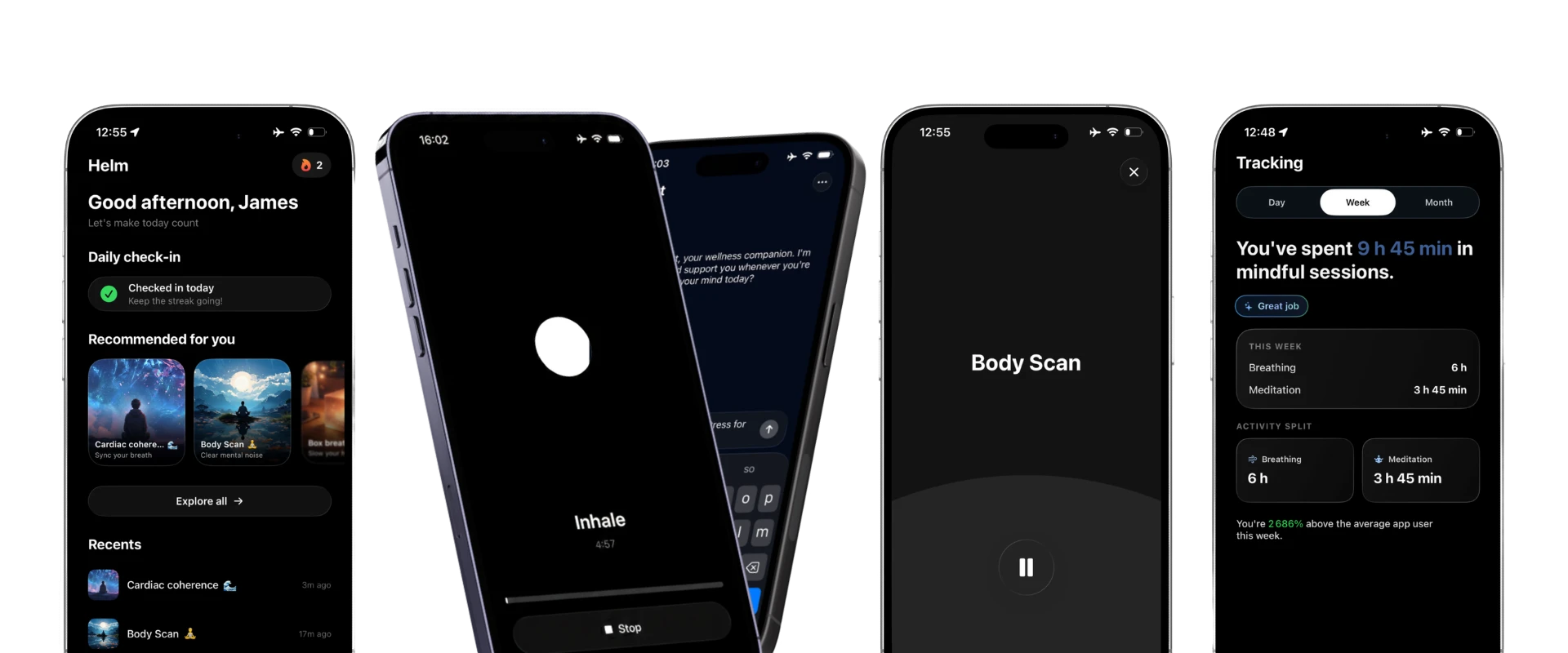
How to calm down after a stressful day starts with your body, not your thoughts. The quickest way to feel better is to lower physical activation first: reduce stimulation, loosen muscle tension, lengthen your exhale, and give your mind one clear signal that the day is over. Once your body feels safer, your thoughts usually soften too.
That matters because many people try to calm down by thinking harder, scrolling for a distraction, or replaying conversations until they feel finished. Stress rarely resolves that way at night. If your heart is still a little fast, your jaw is tight, or your chest feels braced, your nervous system is still acting like the day is happening now. The goal is not to force relaxation. The goal is to help your system shift from guarded to settled.

A stressful day does not stop affecting you the moment the meeting ends, the commute is over, or the house gets quiet. Your stress response is physical before it is mental. Breathing changes, muscles stay half-contracted, and attention narrows. According to stress can affect the body long after the stressor ends, stress can alter sleep, digestion, mood, and energy, even when the original trigger is gone.
This is why evening anxiety can feel confusing. You may be technically safe, but your body has not fully updated yet. The shift between alertness and recovery is automatic, but it is also trainable. As the autonomic nervous system controls the shift between alertness and recovery, small signals like slower breathing, lower light, less noise, and grounded movement can help the system switch states.
Use this routine when you feel wired, irritable, mentally loud, or too drained to do anything complicated. Keep it simple and repeatable. If your stress is still peaking, start with these fast ways to calm your nervous system when stress spikes, then come back to the full reset.
This sequence works because it moves from outer cues to inner cues. First you reduce incoming stimulation. Then you discharge tension. Then you slow physiology. Then you reassure the mind that nothing important will be forgotten tonight.
A few common habits keep the body activated even when you are trying to rest. The biggest one is mixed signals. You tell yourself to relax, but you also keep bright screens close to your face, answer one more message, revisit conflict, or use alcohol as a shortcut to numb out. That may feel relieving in the moment, but it often delays real recovery.
Stress and sleep influence each other in both directions. As stress is a common cause of sleep disruption, being mentally activated at night can make it harder to fall asleep and stay asleep. Try not to bring problem solving into bed. If your mind starts spinning once the lights are off, use a chair, notebook, or short breathing practice before lying down again.
One rough day is normal. A body that never fully comes down is different. Pay attention if you stay tense for hours every night, wake up already braced, snap at people you care about, or feel tired but unable to relax. Those are signs your recovery window may be too small for the amount of stress you are carrying.
If nighttime is where it shows up most, a structured bedtime routine for racing thoughts can help you stop carrying the whole day into bed. Get extra support if stress starts affecting appetite, panic, sleep for weeks, work, or relationships. Chest pain, fainting, severe shortness of breath, or thoughts of harming yourself need prompt medical or emergency support.
The best evening reset is not only about feeling better tonight. It also changes tomorrow's baseline. When you complete a stress cycle instead of dragging it forward, you wake up with more capacity. That means better patience, less reactivity, and less need for caffeine or distraction just to function.
Keep the habit small so it survives real life. Choose three anchors: one cue that the workday is over, one five minute body practice, and one written line for tomorrow. Research suggests that mindfulness practices can help lower perceived stress, but consistency matters more than perfection. A short ritual done nightly beats a long routine done once a week.
Calming down after a stressful day is less about becoming instantly peaceful and more about sending your body clear signals that pressure has passed. Reduce stimulation, release tension, lengthen the exhale, and close the open loops. When you stop asking your mind to do all the work, recovery gets easier. Some nights you will need two minutes, some nights twenty, and that is normal. What matters is learning the sequence that helps you shift from guarded to settled, instead of carrying the whole day into your evening and sleep. If you want extra structure, try Helm, an iOS mental wellness app designed to manage stress and improve focus through guided breathing resets.
It depends. For mild stress, 5 to 15 minutes is often enough to feel noticeably different. For heavier days, your body may need a longer wind down and fewer stimulating inputs.
Usually, breathing first works better when your body is still activated. Once your heart rate, jaw, and chest soften, talking or journaling tends to feel more clear and less repetitive.
Yes, that is common. Fatigue and activation can exist together when stress hormones are still elevated, so you feel depleted but not truly ready for rest.
Yes, that can happen. Make the breath smaller and gentler, skip long breath holds, and focus on relaxing your shoulders or extending the exhale only slightly. If it keeps happening, try movement first.
Ten minutes a day to feel calmer, sleep better, and stay sharp.