HELM
The Helm Blog
Insights on nervous system regulation, mental clarity, and the science of optimal performance.
HELM
HELM
HELM
HELM
HELM
HELM
Insights on nervous system regulation, mental clarity, and the science of optimal performance.
Helm is the #1 app to optimize your mind, breathe better, and master your focus. Combine science-backed breathwork and meditation into your daily protocol to build resilience.
If you keep asking why do i feel wired but tired at night, the short answer is this: your body is sleepy, but your brain is still running on alert. That pattern usually reflects hyperarousal, where stress, late light exposure, caffeine, or mental stimulation keep the nervous system active even when sleep pressure is high. In other words, you are not lacking fatigue. You are carrying too much activation into bedtime.
This feels confusing because you may yawn, rub your eyes, and genuinely want sleep, yet the moment the room gets quiet, your mind speeds up. For many people, the issue is not poor discipline. It is a mismatch between the systems that build sleep drive and the systems that maintain wakefulness. Once you understand that mismatch, the problem starts to feel more workable and much less personal.

Your nights are shaped by two forces: sleep pressure and your internal clock. Sleep pressure rises the longer you stay awake, while your circadian system helps decide when your brain should feel alert or drowsy. An overview of circadian rhythms and sleep explains why you can be exhausted and still miss the window where sleep comes easily.
At the same time, the brain can stay stuck in hyperarousal, a state linked with insomnia in research on sleep-related hyperarousal. This does not always mean panic. It can be subtler: a slightly elevated heart rate, shallow breathing, mental rehearsal, jaw tension, or the feeling that your body never fully got the memo that the day is over.
That state is easy to prolong. Bright light at night can delay melatonin release, as shown in evidence on room light and melatonin suppression, and caffeine timing matters more than many people realize, with findings on caffeine even 6 hours before bed showing measurable effects on sleep.
For most people, being wired but tired is not caused by one dramatic thing. It is usually the result of small activating inputs stacking up late in the day, especially when your baseline stress is already high.
A useful way to think about it is this: fatigue is not the same as calm. You can be depleted and still physiologically activated. If your symptoms are broader than this specific pattern, it may help to review the real reasons you can't sleep even when you're tired, then come back to the hyperarousal piece here.
A classic clue is that sleepiness fades when you get into bed. You were dragging on the couch, but once you try to sleep, your thoughts sharpen, your body feels buzzy, or you suddenly want to check your phone, organize something, or replay the day.
Another sign is tired body, busy mind. Your muscles may feel heavy while your thoughts stay fast. Many people also notice a light sense of internal pressure, like they are bracing without meaning to. It is not always dramatic anxiety. Often it is low-grade vigilance.
You might also drift off and then wake with a small jolt, notice chest breathing instead of belly breathing, or feel more awake after screen time. Those are hints that your system has not fully downshifted. When this happens often, the goal is not to force sleep harder. It is to lower activation first, then let sleep arrive.
When you feel wired but tired, do not aim to knock yourself out. Aim to send your body a series of small safety cues. That works better than battling with your mind.
This routine works because it targets state change, not perfect sleep hygiene. If your mind tends to spin, a simple bedtime routine for racing thoughts can pair well with the reset above. And if deep breathing makes you feel worse, keep the breath smaller and quieter instead of trying to inhale more.
If this pattern happens most nights for several weeks, or if your daytime functioning is slipping, it is worth looking deeper. Persistent wired-but-tired insomnia can overlap with anxiety, depression, perimenopause, thyroid issues, reflux, medication side effects, sleep apnea, or circadian rhythm disruption.
Pay special attention if you snore loudly, gasp awake, have hot flashes, wake with reflux, or feel exhausted despite enough time in bed. Those clues suggest the issue may be more than evening stress. A clinician or sleep specialist can help sort out whether you are dealing with simple hyperarousal, a schedule problem, or a medical contributor.
Feeling wired but tired at night usually means your arousal system is outrunning your sleep system. You are tired enough to sleep, but not settled enough. That is why pushing harder, scrolling longer, or waiting for the perfect level of exhaustion rarely works. What helps is reducing the signals of alertness before bed: less light, less cognitive load, steadier breathing, and a gentler landing into the night.
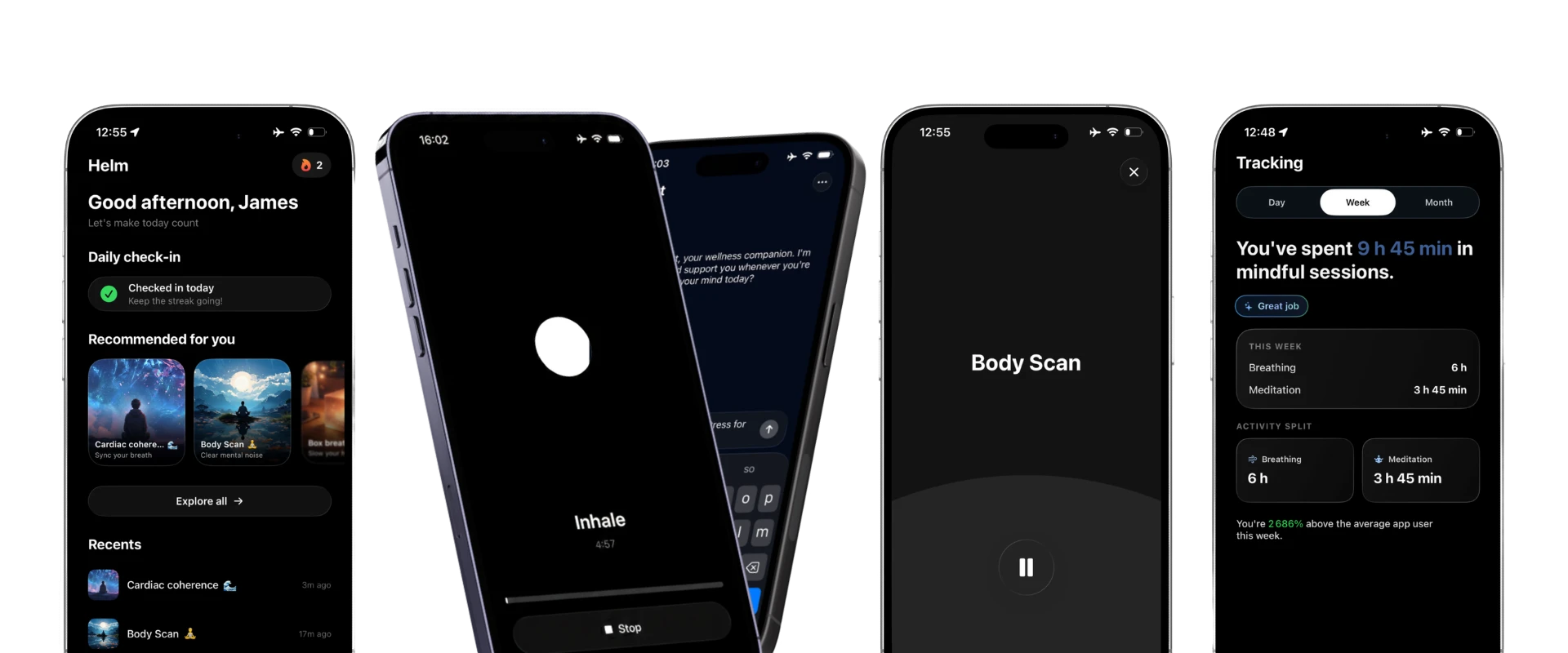
If you want a little structure, try Helm, an iOS mental wellness app designed to manage stress and improve focus through guided breathing resets.
Yes, sometimes. It can reflect anxiety, but it can also come from caffeine, late light exposure, irregular sleep timing, or a stressed nervous system that has not downshifted yet.
Yes, that second wind is common. It often happens when you stay up past your sleepy window or keep adding stimulation, which temporarily masks fatigue and boosts alertness.
Yes. If stress remains high into the evening, your body can stay too activated for sleep, even when you feel physically exhausted.
About 1 to 2 weeks is a fair test. Many people feel some relief the first night, but consistent timing usually matters more than one perfect routine.
No, not for long. If you feel stuck and frustrated, get up briefly, keep the lights low, and do something calm until your body feels sleepier again.
Ten minutes a day to feel calmer, sleep better, and stay sharp.