HELM
The Helm Blog
Insights on nervous system regulation, mental clarity, and the science of optimal performance.
HELM
HELM
HELM
HELM
HELM
HELM
Insights on nervous system regulation, mental clarity, and the science of optimal performance.
Helm is the #1 app to optimize your mind, breathe better, and master your focus. Combine science-backed breathwork and meditation into your daily protocol to build resilience.
A low stimulation bedtime routine is a short wind-down that lowers light, noise, decision-making, and mental input before bed. The goal is simple: make it easier for your brain and body to shift into sleep mode without forcing it. If you often feel tired but oddly alert at night, this kind of routine can help by reducing the signals that keep your system switched on.
Think of it as sleep readiness, not sleep performance. You are not trying to knock yourself out. You are creating conditions that make drowsiness more likely, especially when stress, screens, or a busy evening have left your body activated. For many people, the most effective bedtime routine is not the most elaborate one. It is the one that feels quiet, repeatable, and easy to follow even on a long day.

Sleep usually arrives when your body senses enough safety and predictability to downshift. A high-input evening does the opposite. Bright light, fast-moving media, emotional conversations, late work, and constant choice-making can all keep your brain in task mode. According to the general sleep guidance that adults need at least 7 hours most nights, consistent habits matter because sleep is shaped by both biology and behavior.
One of the biggest levers is light. Research shows that evening light exposure can suppress melatonin and delay sleep timing, which means your body may not feel sleepy when you want it to. Low stimulation routines work because they reduce several forms of input at once: visual intensity, cognitive effort, emotional arousal, and physical restlessness. Less input often means less resistance.
There is also a nervous system angle. When your evening is full of unfinished loops, your body may interpret that as a cue to stay available, alert, and slightly guarded. A calmer routine sends a different message: nothing urgent is happening now. That is why low stimulation is especially useful for people who say, "I am exhausted, but I cannot switch off."
Low stimulation does not mean boring, rigid, or joyless. It means gentle enough that your senses stop getting pulled outward. Warm lighting, a low-volume audio track, light stretching, skincare, reading a few pages of something non-activating, or folding tomorrow's clothes can all fit. The best routine lowers friction instead of adding a long checklist.
What usually does not fit? Fast scrolling, bright overhead lights, argument-heavy shows, inbox checking, intense workouts, problem-solving, and anything that triggers comparison or urgency. If phone use is the hardest piece, start with small boundaries rather than perfection. These evening phone habits for better sleep can help you lower stimulation without turning bedtime into another self-improvement project.
A useful test is this: after an activity, do you feel softer, slower, and less mentally hooked, or more alert and pulled in? If you are unsure, keep the routine simple for one week and notice what changes. Basic relaxation practices can support that process, and relaxation techniques are associated with reduced stress and better sleep readiness.
You do not need a perfect hour-long ritual. Thirty minutes is enough for many people. Keep the order the same most nights so your body starts to recognize the sequence.
If your evenings are unpredictable, choose a minimum viable version: dim lights, wash up, breathe slowly, get into bed. A shorter routine you actually repeat is more effective than a detailed one you abandon after three nights.
When you feel tired but wired, the mistake is often trying harder. Force usually adds stimulation. Instead, lower the demand. Shorten the routine, make the room darker, and choose activities that keep your attention in the body rather than in thought. Longer exhales, jaw unclenching, and relaxing your eyes can help more than trying to "think sleepy thoughts."
If your mind keeps looping, it may help to externalize the unfinished material before bed. Write down what is on your mind, then give yourself one sentence of closure such as, "Not now, tomorrow." If mental spinning is the main barrier, this guide on how to stop overthinking at night naturally goes deeper into body-first ways to settle.
You also do not need to stay in bed battling wakefulness. Basic sleep hygiene guidance recommends keeping a regular sleep schedule, and many sleep clinicians also suggest getting out of bed for a short, quiet reset if you feel fully awake for a while. The key is to keep that reset low stimulation too: dim light, no problem-solving, no emotional content, no clock-watching. Your job is to lower activation, not chase sleep.
A low stimulation bedtime routine works because it removes the inputs that keep your brain and body on standby. Instead of treating sleep like a performance, it creates a softer landing at the end of the day. Start by reducing brightness, noise, urgency, and choice in the last 30 minutes before bed. Then repeat the same few steps until they feel familiar. That familiarity is part of the medicine.
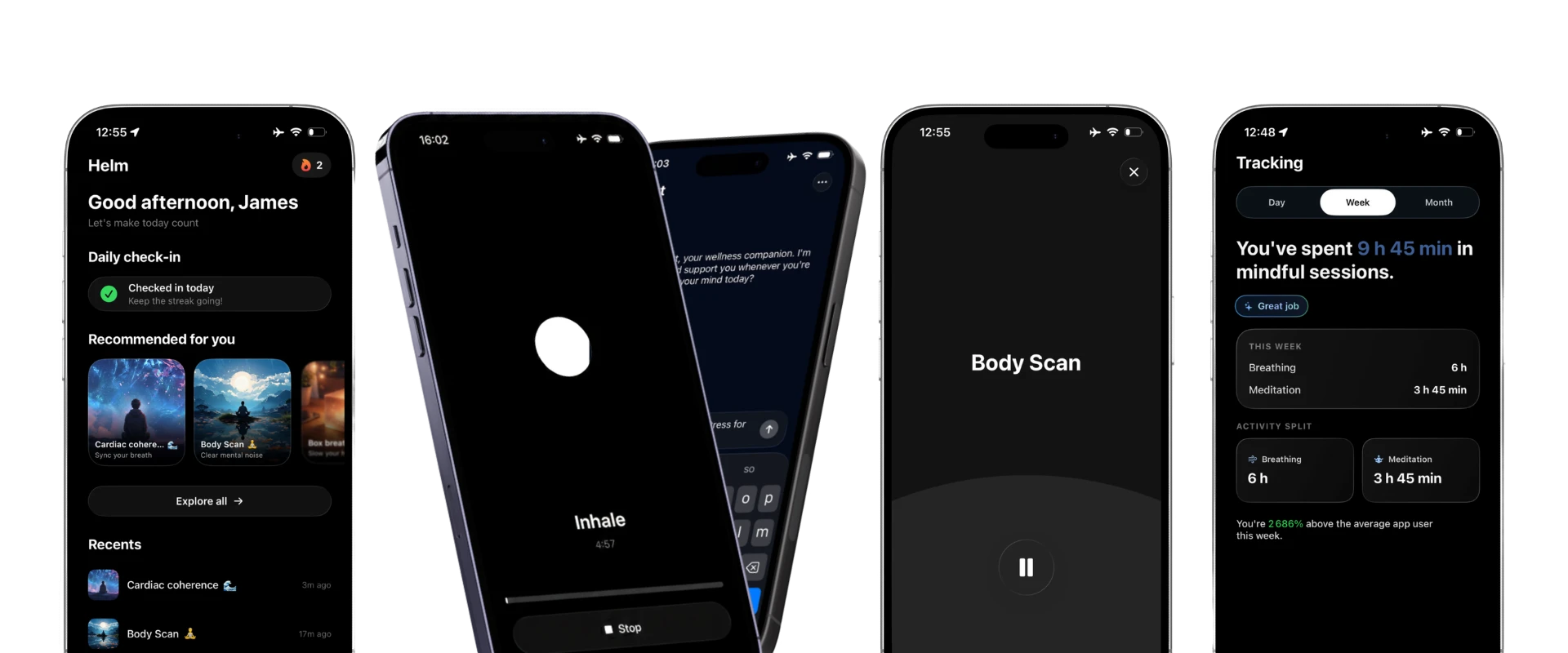
If you only remember one thing, let it be this: when nights feel difficult, go gentler, not harder. The more your routine communicates quiet, safety, and completion, the easier sleep usually becomes. If you want extra structure, you can try Helm, an iOS mental wellness app designed to manage stress and improve focus through guided breathing resets.
About 20 to 30 minutes is enough for most people. If your evenings are hectic, even 10 to 15 minutes of consistent low-input wind-down can still help.
No. Reading helps some people, but it is not required. If reading wakes your mind up, choose quiet stretching, slow breathing, or simply sitting in dim light instead.
Avoid bright light, fast scrolling, work tasks, heated conversations, and intense exercise. These tend to raise mental and physical activation when you are trying to downshift.
Yes, sometimes. It helps most when racing thoughts are fueled by stress, screens, or unfinished tasks. If thoughts stay intense, pair the routine with journaling or a body-based calming practice.
Yes, but keep it gentle. Slow, easy breathing with slightly longer exhales is usually a better fit for bedtime than energizing or fast-paced techniques.
Ten minutes a day to feel calmer, sleep better, and stay sharp.