HELM
The Helm Blog
Insights on nervous system regulation, mental clarity, and the science of optimal performance.
HELM
HELM
HELM
HELM
HELM
HELM
Insights on nervous system regulation, mental clarity, and the science of optimal performance.
Helm is the #1 app to optimize your mind, breathe better, and master your focus. Combine science-backed breathwork and meditation into your daily protocol to build resilience.
If you want to know how to feel grounded when stressed, start by bringing attention out of racing thoughts and back into your body, breath, and surroundings. The fastest path to feeling steadier is usually not more analysis. It is sensory orientation, slower exhalation, and physical contact with the floor, chair, or your own hands.
Stress can make you feel scattered, buzzy, floaty, or detached, even when nothing dangerous is happening in the room. Grounding helps because it gives your nervous system evidence that you are here, now, and supported. In practice, that means simple actions: noticing what you can see, lengthening the out-breath, relaxing your jaw, pressing your feet down, and reducing the urge to mentally sprint ahead. You do not need a perfect routine. You need a repeatable way to return to the present.

Grounding is not the same as forcing yourself to calm down. It is the process of reconnecting with the present moment through the body. That matters because stress often pulls attention away from the present and into threat scanning, future rehearsal, or self-protection.
When people say they feel ungrounded, they usually mean one of a few things: their thoughts are moving too fast, their body feels jittery, they cannot focus their eyes or attention, or they feel strangely disconnected from themselves. Grounding works by giving the brain and body clear, immediate signals of safety and orientation.
That is why the best grounding tools are often ordinary. Feet on the floor. A slower exhale. The pressure of your back against a chair. Looking around the room and naming what is actually here. These cues are simple, but they interrupt the spiral of internal alarm.
Under stress, the body shifts resources toward survival. Breathing can get shallow, muscles tighten, vision narrows, and attention becomes biased toward possible danger. A broad stress response overview shows how quickly these changes can affect heart rate, breath, and muscle tension. Feeling ungrounded is often a body-state first, not a mindset problem first.
This is why trying to think your way into feeling safe can fail. If your chest is tight, your jaw is clenched, and your breath is high and fast, your system may still read the moment as urgent. Grounding works better when you start with the body and let the mind catch up.
If your stress tends to feel intense and adrenaline-heavy, it can help to understand the signs of a stress response stuck in high alert. But grounding is especially useful when you are not panicking exactly, you just feel off-center, overstimulated, or not fully present.
The goal is not to feel amazing in three minutes. The goal is to feel a little more here, a little less swept away. Research suggests that slow breathing can support autonomic balance and reduce stress, which is one reason this sequence is so effective.
That final question matters. Grounding is often incremental, not dramatic. A softer belly, a wider field of vision, less pressure behind the eyes, or slightly slower thoughts all count.
If the hand-on-ribs step feels awkward, it may help to learn the difference between belly breathing and chest breathing. A small study found that diaphragmatic breathing was linked with lower cortisol and better attention. You do not need big breaths. In fact, gentle, low, unforced breathing usually grounds better than dramatic inhaling.
Sometimes grounding fails because the technique is wrong for your current state. If you are highly activated, closing your eyes may make you feel worse. If you feel foggy or dissociated, lying down may increase the drift. In those moments, more contact and more orientation usually help.
Try opening your eyes wider, standing instead of sitting, or holding something cool in your hands. You can also add mild movement, like marching in place for 20 seconds or slowly pushing your palms together. The point is to create a stronger sense of body boundaries and present-time awareness.
It also helps to lower the bar. Grounding is not proof that stress is gone. It is proof that you can relate to stress differently. A 10 percent shift is a real shift. Once that happens, your thinking usually becomes clearer, and the next helpful choice becomes easier to see.
The easiest time to build grounding capacity is not during your worst moment. It is during ordinary moments. When you practice returning to your senses while already okay, your system gets better at finding that path under pressure.
A few low-effort habits help a lot: pause before opening your laptop, take one longer exhale before answering a message, feel your feet while brushing your teeth, and relax your jaw when you notice tension. Tiny repetitions train familiarity.
Sleep, food, hydration, and movement matter too. When you are depleted, your baseline is shakier, so stress hits harder. Grounding is more available when the body has enough resources to work with. That does not mean you need a perfect lifestyle. It means basic regulation supports emotional steadiness.
Feeling grounded is less about becoming instantly peaceful and more about becoming physically present enough to ride the moment without getting carried off by it. Start with what is concrete: your feet, your seat, your jaw, your exhale, the objects in front of you. When stress makes you feel scattered or unreal, the most effective response is often simple and sensory, not complicated and mental.
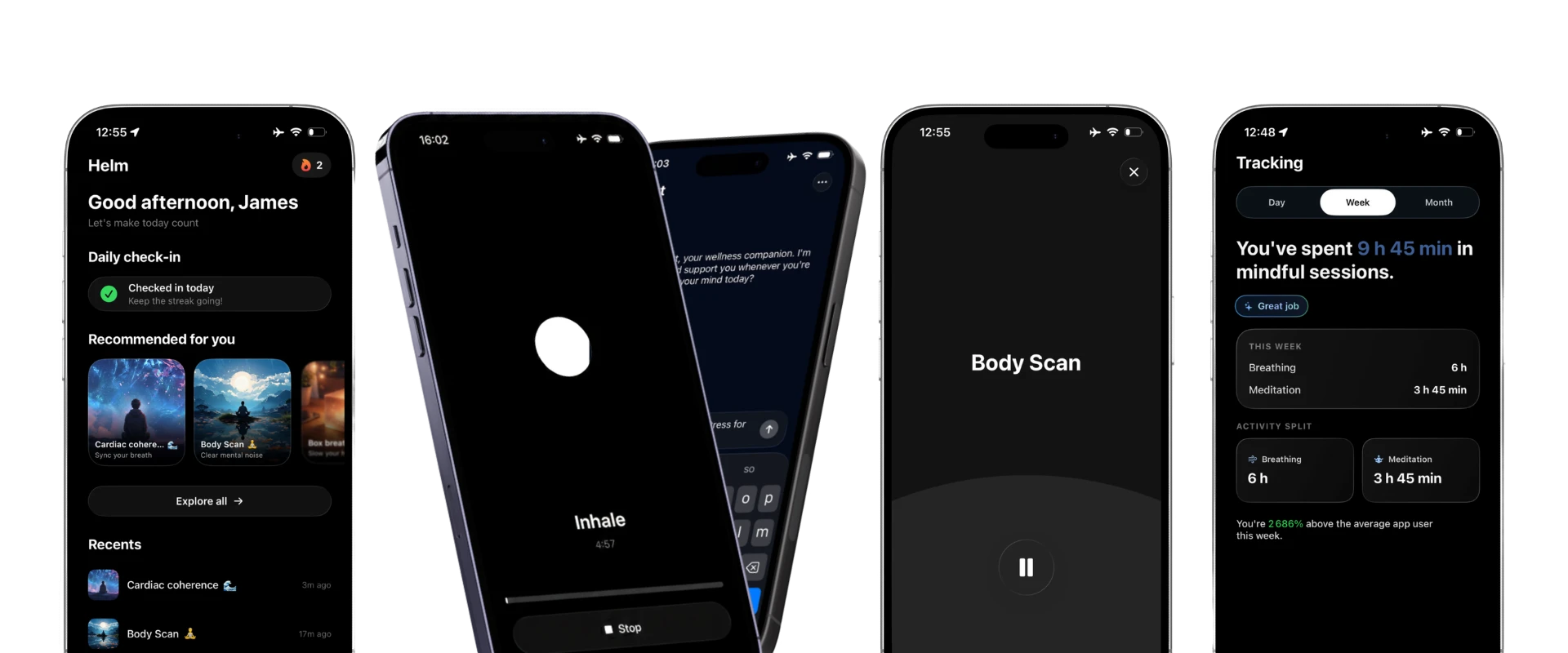
Practice the sequence above when you are mildly stressed, not only when you are overwhelmed. Over time, your body starts to recognize the route back. The skill is not perfection. It is return. If you want extra structure, you can try Helm, an iOS mental wellness app designed to manage stress and improve focus through guided breathing resets.
Yes, that is common. Stress can narrow attention, tighten muscles, and speed up breathing, which can make you feel scattered, floaty, or disconnected from the present moment.
Yes. Start with sensory grounding first, like pressing your feet down or naming objects in the room, then add only small, gentle exhales instead of large breaths.
For many people, 2 to 5 minutes can create a noticeable shift. The goal is not instant calm, but enough steadiness to think clearly and feel more present.
No. Grounding is usually more immediate and body-led, while meditation often asks for sustained attention. Grounding is often the better first step when you feel overstimulated or disconnected.
Ten minutes a day to feel calmer, sleep better, and stay sharp.