HELM
The Helm Blog
Insights on nervous system regulation, mental clarity, and the science of optimal performance.
HELM
HELM
HELM
HELM
HELM
HELM
Insights on nervous system regulation, mental clarity, and the science of optimal performance.
Helm is the #1 app to optimize your mind, breathe better, and master your focus. Combine science-backed breathwork and meditation into your daily protocol to build resilience.
A lunch break routine for stress relief works best when it does three simple things in order: it gets you away from work cues, settles your body, and helps your mind re-enter the day without friction. In 10 to 15 minutes, a structured lunch break can reduce tension, cut mental fatigue, and make the second half of your day feel more manageable. The goal is not to squeeze in another productivity hack. It is to create a true nervous system reset in the middle of the workday.
If your current lunch break means eating while scrolling, answering messages, or staying half-engaged with work, your body never fully gets the signal that it is safe to downshift. That matters, because stress is not only mental. It shows up as muscle tension, shallow breathing, irritability, and mental noise. A better lunch routine gives your system a short window to settle before stress hardens into the rest of the afternoon.

By midday, many people are not dealing with one big stressor. They are dealing with stacked activation: a rushed morning, constant notifications, decisions, noise, and social demands. Even if none of it feels dramatic, the body can still stay slightly braced. Over time, that low-grade activation can affect mood, digestion, sleep, and concentration. Research and clinical guidance consistently show that relaxation techniques can reduce tension and support overall well-being, especially when practiced regularly rather than only during crisis moments.
Lunch is useful because it is already built into the day. You do not need a perfect routine or a silent room. You need a repeatable pause that interrupts stress momentum before it spills into the afternoon. Brief physical activity helps too. Even short movement breaks can support energy, mood, and health, according to public health guidance on physical activity. The best lunch break routine is not elaborate. It simply changes your state enough that your next hour feels different from your last one.
A calming lunch break is less about duration and more about sequence. Most people try to relax before they disengage, which is why it often fails. If your eyes are still on your inbox and your shoulders are still lifted, your body is unlikely to shift. A better order is: separate from work, release physical tension, slow the breath, eat with some attention, then transition back intentionally.
That sequence works because stress is embodied. Your body usually calms first, then your thoughts follow. Slow breathing can help regulate arousal, and gentler breathing patterns may influence heart rate variability and relaxation pathways, as discussed in research on breathing and autonomic regulation. If you tend to think, "I should use lunch to catch up," remember that a lunch break is not lost time if it improves the quality of the next three hours.
This routine is designed for real life. It does not require special equipment, a meditation cushion, or a full hour away from your desk. If you have more time, extend the walking or eating portion. If you have less, keep the order the same.
What makes this effective is the combination of body downshift and mental clarity. Movement helps discharge some of the physical buildup, breathing reduces urgency, and a deliberate return prevents instant reactivation. If your stress is spiking rather than simmering, you may also benefit from this guide on how to calm your nervous system fast before you settle into the slower lunch routine.
In an office, the main challenge is often visibility. People feel watched during breaks, so they stay half-available. Try using physical cues that create separation, such as leaving the floor, walking one block, or eating somewhere that is not within view of your usual workstation. At home, the challenge is different. Remote workers often blur chores, screens, and food into one muddy break. Give your lunch routine a container. Sit somewhere new, keep the phone out of reach, and do the same breathing pattern daily so your body learns the cue.
On packed days, shorten the routine but do not skip the structure. Five intentional minutes can work better than 20 scattered ones. If lunch disappears into back-to-back calls, borrow the framework from a 5 minute nervous system reset between meetings and use movement, breath, and re-entry in miniature. The nervous system responds well to consistency. A small ritual repeated most days usually beats an ideal routine done once a week.
A few common habits can cancel out an otherwise good break. Stress relief usually fails because the break stays cognitively noisy, not because the technique itself is wrong.
A helpful rule is to protect just one calming element if the whole routine is not possible. One steady habit is enough to create momentum. That might be a 4-minute walk, a slower exhale, or eating the first few minutes without a screen. Over time, these micro-resets can reduce how intensely stress accumulates across the week. If you notice your body stays keyed up even after breaks, chronic stress can show up in physical and emotional ways, which is a sign to simplify and make the routine gentler, not more intense.
A good lunch break is not just time off. It is a midday recovery practice that helps your body stop carrying the morning into the rest of the day. The most effective routine is simple: step away, move a little, breathe more slowly, eat with some presence, and return with one clear next step. That sequence works because it respects how stress actually operates, through your body as much as your thoughts.
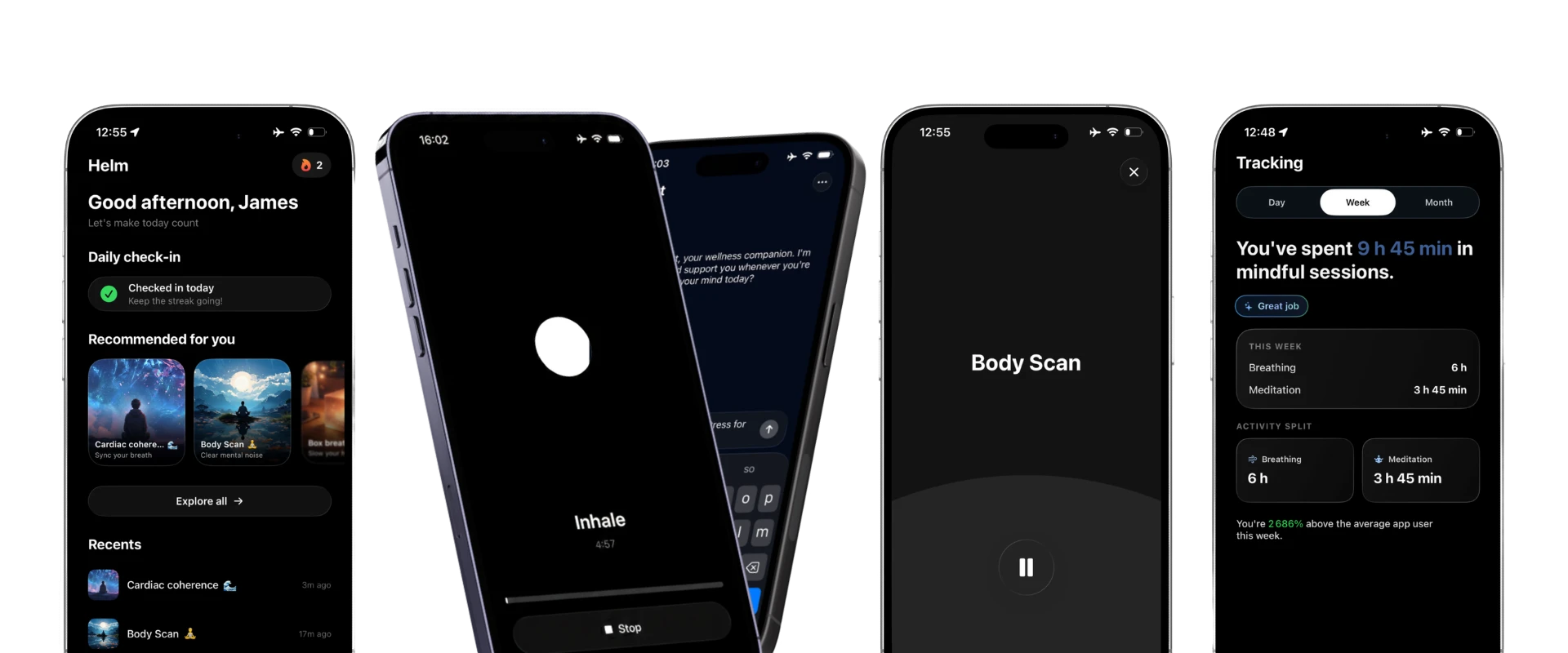
You do not need to feel perfectly calm for the routine to work. You only need to feel a little less rushed, a little more grounded, and a little more able to choose your next action well. If you want help making that habit easier, Helm is an iOS mental wellness app designed to manage stress and improve focus through guided breathing resets.
10 to 15 minutes is enough for most people. That is usually long enough to step away, move, slow the breath, and return to work with less tension.
No, not for most people. If you stay in the same visual and mental work environment, your brain often treats lunch as continued task time rather than recovery time.
Yes, 5 minutes can still help. Spend 1 minute stepping away, 2 minutes walking or stretching, and 2 minutes on a longer exhale breathing pattern.
Yes, sometimes, but usually only if you breathe too deeply or too long. Keep the breath light and steady, and use a slightly longer exhale rather than forceful slow breathing.
Ten minutes a day to feel calmer, sleep better, and stay sharp.