HELM
The Helm Blog
Insights on nervous system regulation, mental clarity, and the science of optimal performance.
HELM
HELM
HELM
HELM
HELM
HELM
Insights on nervous system regulation, mental clarity, and the science of optimal performance.
Helm is the #1 app to optimize your mind, breathe better, and master your focus. Combine science-backed breathwork and meditation into your daily protocol to build resilience.
To stop doomscrolling before bed, make scrolling slightly harder and sleep slightly easier. A fixed cutoff time, a short body-calming ritual, and a low-stimulation replacement activity work better than trying to win a willpower battle when you are already tired.
If you are searching for how to stop doomscrolling before bed, the key is to treat it like a nighttime stress loop, not a character flaw. At night, your brain is more vulnerable to threat-scanning, novelty, and emotional cues, while self-control is lower. That is why the goal is not perfection. The goal is to reduce friction in the wrong direction, increase friction in the right direction, and give your mind a gentler landing before sleep.

Doomscrolling feels strongest at night because your brain is tired, under-defended, and still looking for closure. After a long day, mental energy drops, but emotional sensitivity often stays high. That makes negative headlines, conflict, and uncertainty feel oddly compelling. Research on sleep loss and emotional reactivity shows that tired brains respond more strongly to emotional stimuli, which helps explain why one quick check can turn into forty minutes of scrolling (research on sleep loss and emotional reactivity).
There is also the light problem. Bright screens can delay sleep timing and make it harder for your body to shift into a nighttime state. A controlled study found that evening exposure to light from electronic screens can suppress melatonin and push sleep later (a controlled study on evening light exposure and sleep timing). So doomscrolling is not just mentally activating, it can also keep your biology from getting the message that the day is over.
Vague rules fail at night. Saying I should stop earlier rarely survives fatigue, boredom, or stress. A better approach is to build a cutoff that runs on cues and environment. Your bedtime plan should require as little thinking as possible, because tired brains negotiate with themselves and usually lose.
Use this four-step setup:
Environment beats intention almost every time. If your phone sleeps next to your pillow, you are asking a tired brain to resist a device designed to grab attention. If it lives across the room and your replacement activity is already ready, the path of least resistance changes. That is what makes habits stick.
Most people do not need more discipline, they need a bridge. The moment after you put your phone down can feel restless, empty, or agitated. That is normal. Your nervous system has been fed novelty and micro-stress, so the first task is not sleep itself. It is downshifting.
Try this 10-minute wind-down bridge. Spend the first two minutes on long exhales or two rounds of a calming breath. If your body still feels revved, the 30-second physiological sigh for instant calm is a useful reset. Spend the next three minutes doing a low-light bathroom routine, skin care, or gentle stretching. Use the final five minutes for something low-stakes and non-interactive, such as a few pages of a paper book or jotting down tomorrow's top task so your brain stops rehearsing it.
The replacement matters as much as the removal. If you only take the phone away, your brain still wants stimulation, certainty, or distraction. When you replace scrolling with a predictable ritual, you teach your system that bedtime can feel safe, boring, and complete. That is exactly what sleep needs.
Do not turn one lapse into a lost hour. The most useful move is to interrupt the spiral fast and without shame. Self-criticism increases stress, and stress makes the urge to keep scrolling stronger. Instead, name what is happening as simply as possible: I am looking for relief, and this is not giving it to me.
Then use a 60-second reset. Sit up. Put both feet on the floor. Exhale longer than you inhale three times. Lower the screen brightness or lock the phone. Choose the smallest next action, not the perfect one: place the phone away, drink water, turn off the overhead light, get back into bed. This works because you are shifting from automatic behavior to deliberate behavior. Evidence reviews consistently link bedtime technology use with worse sleep, especially when use is emotionally engaging (an evidence review on bedtime technology use and sleep quality).
Sometimes doomscrolling is not the problem, it is the symptom. If it spikes after conflict, lonely evenings, work uncertainty, or overstimulating days, the scroll may be acting like self-soothing. It gives you a mix of distraction, vigilance, and numbing. That does not make it helpful, but it does explain why simple rules sometimes fail.
Ask yourself what the urge is really asking for: certainty, decompression, connection, or sedation. If it is certainty, write tomorrow's plan. If it is decompression, stretch or breathe. If it is racing thoughts, a structured bedtime routine for racing thoughts may fit better than another attempt at willpower. If doomscrolling and insomnia keep showing up for weeks, or anxiety feels hard to manage, it is worth getting support from a licensed professional.
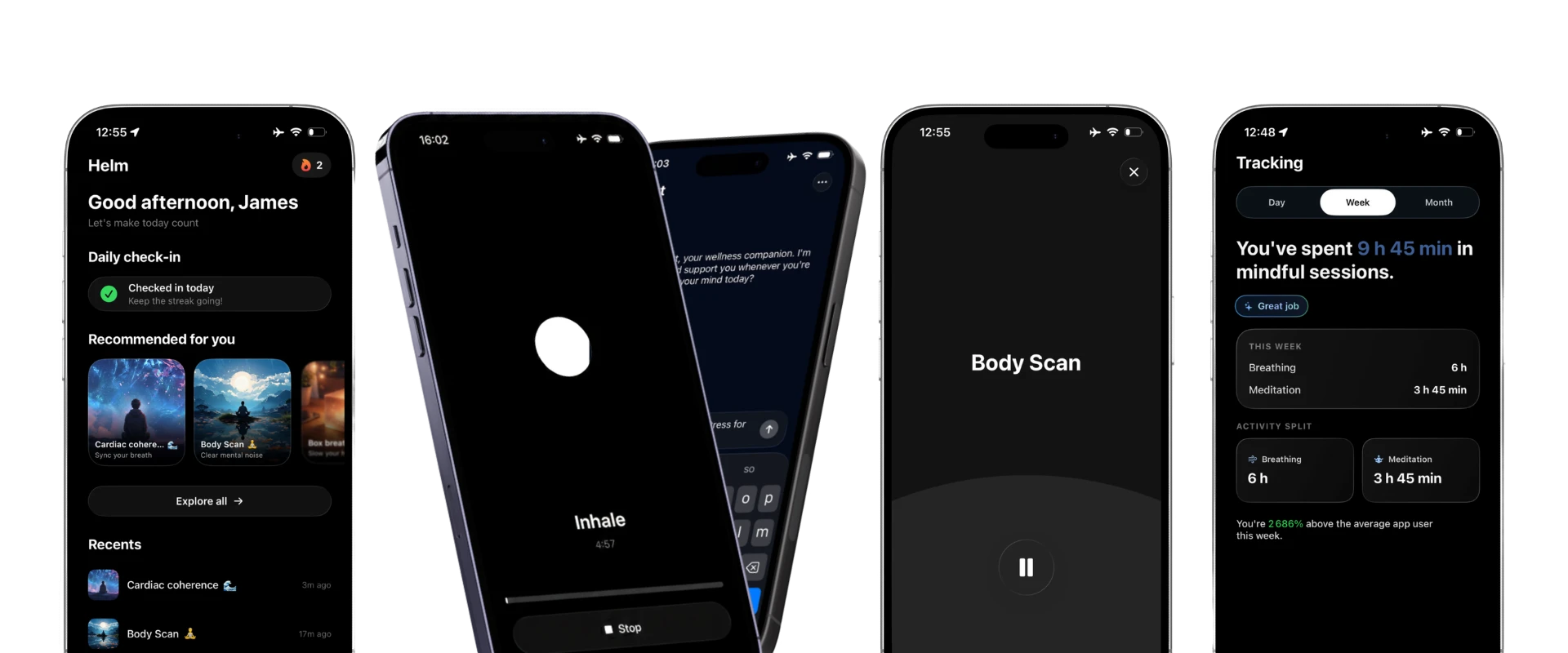
Stopping doomscrolling before bed is less about self-control and more about design. Your tired brain will usually choose the easiest source of stimulation unless you make another option easier. A clear cutoff, a little physical distance from the phone, and a short calming ritual can break the loop surprisingly fast. Start small. Move the charger. Pick one replacement activity. Practice recovering quickly when you slip, instead of treating one lapse like proof that nothing works. Consistency matters more than intensity, and the real win is not using your phone less. It is helping your mind and body recognize that the day is safe to end. If you want extra structure at night, try Helm, an iOS mental wellness app designed to manage stress and improve focus through guided breathing resets.
Yes, being tired makes it more likely. Fatigue weakens self-control and increases emotional reactivity, so negative or novel content feels harder to stop even when you know it is keeping you awake.
Thirty to sixty minutes is a strong starting range for most people. If your sleep is sensitive or you already feel wired at night, closer to sixty minutes usually works better.
Yes, usually it is better, but it is not equal to going screen-free. Passive reading is less activating than endless updates, yet screen light and device habit cues can still delay sleep.
Start with one minute, not a big reset. Put both feet on the floor, take three slow exhales, place the phone out of reach, and return to the next step in your bedtime routine.
Yes, sometimes it can. If scrolling feels compulsive, happens most nights, and comes with racing thoughts, dread, or insomnia, the behavior may be tied to underlying stress or anxiety.
Ten minutes a day to feel calmer, sleep better, and stay sharp.