HELM
The Helm Blog
Insights on nervous system regulation, mental clarity, and the science of optimal performance.
HELM
HELM
HELM
HELM
HELM
HELM
Insights on nervous system regulation, mental clarity, and the science of optimal performance.
Helm is the #1 app to optimize your mind, breathe better, and master your focus. Combine science-backed breathwork and meditation into your daily protocol to build resilience.
If you want to know how to focus after a bad night of sleep, the fastest answer is this: do not try to force peak performance. Instead, raise alertness with morning light, a little movement, steady food, and well-timed caffeine, then lower the cognitive load of your day so your brain has less to fight through.
One poor night can reduce attention, working memory, and reaction time, but it does not mean your day is lost. A simple damage-control plan works better than chasing energy. Think in phases: wake your system up, protect the hours that matter most, avoid the mistakes that make fatigue worse, and use short resets to stay usable rather than fried.

After bad sleep, the problem is not just feeling tired. Your brain filters information less efficiently, so distractions feel louder and simple tasks take more effort. Research shows sleep loss can impair attention, reaction time, and decision-making, especially when tasks are repetitive or mentally demanding. You can see that pattern in research on sleep loss and performance.
That matters because many people respond the wrong way. They add more stimulation, multitask, skip meals, and try to “catch up” with urgency. That usually creates jittery, fragmented focus, not clear thinking. A better goal is stable output. You may not do your most creative work today, but you can still protect accuracy, emotional steadiness, and follow-through.
The first part of the day sets the tone for energy regulation after poor sleep. If you wake up groggy, use a simple sequence that nudges your nervous system toward alertness without overdoing it.
Light is one of the strongest signals for wakefulness and circadian timing, and basic sleep guidance consistently recommends it as part of healthy alertness habits. A short walk plus daylight can do more for morning clarity than scrolling in bed. You can read more in practical sleep guidance on light and routines.
Food matters too. After bad sleep, blood sugar swings can make brain fog feel worse. A simple breakfast beats a perfect one, especially if it helps you avoid grazing on quick sugar later. Think eggs and fruit, yogurt and nuts, or toast with something protein-rich.
When you are sleep-deprived, focus improves when you shrink the number of open loops. Single-tasking becomes a performance tool, not a productivity slogan. Pick one priority that truly matters, define what “done enough” looks like, and protect the next 25 to 40 minutes from input.
This is also the day to separate work by brain cost. Put admin, logistics, and proofreading into one bucket. Put strategy, writing, analysis, and emotionally sensitive conversations into another. Do the most important high-focus task early, before fatigue compounds and decision quality slips.
If your day includes calls or context switching, build in deliberate resets. Even two minutes of standing up, looking far away, and lengthening your exhale can reduce the “stuck in overdrive” feeling. For a practical structure, see how to reset between meetings with a 5 minute routine.
A few tactical rules help more than people expect: close unused tabs, silence nonessential alerts, write down the next step before every break, and lower the bar for starting. Momentum is more valuable than intensity on low-sleep days.
Yes, a short nap can help, but timing matters. A 10 to 20 minute nap can improve alertness without leaving you deeply groggy, especially if you take it before mid-afternoon. Longer naps may help some people, but they also raise the odds of sleep inertia and can make the next night harder.
Caffeine can help too, but more is not always better. Use it strategically, not continuously. A moderate amount in the morning or early afternoon may sharpen attention, while repeated doses can increase anxiety, shakiness, and a second-night sleep problem. This overview on caffeine and sleep timing explains why late use often backfires.
If you hit a wall later in the day, do not assume you need another stimulant. Try water, a five-minute walk, and a lighter cognitive task first. Even mild dehydration can affect concentration and mood, as discussed in this review on hydration and cognition. And if your worst dip always lands around 2 to 4 p.m., these afternoon slump reset strategies that do not rely on more caffeine can help.
After poor sleep, many people feel both flat and overstimulated. That tired-wired state is where gentle breathwork can help. The goal is not to energize hard. It is to reduce internal noise so your remaining attention becomes easier to use.
Try this for three minutes: inhale through the nose for 4 seconds, exhale for 6 seconds, and keep the breath smooth rather than deep. Let your shoulders drop on the exhale. If counting distracts you, simply make the exhale a little longer than the inhale. Longer exhales can lower pressure without making you drowsy, which is useful when you need steady focus instead of a jolt.
If deep breathing makes you lightheaded, make the breath smaller. The best reset is the one your body accepts. One bad night is not the time for intense retention, forceful breathing, or anything that leaves you more activated than before.
One rough night is normal. Several rough nights a week is a different conversation. If your focus is regularly damaged by sleep, the issue may be less about daytime hacks and more about the sleep problem itself.
Pay attention if you snore loudly, wake with headaches, feel unrested after enough time in bed, or rely on caffeine just to feel baseline. The same goes for trouble falling asleep, waking at 3 a.m. with a racing mind, or feeling persistently low, anxious, or irritable. Daytime concentration problems are often a sleep signal, not a character flaw.
A bad night of sleep does not require heroic discipline. The smartest response is usually a gentler one: get light early, move a little, eat predictably, use caffeine with intention, narrow your task load, and reset your breathing before stress snowballs. You are not trying to become your sharpest self on low fuel. You are trying to become your steadiest self.
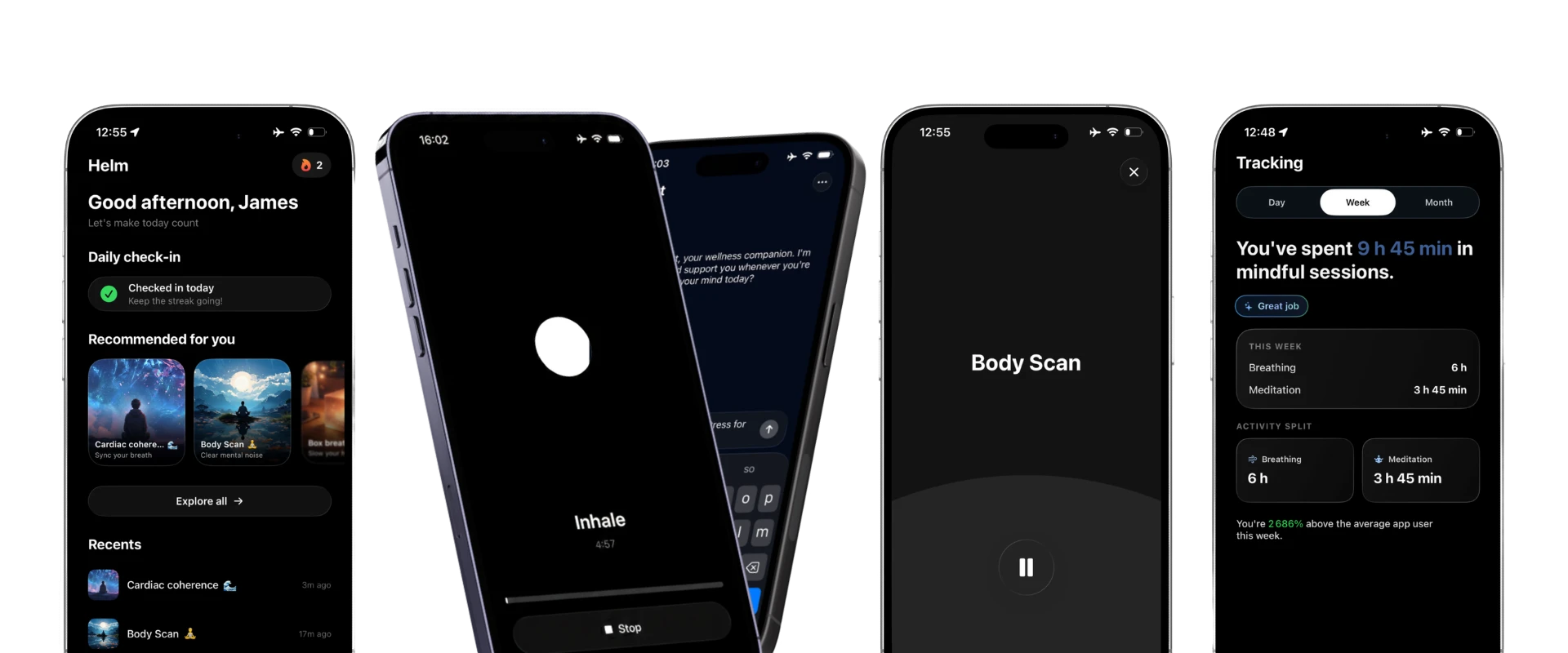
That shift matters because focus after poor sleep is less about motivation and more about friction. Remove enough friction, and the day becomes manageable again. If you want a guided way to do those quick breathing resets, you can try Helm, an iOS mental wellness app designed to manage stress and improve focus through guided breathing resets.
Yes, but less of it. Protect one short block for your highest-value task, lower distractions aggressively, and expect slower processing rather than trying to match your usual output.
It depends. A 10 to 20 minute nap often works best for an afternoon rescue, while caffeine is more useful earlier in the day when you want alertness without risking your next night of sleep.
Yes, that is common. Sleep loss can increase emotional reactivity while lowering attention control, so your mind feels more scattered and your body feels more on edge.
Avoid overcommitting, constant snacking, repeated caffeine dosing, and forceful breathwork. Those tend to create more stimulation, more errors, and worse sleep the next night.
For many people, one solid night helps a lot. If you keep a steady routine, use light well, and do not overshoot caffeine, your focus often rebounds within 24 to 48 hours.
Ten minutes a day to feel calmer, sleep better, and stay sharp.