HELM
The Helm Blog
Insights on nervous system regulation, mental clarity, and the science of optimal performance.
HELM
HELM
HELM
HELM
HELM
HELM
Insights on nervous system regulation, mental clarity, and the science of optimal performance.
Helm is the #1 app to optimize your mind, breathe better, and master your focus. Combine science-backed breathwork and meditation into your daily protocol to build resilience.
If you want to know how to stop overthinking at night naturally, the short answer is this: stop trying to force sleep, give your brain a place to put unfinished thoughts, and help your body shift out of alert mode. Night overthinking usually eases when you create both mental closure and physical downshift. In other words, you do not need a perfect empty mind. You need less stimulation, less internal pressure, and a simple process your nervous system can trust.
This is why your thoughts can feel louder at bedtime. During the day, tasks, noise, and screens keep attention occupied. At night, those distractions fall away, and anything unresolved gets more noticeable. On top of that, stress can keep the body in a more activated state even when you are tired, which makes sleep feel close but unreachable (source). For many people, nighttime rumination is not a discipline problem. It is a mix of bedtime anxiety, unfinished mental loops, and a body that still thinks it needs to stay on.

The common mistake is treating overthinking like a thought problem only. It often starts there, but it keeps going because your body reads those thoughts as signals of importance. That is one reason hyperarousal is a recognized part of insomnia (source). If your system feels watchful, your brain keeps scanning for answers, risks, and tomorrow's unfinished business.
Another reason is timing. At night, you are no longer solving, replying, moving, or producing. That drop in external demands creates space, but if your mind has been running all day, the first quiet moment can trigger racing thoughts at bedtime. Many people then make it worse by monitoring sleep, checking the clock, or asking, "Why am I still awake?" The mind hears that as a new problem to solve.
Trying harder to sleep usually backfires. The more you chase sleep, the more attention you place on not sleeping. That creates sleep anxiety, which can quickly turn a normal restless night into a long mental spiral. Your goal is not to win an argument with your thoughts. Your goal is to make thoughts feel less urgent.
That means skipping anything that adds fuel, especially your phone. Bright light, novelty, and emotional input all tell the brain to stay engaged. If evening scrolling is part of your pattern, these evening phone habits for better sleep can make your wind-down much smoother. The natural route is simple: reduce input, reduce pressure, and give the mind a predictable off-ramp.
Use this when your mind is racing at night or you feel tired but mentally busy. The sequence matters because it moves from thought relief to body relief.
Empty the mental inbox for 3 minutes
Write down everything circling in your head, tasks, worries, reminders, awkward moments, anything. Then mark each line with one label: do tomorrow, let go, or not tonight. This creates cognitive offloading, which tells the brain the thought has been stored and does not need repeating.
Orient your body to safety for 2 minutes
Sit or lie down and notice five neutral things around you, the weight of the blanket, the shape of the ceiling, the temperature of the room, the sound of air, the feeling of the mattress. This sounds small, but it helps shift attention from abstract thinking to present-moment sensory cues, which are easier for the nervous system to settle around.
Lengthen your exhale for 5 minutes
Breathe in through the nose for 4, then exhale gently for 6 or 8. Keep it light, not dramatic. Slow breathing may support parasympathetic activity and emotional regulation when it is comfortable and unforced (source). If counting makes you more alert, simply think "longer out than in." This is one of the most reliable ways to calm the nervous system before bed.
Narrow attention without trying to erase thoughts for 5 minutes
Pick one quiet anchor, the breath moving at the nostrils, the heaviness of your legs, or a slow body scan. If that helps, try this gentle body scan meditation for insomnia. The point is not zero thoughts. The point is giving attention a softer place to land so thoughts stop leading the room.
That is normal. A returning thought does not mean the routine failed. It usually means your brain is checking whether the issue is still urgent. Respond with the same message each time: not now, tomorrow is covered. Repetition builds safety faster than analysis.
If you have been awake for a while and feel more frustrated than sleepy, get out of bed for a short reset. Keep the lights low, avoid screens, and do something boring and calm for 10 to 15 minutes, like folding laundry or reading a few pages of something neutral. Then return to bed when sleepiness, not pressure, comes back.
If overthinking at night happens most nights for several weeks, or comes with panic, low mood, chest tightness, or dread that spills into the day, it may be part of a bigger pattern. Caffeine timing, alcohol, irregular sleep, chronic stress, and anxiety can all keep the system activated. In those cases, good sleep habits improve the odds of falling asleep more smoothly (source), but support from a qualified professional may help you address the deeper driver.
The key is not to pathologize every restless night. A busy mind is human. But if your nighttime anxiety feels relentless, frequent, or physically intense, you do not have to manage it alone.
Stopping overthinking at night naturally is less about controlling your mind and more about reducing urgency. When you externalize unfinished thoughts, lower stimulation, and slow the body first, the mental loop often loses momentum on its own. That is the real shift: not forcing silence, but creating conditions where thinking no longer feels necessary.
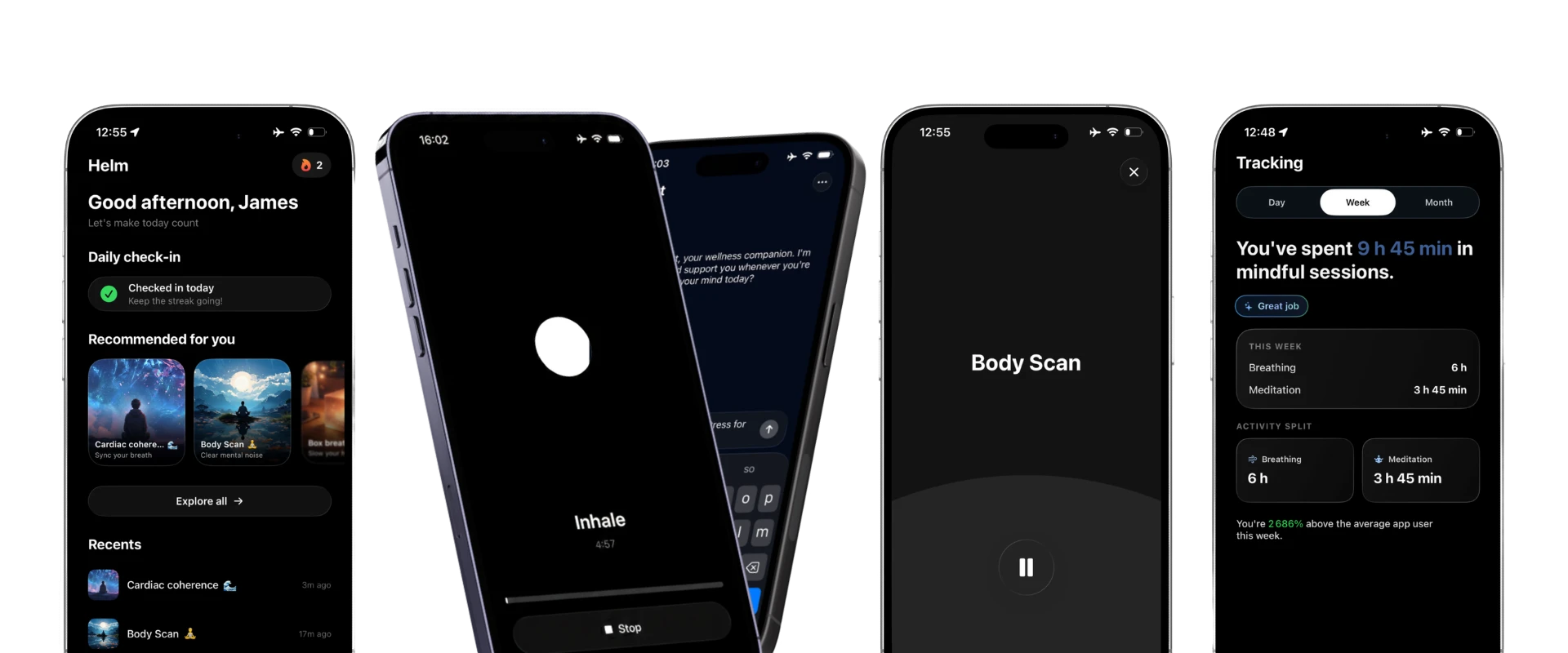
If you remember one thing, let it be this: a calm night starts with a message your whole system can believe, nothing needs to be solved right now. Practice the same short routine for a week, and consistency will usually work better than intensity. If you want a simple way to practice guided breathing resets on your phone, you can try Helm, an iOS mental wellness app designed to manage stress and improve focus.
Yes, that is common. At night there are fewer distractions, so unresolved worries become more noticeable, and a tired but activated nervous system can make thoughts feel louder.
Both help, but in a different order. Start with journaling if your thoughts feel unfinished, then use slow breathing to help your body shift out of alert mode.
No, not always. If you feel stuck, frustrated, and wide awake, get up briefly for a low-stimulation reset and return when you feel sleepy again.
Yes, sometimes. Occasional rumination is normal, but frequent nighttime overthinking with physical tension, dread, or poor sleep can overlap with anxiety and may deserve extra support.
Usually a few nights to a week. Natural sleep remedies work best through repetition, because the brain learns safety through consistency more than novelty.
Ten minutes a day to feel calmer, sleep better, and stay sharp.