HELM
The Helm Blog
Insights on nervous system regulation, mental clarity, and the science of optimal performance.
HELM
HELM
HELM
HELM
HELM
HELM
Insights on nervous system regulation, mental clarity, and the science of optimal performance.
Helm is the #1 app to optimize your mind, breathe better, and master your focus. Combine science-backed breathwork and meditation into your daily protocol to build resilience.
If you want to know how to stop feeling mentally scattered, start by treating it as an overload problem, not a motivation problem. The fastest reset is usually simple: slow your exhale, reduce incoming stimulation, empty the mental tabs onto paper, and choose one next action for the next 10 minutes. Mental scatteredness often comes from stress, task-switching, poor sleep, and too many unfinished thoughts competing for attention.
That matters because most people respond the wrong way. They push harder, open another tab, drink more caffeine, or shame themselves for being unfocused. Usually, that makes the nervous system more activated and the mind less organized. A better approach is to calm the body first, narrow the field second, and only then ask your brain to concentrate. Once you do that, focus starts to feel less like force and more like traction.

A scattered mind is rarely random. It is often the result of working memory overload. Your brain can only hold so many active items at once, so when stress, notifications, conversations, and unfinished tasks pile up, attention starts jumping. That jumpy feeling can look like forgetfulness, procrastination, doom scrolling, or reading the same sentence three times without absorbing it.
Stress makes this worse. High physiological arousal can shrink your ability to think clearly and prioritize well, which lines up with what chronic stress does to attention and memory. Context switching adds another layer. Research on attention residue helps explain why a piece of your mind stays stuck on the last task, even after you move to the next one. And if your sleep has been off, how too little sleep affects focus and mood makes the picture even clearer.
When you feel scattered, do not start with productivity tricks. Start with a body-first reset. If your system feels revved up, your thoughts will usually stay fragmented. If you need more fast downshifting ideas, this guide to calming your nervous system when stress spikes can help.
This sequence works because it resets three drivers of scattered thinking at once: physiology, cognitive load, and indecision. You are not trying to become deeply focused in five minutes. You are trying to become less fragmented so focus has a place to land.
If scatteredness keeps returning, the issue is often not one bad moment. It is unrecovered transition time. Many people move from task to task with no downshift, so the mind never fully closes the previous loop. That is why a simple 5 minute reset between meetings can be more effective than another coffee or another to-do app.
Try building small recovery points into your day. After a meeting, stand up, look away from the screen, take six slower breaths, and ask, "What is the one thing that matters before I switch?" After a stressful conversation, do not force immediate deep work. Give your system two minutes to settle. Mental clarity is easier to protect in small intervals than to recover after hours of overload.
Another overlooked factor is hidden emotional load. Sometimes feeling mentally scattered is really unprocessed stress. You are not distracted by nothing. You are distracted by tension your body is still carrying. In those moments, a short walk, slower breathing, or a minute with your hand on your chest can work better than trying to outthink the problem.
Daily clarity comes less from heroic focus sessions and more from a few reliable stabilizers. You do not need a perfect routine. You need fewer inputs your brain must fight all day.
The key is consistency, not intensity. A short breathing reset, a clean task list, and one protected block of monotasking often do more for focus after overwhelm than waiting for the perfect mood.
Sometimes a scattered mind is situational. Other times it is a signal. If this feeling is frequent, severe, or getting worse, it may be worth looking beyond stress. Anxiety, burnout, grief, depression, sleep issues, medication changes, hormonal shifts, and attention differences can all affect concentration.
If you are noticing persistent forgetfulness, major trouble finishing ordinary tasks, or a level of brain fog that disrupts work or relationships, talk with a qualified clinician. Self-regulation tools are useful, but they are not a substitute for care when something deeper may be going on.
To stop feeling mentally scattered, begin by lowering activation, not by demanding more output from an already overloaded brain. Slow the exhale, reduce stimulation, write down the open loops, and commit to one next action. Then protect clarity throughout the day with cleaner transitions, better sleep, and fewer competing inputs. Scattered is usually a state, not an identity. When you treat it like a temporary pattern your body and brain are producing, it becomes much easier to interrupt.
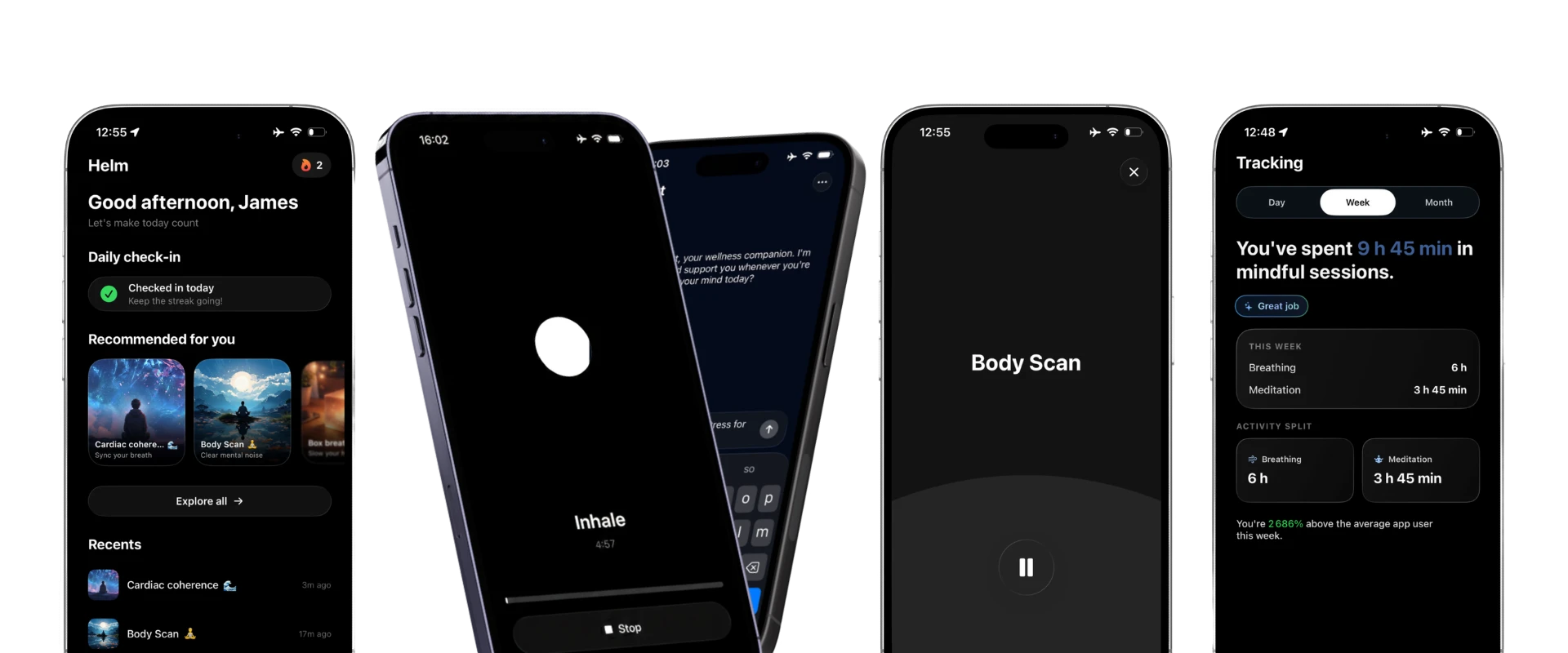
The goal is not perfect focus all day. It is returning to center faster, with less friction and less self-criticism. If you want a simple way to practice these resets consistently, try Helm, an iOS mental wellness app designed to manage stress and improve focus through guided breathing resets.
Yes, effort can make it worse if your nervous system is already overloaded. Trying harder on top of stress, poor sleep, or task-switching often increases mental noise instead of clearing it.
Yes, for many people it can. Slower exhales can reduce physiological arousal, which gives your attention a better chance to organize instead of jumping between threats, tasks, and worries.
No, not always. Mental scatteredness usually feels like fragmented attention and too many open loops, while brain fog can feel heavier, slower, and more physically draining.
About 3 to 5 minutes is often enough to interrupt the spiral. Short resets work best when you use them early, before scattered thinking turns into a full day of overwhelm.
Ten minutes a day to feel calmer, sleep better, and stay sharp.